
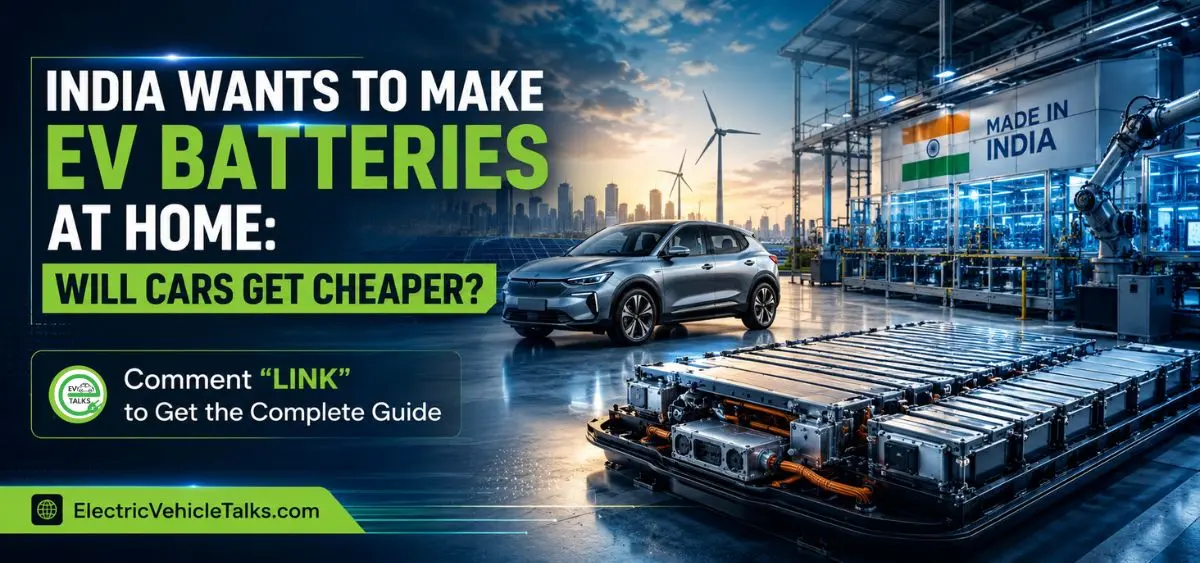

India Wants to Make EV Batteries at Home to reduce its dependence on imported lithium-ion battery cells and make electric vehicles (EVs) more affordable for consumers. Since batteries contribute nearly 30% to 50% of an EV’s manufacturing cost, the Central Government believes that building a strong domestic battery ecosystem is essential for lowering vehicle prices in the long run.
To achieve this goal, the government launched the ₹18,100 crore Advanced Chemistry Cell (ACC) Production Linked Incentive (PLI) Scheme, aimed at creating 50 Gigawatt-hours (GWh) of domestic battery cell manufacturing capacity. The initiative is expected to reduce reliance on imports, especially from China, while strengthening India’s EV supply chain.
Local Production Is Growing, but Progress Remains Slow
Although India wants to make EV Batteries at Home, the country is still at the early stages of manufacturing lithium-ion battery cells. At present, only around 1.4 GWh of the planned 50 GWh production capacity has been commissioned, with Ola Electric leading the current manufacturing efforts.
Most EV battery packs assembled in India still rely on imported battery cells. This means that while final assembly takes place locally, the most valuable component of the battery continues to come from overseas.
Why Making Battery Cells Alone Is Not Enough
Experts believe that manufacturing battery cells is only one part of a much larger value chain. India currently lacks refining facilities for critical battery minerals such as lithium, cobalt, nickel, and graphite. As a result, manufacturers still depend heavily on imported processed materials, making EV prices vulnerable to global commodity prices and currency fluctuations.
In addition, the country is still developing supporting infrastructure, including chemical processing plants, advanced battery testing facilities, semiconductor integration, and large-scale battery recycling. Equipment shortages, regulatory delays, and high financing costs have also slowed the industry’s progress, preventing some manufacturers from fully benefiting from government incentives.
Will Electric Cars Become Cheaper?
The biggest question remains whether making EV Batteries at Home will actually reduce EV prices for consumers.
The answer is yes—but gradually, not immediately.
Currently, nearly 99% of the battery cells used in Indian-made EVs are imported. Even after domestic production expands, manufacturers are expected first to recover the significant investments made in building gigafactories before passing cost savings to customers.
For electric two-wheelers and three-wheelers, prices are already close to petrol vehicle parity. Any future savings from local battery production are more likely to be invested in better technology, longer range, or improved profitability rather than direct price cuts.
However, the passenger car segment has greater potential for gradual price reductions because electric cars still carry a higher upfront cost than conventional petrol vehicles.
Other Factors Making EVs More Affordable
While local battery manufacturing develops, the Indian EV industry is already adopting several strategies to reduce ownership costs.
Manufacturers are introducing Battery-as-a-Service (BaaS) models, allowing customers to purchase the vehicle separately while paying for battery usage through subscription or per-kilometer plans. The government has also extended customs duty exemptions on machinery required for lithium-ion battery manufacturing, helping companies reduce initial setup costs.
Another important trend is the growing use of Lithium Iron Phosphate (LFP) batteries, which are generally more affordable and stable than Nickel Manganese Cobalt (NMC) batteries, helping manufacturers manage production costs.
The Road Ahead
While India wants to Make EV Batteries at Home, achieving truly affordable electric vehicles requires much more than domestic cell production. India must build a complete battery ecosystem covering raw material refining, cathode manufacturing, advanced testing, recycling infrastructure, and reliable supply chains.
Although consumers should not expect an immediate drop in EV prices, localisation will improve battery quality, safety, durability, and supply security. As the domestic ecosystem matures over the coming years, India will be better positioned to reduce production costs and deliver more affordable electric vehicles to the mass market.

Related Articles:









