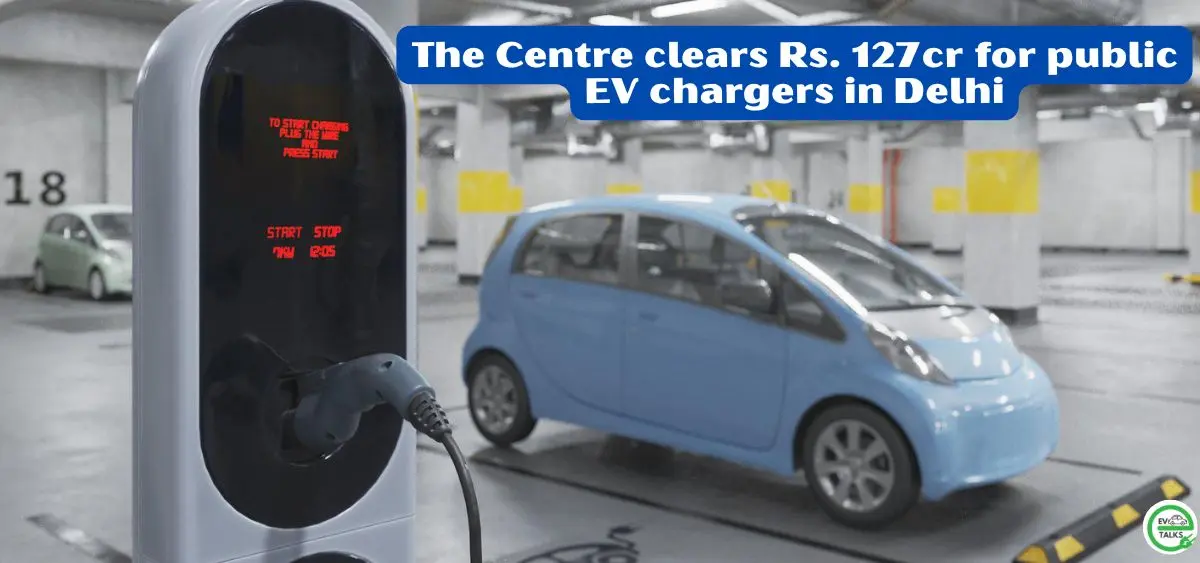

In a significant push towards clean mobility, the Centre clears Rs. 127 crore in financial assistance for the expansion of public electric vehicle (EV) charging infrastructure across Delhi under the PM E-Drive scheme. The funding is expected to accelerate the capital’s transition toward sustainable transportation while supporting the rapidly growing adoption of electric vehicles.
The financial support has been approved under the Prime Minister’s Electric Drive Revolution in Innovative Vehicle Enhancement (PM E-Drive) scheme, a flagship initiative launched in 2024 by the Ministry of Heavy Industries with a total outlay of ₹10,900 crore. Out of this allocation, ₹2,000 crore has been earmarked specifically for developing public EV charging infrastructure across India.
Delhi Government Begins Groundwork for Charging Network Expansion
Following the announcement that the Centre clears Rs. 127 crore, the Delhi government has initiated preparations for the project. District magistrates across Delhi’s 13 revenue districts have been directed to identify government buildings and public spaces suitable for installing EV charging stations.
Officials said that the government will soon invite tenders to appoint agencies responsible for setting up, operating, and maintaining the charging infrastructure. Land parcels will also be sought from civic and development bodies such as the Municipal Corporation of Delhi (MCD), Delhi Development Authority (DDA), and New Delhi Municipal Council (NDMC).
Ambitious Goal of 32,000 Charging Points by 2028
Delhi has set an ambitious target of establishing 32,000 EV charging points across the city by 2028. To achieve this objective, approximately 8,000 new charging points will need to be added every year. The Centre clears Rs. 127 crore for public EV chargers in Delhi
The decision comes at a time when Delhi has emerged as one of India’s strongest EV markets. The city already has more than 10,000 operational charging points and continues to witness rapid growth in electric vehicle adoption.
Delhi Leads India in EV Adoption and Charging Consumption
The latest data highlights Delhi’s leadership in India’s electric mobility revolution. During the 2025-26 fiscal year, electric vehicles accounted for nearly 14-15% of all new vehicle registrations in the capital, significantly above the national average of around 8%.
More than 1.2 lakh EVs were registered in Delhi out of over 8 lakh total vehicle registrations during the year. Additionally, Delhi accounted for nearly 29% of India’s total electricity consumption at public EV charging stations between April and December of the 2025-26 fiscal year, according to data from the Central Electricity Authority.
Power Utilities Strengthening the Charging Ecosystem
Power distribution companies have also played a major role in expanding Delhi’s EV infrastructure. During the 2025-26 fiscal year, BSES facilitated the installation of over 1,600 EV charging points and battery-swapping stations across 1,241 locations.
Cumulatively, BSES has supported the development of more than 6,552 charging and swapping facilities across over 3,400 locations in South, West, East, and Central Delhi. Nearly half of these are private charging points, while around 44% are public chargers.
Meanwhile, Tata Power-DDL has installed 675 public EV chargers across Delhi-NCR and facilitated the installation of approximately 8,550 home charging units in the region.
Supporting Delhi’s Clean Mobility Vision
The announcement that the center has cleared Rs 127 cr aligns with the broader objectives of the Delhi EV Policy, which aims to reduce vehicular pollution, promote sustainable transportation, and encourage the adoption of electric mobility across the private and public transport sectors.
As EV adoption continues to grow, the center’s Rs. 127cr allocation for charging infrastructure is expected to strengthen Delhi’s position as India’s leading electric vehicle hub while making charging facilities more accessible, convenient, and reliable for consumers across the city.
Conclusion
With substantial central funding, an ambitious expansion plan, and strong EV adoption rates, Delhi is poised to take another major step toward becoming a fully developed electric mobility ecosystem. The new charging infrastructure will not only support the rising number of EV users but also contribute significantly to the city’s environmental and sustainability goals in the coming years.

Related Articles: