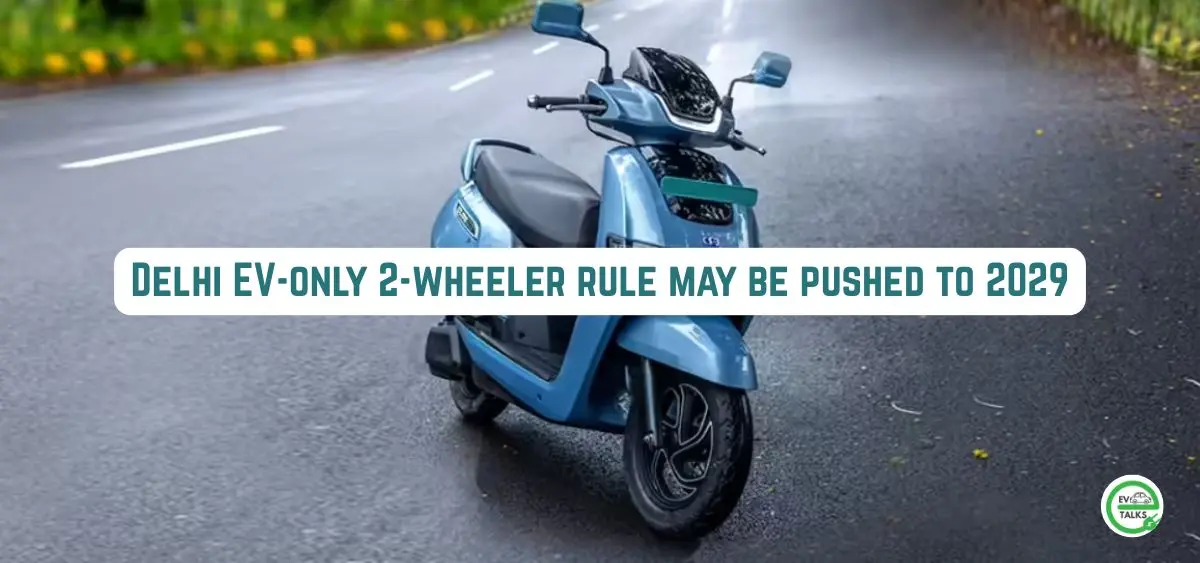

The Delhi government is reportedly considering postponing the implementation of the Delhi EV-only 2-wheeler rule, one of the most debated provisions in the draft Delhi Electric Vehicle Policy 2026-2030. Initially proposed to take effect from April 1, 2028, the mandate could now be pushed to late 2028 or even 2029 following extensive stakeholder feedback and industry concerns.
The proposal is part of the capital’s ambitious EV Policy 2.0, which aims to accelerate the adoption of electric mobility and reduce vehicular emissions. However, policymakers are reassessing the timeline after receiving significant feedback from industry groups, manufacturers, dealers, citizen organisations, and residents.

More Than 750 Suggestions Submitted
According to transport department officials, over 750 suggestions have been received during the public consultation process. Several stakeholders have requested modifications to key provisions, especially the proposed Delhi EV-only 2-wheeler rule, which would prohibit the registration of new petrol-powered two-wheelers in the city.
Officials stated that all recommendations are currently under review, and no final decision has been made regarding the implementation date.
Why Could the Rule Be Deferred?
Several factors have contributed to the possible delay of the Delhi EV-only 2-wheeler rule.
Industry and Market Concerns
Vehicle manufacturers and dealer associations argue that petrol-powered two-wheelers still account for nearly 65% of the market. They warn that a rapid transition could disrupt sales, production planning, and consumer demand.
Affordability Challenges
Many lower-income households, daily commuters, and gig economy workers continue to depend on affordable petrol scooters and motorcycles. Industry representatives believe forcing an immediate shift to electric vehicles could place additional financial pressure on these groups.
Supply Chain Risks
Experts have also highlighted India’s continued dependence on imported battery cells and rare-earth materials. With around 95% of these supplies linked to China, concerns remain about supply chain stability and potential shortages.
Charging Infrastructure Expansion Needed
Stakeholders emphasized that Delhi must further expand its public charging stations and battery-swapping networks before supporting a fully electric two-wheeler market.
Key Highlights of Delhi EV Policy 2.0
Despite the potential delay, Delhi’s clean mobility roadmap remains aggressive. The draft policy proposes that all newly registered commercial three-wheelers and auto-rickshaws become electric from January 1, 2027.
The policy also includes purchase incentives of up to ₹30,000 for electric two-wheelers and up to ₹50,000 for electric three-wheelers. Additionally, electric vehicles priced below ₹30 lakh would continue to enjoy a 100% exemption on road tax and registration fees until March 31, 2030.
To encourage cleaner mobility, the government has also proposed a ₹10,000 scrappage incentive for owners replacing older polluting vehicles. As discussions continue, the final timeline for the Delhi EV-only 2-wheeler rule will remain closely watched by both consumers and the automotive industry.

Related Articles: