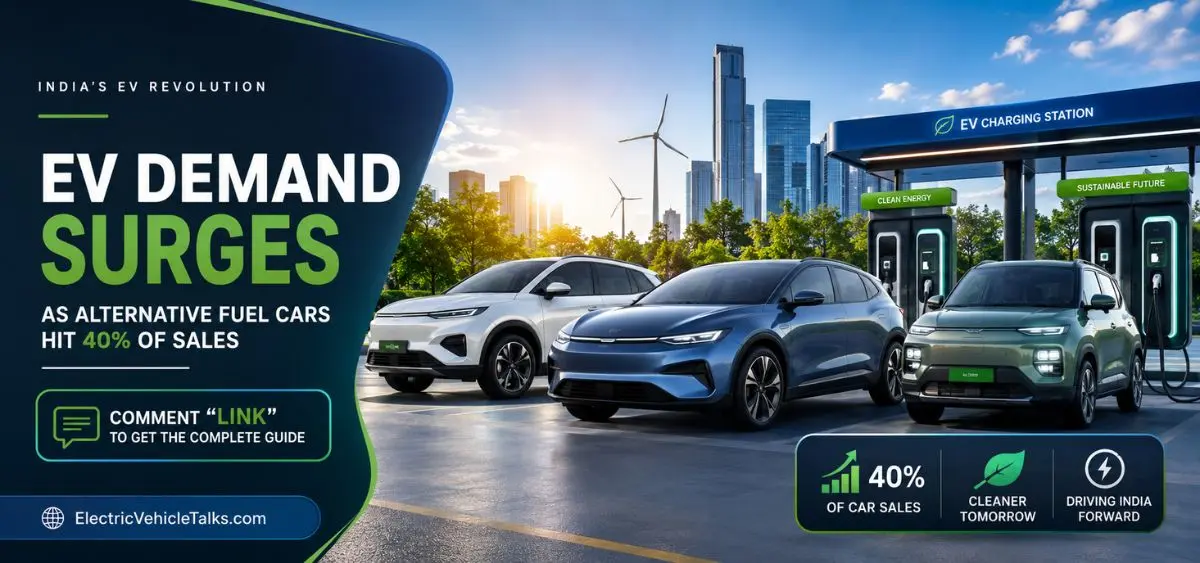

EV Demand Surges across India as consumers increasingly choose electric vehicles (EVs), hybrids, and compressed natural gas (CNG) models over conventional petrol and diesel cars. Higher fuel prices, inflationary pressures, and growing awareness of long-term ownership savings have pushed alternative-fuel vehicles to account for more than 40% of passenger-vehicle retail sales in June, compared with around 38% in May. CNG led the segment with a 24.3% share, followed by hybrids at 8.3% and EVs at 7.8%, highlighting a significant transformation in India’s automotive market.
Two-Wheelers Continue to Drive EV Growth
The surge in EV demand is being led by electric two-wheelers, which contributed nearly 63% of total EV sales in June, while electric passenger cars accounted for around 10%. EV penetration in the passenger vehicle segment climbed to 7.5% in June, up from 4% at the end of the January-March quarter. In the two-wheeler category, EV penetration increased from 7.7% to 10.6%, reflecting stronger consumer confidence.

Industry leaders are also reporting record growth. Tata Motors recorded its highest-ever monthly EV sales in June, delivering nearly 15,000 electric vehicles, a 183% year-on-year increase. Meanwhile, Bajaj Auto and TVS Motor posted robust growth in electric two-wheelers, with both companies expanding production capacity to meet rising demand.
Lower Running Costs and Government Support Boost Adoption
One of the biggest reasons for the EV Demand Surge is the sharp rise in petrol and diesel prices, which have increased by approximately ₹7-11 per litre across many cities since the West Asia conflict intensified earlier this year. Although EVs have a higher upfront purchase price, they offer significantly lower fuel, maintenance, and registration costs over their ownership life.
Government policies have further strengthened adoption. EVs attract only 5% GST, while hybrids continue to face tax rates of up to 40-48%, limiting their competitiveness despite offering improved fuel efficiency. Incentive programmes such as FAME and PM E-Drive have also encouraged EV manufacturing, charging infrastructure development, and consumer adoption.
Charging Infrastructure Expands as Market Matures
India now has 52,718 public EV charging stations, including over 16,500 fast chargers for passenger vehicles. While the country still has a relatively high EV-to-charger ratio compared to global standards, infrastructure is steadily improving across cities and highways. Analysts believe most urban EV owners comfortably charge their vehicles at home, reducing concerns over public charging availability.
Looking ahead, EV demand is expected to continue as automakers introduce new models, expand manufacturing capacity, and consumers increasingly prioritize lower operating costs. With rising fuel prices, supportive government policies, and improving charging infrastructure, India’s transition toward cleaner mobility is gathering momentum, positioning electric mobility as a mainstream choice for the country’s next generation of vehicle buyers.

Related Articles: