
Choosing between an LFP and NMC battery could decide how safe, affordable, and long-lasting your electric car is. The LFP vs. NMC Battery debate is no longer just about chemistry—it directly affects driving range, charging habits, performance, resale value, and ownership costs.
LFP batteries are gaining popularity for their lifespan, thermal stability, and lower price, while NMC batteries continue to dominate premium EVs with their lighter weight and higher energy density. But which technology performs better in India’s summers, congested cities, and fast-growing charging network? The answer may surprise buyers who assume that more range always means a better battery.
In this comparison, we examine safety, degradation, cycle life, charging speed, cost, and Indian electric cars using both technologies. Before choosing your next EV, understand what manufacturers rarely explain—and discover which battery chemistry matches your driving needs, budget, and long-term ownership expectations in the rapidly evolving Indian electric vehicle market.
LFP vs NMC Battery: Quick Verdict
Choose an LFP battery if you want greater thermal stability, longer cycle life, lower cost, and an EV that can tolerate frequent charging.
Choose an NMC battery if you prioritize maximum range, lower battery weight, better energy density, and premium performance.
For most price-conscious Indian city users, long-term owners, and commercial fleets, LFP is generally the more practical choice. For long-distance, luxury, and performance-focused EV buyers, NMC may justify its additional cost.
LFP vs. NMC Battery Comparison Table
| Parameter | LFP battery | NMC battery |
|---|---|---|
| Full name | Lithium iron phosphate | Lithium nickel manganese cobalt oxide |
| Typical cathode | LiFePO₄ | LiNiMnCoO₂ |
| Cell energy density | Approximately 90–180 Wh/kg | Approximately 150–260 Wh/kg |
| Typical cycle life | Around 2,000–6,000+ cycles | Around 1,000–2,000 cycles |
| Thermal stability | Excellent | Lower than LFP |
| Thermal-runaway resistance | Higher | Requires more careful thermal management |
| Battery weight | Heavier for equal usable energy | Lighter for equal usable energy |
| Cost | Usually lower | Usually higher |
| Cobalt and nickel | Not required in cathode | Used in varying proportions |
| Daily 100% charging | Generally more tolerant | Regularly staying below 100% is usually preferable. |
| Cold-weather performance | Relatively weaker | Generally better |
| State-of-charge estimation | More difficult due to the flat voltage curve | Comparatively easier |
| Best suited to | Affordable EVs, fleets, buses, and long ownership | Long-range, luxury, and performance EVs |
| Main advantage | Safety, longevity, and value | High energy density |
| Main limitation | More weight for the same range | Cost, degradation, and thermal sensitivity |
These are representative cell-level ranges, not guaranteed figures for every vehicle. Pack design, cell format, software, cooling, usable capacity, and driving conditions can substantially change real-world performance.
LFP vs NMC Battery: Which One Wins?
| Category | Winner | Why? |
|---|---|---|
| Safety | LFP | More thermally stable and less prone to thermal runaway |
| Cycle life | LFP | Generally withstands more charge-discharge cycles |
| Affordability | LFP | Avoids expensive nickel and cobalt in its cathode |
| Hot-weather suitability | LFP | Better thermal resilience for demanding conditions |
| Energy density | NMC | Stores more energy per kilogram |
| Lightweight packaging | NMC | Delivers more capacity from a smaller, lighter pack |
| Maximum range potential | NMC | Higher energy density benefits long-range vehicles. |
| Cold-weather performance | NMC | Usually retains power and charging capability better |
| Fleet use | LFP | High cycle life helps reduce lifetime operating cost. |
| Premium performance | NMC | Strong power-to-weight and energy-to-weight performance |
LFP = Better value and durability
NMC = Better energy density and packaging
What Is an LFP Battery?
An LFP battery is a type of lithium-ion battery that uses lithium iron phosphate as its cathode material. Most automotive LFP cells use graphite or a graphite-dominant material at the anode.
Its cathode has a stable olivine crystal structure. Strong phosphorus–oxygen bonds help the material retain oxygen at elevated temperatures, reducing the severity and likelihood of self-heating reactions.
In practical ownership terms, that means an LFP pack can tolerate repeated charging, deeper cycling, and warm operating conditions relatively well. It does not mean the battery is fireproof or incapable of failure. Pack damage, defective cells, poor-quality chargers, and inadequate battery management can still create hazards.
Chemistry of LFP batteries
During charging, lithium ions leave the LFP cathode and travel through the electrolyte to the anode. Electrons move through the external electrical circuit. During discharge, the process reverses, and electrical energy powers the motor.
The simplified cathode reaction is
Iron and phosphate are comparatively abundant and less expensive than battery-grade nickel and cobalt. This supports LFP’s cost and supply-chain advantages.
What Is an NMC Battery?
An NMC battery is a lithium-ion battery whose cathode contains nickel, manganese, and cobalt. Different formulations balance these metals in different ratios, including NMC 111, NMC 532, NMC 622, and nickel-rich NMC 811.
Each material performs a particular role:
- Nickel increases energy capacity.
- Manganese supports structural and thermal stability.
- Cobalt improves conductivity and cathode durability but is expensive and associated with supply-chain concerns.
Newer nickel-rich formulations reduce the proportion of cobalt while increasing energy density. However, a higher nickel content can also make heat management and long-term stability more challenging.
Chemistry of NMC batteries
NMC uses a layered metal-oxide structure that allows lithium ions to move efficiently during charging and discharging. Its simplified reaction can be represented as
This layered structure stores more energy per kilogram than conventional LFP chemistry, which is why NMC remains important in premium, performance-oriented, and long-range EVs.
What Is the Chemistry Difference Between LFP and NMC?
The core LFP vs NMC battery chemistry difference lies in the cathode.
LFP’s phosphate structure is exceptionally stable. It sacrifices some voltage and energy density in exchange for safety, durability, and lower material cost.
NMC’s layered oxide structure supports higher voltage and energy density. It allows manufacturers to obtain more driving range without proportionally increasing battery weight but requires sophisticated cooling, monitoring, and safety controls.
This difference affects almost every part of the vehicle—from range and acceleration to price, charging recommendations, and resale expectations.
LFP vs NMC Battery: Advantages and Disadvantages
Advantages of LFP batteries
- Longer cycle life under comparable operating conditions
- Greater resistance to thermal runaway
- Lower dependence on nickel and cobalt
- Usually lower cell and pack cost
- Better tolerance for frequent high states of charge
- Well suited to commercial fleets and high-mileage vehicles
- Strong performance in hot operating environments
- Lower long-term replacement risk when properly managed
Disadvantages of LFP batteries
- Lower energy density
- Greater weight for an equivalent amount of stored energy
- Reduced efficiency and power capability in very cold weather
- A flatter voltage curve makes state-of-charge estimation harder
- May provide less range than an equivalent-size NMC pack
- Large LFP packs can increase vehicle mass and affect efficiency
Advantages of NMC batteries
- Higher gravimetric and volumetric energy density
- More range from a similarly sized pack
- Lower pack weight for a given usable capacity
- Strong acceleration and sustained power potential
- Better suited to premium and long-distance vehicles
- Generally better low-temperature performance
- Easier state-of-charge estimation through voltage changes
Disadvantages of NMC batteries
- Higher raw-material and manufacturing costs
- Greater reliance on nickel and cobalt supply chains
- More demanding thermal-management requirements
- Usually shorter cycle life than LFP
- Faster degradation when repeatedly held at high charge levels
- Higher environmental and social risks associated with mining certain materials
LFP vs NMC Battery Range Difference
NMC usually has the range advantage when pack dimensions and weight are kept equal. Its higher energy density allows more kilowatt-hours to fit inside a limited floor area without adding as much mass.
However, chemistry alone does not determine range. A large, well-integrated LFP battery can provide more range than a smaller NMC pack.
Real-world EV range also depends on:
- Usable battery capacity
- Motor and inverter efficiency
- Vehicle weight and aerodynamics
- Tyre pressure and wheel size
- Speed and acceleration habits
- Air-conditioning or heating use
- Ambient temperature
- Terrain and traffic
- Battery temperature management
This is why buyers should compare certified range, independent road tests, charging speed, and efficiency—not chemistry alone.
LFP vs. NMC Battery Lifespan and Cycle Life
A battery cycle represents energy equal to one complete charge and discharge. Two 50% discharges, for example, add up to approximately one full equivalent cycle.
The attached academic study reports a typical LFP cycle life of more than 2,000 cycles, compared with approximately 1,000–2,000 cycles for NMC. Other commercial claims can be higher, but laboratory cycle-life figures should never be interpreted as guaranteed vehicle life.
| Ownership factor | LFP behaviour | NMC behaviour |
|---|---|---|
| Frequent charging | Very well suited | Manageable with good software and cooling |
| Regular 100% charging | More tolerant | Can accelerate ageing if the vehicle remains full for long periods |
| Deep discharge | More tolerant, but still best avoided | May increase degradation |
| High-temperature storage | Better stability, though ageing still occurs | Greater degradation risk |
| Long ownership | Strong advantage | Depends more heavily on pack management |
| Fleet utilization | Particularly suitable | Suitable when energy density is more important |
A vehicle driven 12,000–15,000 km annually may take many years to accumulate even 1,000 equivalent full cycles. Calendar ageing, temperature, and charging habits can therefore matter as much as cycle count.
LFP vs. NMC Battery Degradation
All lithium-ion batteries gradually lose capacity. The question is not whether degradation occurs, but how quickly it happens and whether the loss affects normal use.
Common causes of degradation
- Remaining at 100% state of charge for extended periods
- Repeatedly draining the pack close to zero
- Charging or parking in extreme heat
- Excessive high-power DC fast charging
- Aggressive acceleration when the battery is very hot or cold
- Long storage at an extremely high or low charge level
- Cell imbalance or inadequate temperature control
LFP generally demonstrates slower cycle-related degradation because its olivine cathode experiences relatively small structural changes. NMC can be more sensitive to high voltage, high state of charge, and elevated temperature.
However, a carefully engineered NMC pack with liquid cooling can outlast a poorly designed or air-cooled LFP pack. Battery chemistry must therefore be evaluated alongside the manufacturer’s thermal management, warranty, and software strategy.
LFP vs. NMC Battery Price Difference
LFP batteries are usually cheaper because their cathodes do not require nickel or cobalt. Iron and phosphate are more widely available, and the chemistry may need less intensive thermal-protection hardware in some applications.
The supplied EVLithium comparison places LFP at roughly 160 Wh/kg and NMC near 250 Wh/kg in representative products, while describing LFP as the more affordable chemistry. Exact figures vary considerably by cell design and manufacturer.
| Cost factor | LFP | NMC |
|---|---|---|
| Cathode materials | Lower-cost iron and phosphate | Costlier nickel, manganese, and cobalt |
| Cost per kWh | Generally lower | Generally higher |
| Thermal-management needs | Potentially simpler | Often more intensive |
| Lifetime cost per cycle | Usually lower | Usually higher |
| Recycling value | Lower material recovery value | Higher-value nickel and cobalt |
| Vehicle positioning | Mass-market and fleet EVs | Premium, performance, and long-range EVs |
For consumers, the chemistry-related saving is rarely shown separately on the invoice. It appears through the vehicle’s overall price, range, warranty, and equipment package.
Popular Electric Cars in India With LFP or NMC Technology
Battery chemistry can change across variants, model years, and suppliers. The following table is a practical market guide, not a substitute for the manufacturer’s latest homologation or owner documentation.
| Electric car sold or recently offered in India | Commonly associated chemistry |
|---|---|
| Tata Tiago EV | LFP |
| Tata Tigor EV | LFP |
| Tata Punch EV | LFP |
| Tata Nexon EV | LFP |
| Tata Curvv EV | LFP |
| Tata Harrier EV | LFP-based platform |
| MG Comet EV | LFP |
| MG Windsor EV | LFP |
| MG ZS EV | LFP in current India-market configurations |
| Mahindra BE 6 | LFP |
| MG Hector Tomahawk EV | NMC (Nickel-Manganese-Cobalt Oxide) |
| Kia Syros EV | NMC (Nickel-Manganese-Cobalt Oxide) |
| Kia Carens Clavis EV | NMC (Nickel-Manganese-Cobalt Oxide) |
| Hyundai Creta EV | NMC (Nickel-Manganese-Cobalt Oxide) |
| Tata Sierra EV | LFP |
| Mahindra XUV 3XO | NMC |
| Mahindra XEV 9S | LFP |
| Mahindra XEV 9e | LFP |
| BYD Atto 3 | LFP Blade Battery |
| BYD Seal | LFP Blade Battery |
| BYD Sealion 7 | LFP Blade Battery |
| BYD eMAX 7 | LFP Blade Battery |
| Hyundai Ioniq 5 | Nickel-based lithium-ion polymer/NMC family |
| Kia EV6 | Nickel-rich lithium-ion/NMC family |
| Kia EV9 | Nickel-rich lithium-ion/NMC family |
| BMW iX1 LWB | Nickel-based lithium-ion chemistry |
Always ask the dealer or manufacturer to confirm the chemistry for the exact variant and production batch. Marketing pages sometimes state only “lithium-ion,” which is not enough to distinguish LFP from NMC.
Which Battery Is Safer in Indian Conditions?
LFP has the inherent safety advantage. Its cathode begins releasing heat and oxygen less readily than NMC, giving engineers a wider margin before thermal runaway becomes self-sustaining.
That advantage is especially relevant in India because parked vehicles may experience high ambient and surface temperatures. Nevertheless, battery fires cannot be assessed by chemistry alone.
A safe EV also requires:
- A properly calibrated battery-management system
- Effective cell isolation
- Crash-resistant pack construction
- Temperature sensors and protective contactors
- Appropriate cooling
- Certified charging equipment
- Strong manufacturing quality control
- Timely recall and diagnostic procedures
Indian buyers should never judge safety from viral fire videos or chemistry claims alone. Check the vehicle’s crash protection, battery warranty, certification, recall history, and manufacturer support.
Indian EV Battery Safety Standards
India uses different standards according to vehicle category:
| Standard | Main vehicle category | Relevance |
|---|---|---|
| AIS-156 | L-category electric vehicles | Primarily electric two-wheelers, three-wheelers, and quadricycles |
| AIS-038 (Rev. 2) | M- and N-category electric vehicles | Passenger vehicles, buses, and goods vehicles |
| UN 38.3 | Transport of lithium batteries | Covers safety testing for battery transportation |
| UNECE R100 | Electric powertrain and REESS safety | Referenced internationally for electric road vehicles |
For an article focused mainly on electric cars, AIS-038 (Rev. 2) is the most directly relevant Indian standard. AIS-156 should be discussed when covering electric scooters, motorcycles, and three-wheelers.
Following battery-fire concerns, the government strengthened AIS-156 and AIS-038 (Rev. 2). Amendment 3 requirements were introduced in phases from December 2022 and March 2023.
The strengthened requirements address areas including:
- Cell-level safety and traceability
- Battery-management system protection
- Overcharge and over-discharge protection
- Overtemperature and overcurrent monitoring
- Short-circuit protection
- Thermal propagation
- Mechanical shock and vibration
- Water and dust ingress
- Charger compatibility and communication
- Minimum spacing and pack-construction requirements
- Warning and fault-detection systems
Passing a regulatory test does not mean an EV is incapable of developing a fault. Certification establishes a minimum safety baseline. Manufacturing consistency, software monitoring, crash protection, and after-sales diagnostics remain essential throughout the vehicle’s life.
Charging Tips for LFP and NMC Batteries
LFP battery charging tips
- Charging to 100% is generally acceptable when the manufacturer recommends it.
- Some LFP vehicles benefit from periodic full charging to recalibrate range estimation.
- Do not leave the vehicle at 100% for weeks in extreme heat.
- Avoid routinely reaching 0%, despite LFP’s cycle-life advantage.
- Use scheduled charging during cooler evening or morning hours when practical.
NMC battery charging tips
- For everyday driving, a limit of around 70–80% can reduce time spent at high voltage.
- Charge to 100% shortly before a long trip rather than leaving the car full overnight for several days.
- Avoid repeatedly reaching very low charge levels.
- Allow battery preconditioning to operate before high-power charging when supported.
- Use DC fast charging when it saves time; rely on slower AC charging when convenience allows.
The vehicle manual takes priority over generic advice. Modern battery-management systems reserve buffers and control temperature, so owners do not need to micromanage every charging session.
Does Fast Charging Damage LFP or NMC Batteries?
Occasional fast charging is not inherently harmful. Modern EVs regulate charging speed according to battery temperature, state of charge, and cell condition.
Degradation may accelerate when high-power charging is repeatedly combined with:
- Very high ambient temperatures
- Back-to-back fast-charging sessions
- Charging above 80% at high power
- Heavy driving immediately before charging
- Poor or absent pack cooling
Charging typically slows after 80% because the battery-management system protects the cells. On highway journeys, arriving at a charger with a relatively low state of charge and stopping around 70–80% is usually faster than waiting for 100%.
Common Battery-Buying Mistakes
1. Choosing an EV only by chemistry
A good NMC pack may be safer and more durable than a poorly engineered LFP pack. Evaluate the complete vehicle.
2. Comparing claimed range without checking the test cycle
MIDC, ARAI, WLTP, and real-world range figures are not directly interchangeable.
3. Assuming LFP can never catch fire
LFP reduces thermal-runaway risk but does not eliminate damage, electrical faults, or charging hazards.
4. Believing NMC automatically means better performance
The motor, inverter, voltage architecture, and software determine performance alongside battery chemistry.
5. Ignoring usable capacity
Two vehicles may advertise the same gross capacity but provide different usable energy and range.
6. Treating battery replacement price as an immediate expense
Most buyers will not replace a complete traction battery during normal ownership. Module-level repair, warranty coverage, and future battery prices also affect the real cost.
LFP or NMC: Which One Should You Buy?
| Your priority | Better starting choice |
|---|---|
| Lowest possible EV price | LFP |
| Long ownership period | LFP |
| Daily commercial or fleet use | LFP |
| Hot-weather resilience | LFP |
| Regular full charging | LFP |
| Maximum range with minimum weight | NMC |
| Premium performance | NMC |
| Limited space for the battery pack | NMC |
| Frequent cold-weather driving | NMC |
| Strongest material-recovery economics | NMC |
For most urban Indian households, LFP is an extremely sensible choice. Daily commutes generally use only a fraction of the available range, while affordability, thermal stability, and long service life are highly valuable.
NMC remains compelling for buyers who regularly travel long distances, want a lighter premium vehicle, or need maximum energy within restricted packaging space.
India’s EV Policies and Battery-Manufacturing Context
FAME-II operated from April 2019 to March 2024 and supported electric vehicles and charging infrastructure. It should not be presented as a current universal subsidy for private electric cars.
Its successor, PM E-DRIVE, has an outlay of ₹10,900 crore and supports electric two-wheelers, three-wheelers, buses, trucks, ambulances, and public charging infrastructure. It does not provide a broad national purchase subsidy for private electric cars. State-level road tax, registration, and manufacturing incentives vary and can change.
The government has also allocated ₹18,100 crore under the Production Linked Incentive programme for 50 GWh of Advanced Chemistry Cell manufacturing capacity. This is important because India’s EV expansion still depends heavily on imported cells and battery materials.
Charging access is improving. Government data reported 29,151 EV charging stations installed across India by December 2025, including 8,805 fast chargers. PM E-DRIVE allocated ₹2,000 crore toward public charging infrastructure.
A larger charging network benefits both chemistries. It also reduces pressure on automakers to install oversized, expensive batteries purely to address range anxiety.
Sustainability and Recycling
LFP avoids nickel and cobalt in its cathode, reducing exposure to some of the environmental, geopolitical, and labor concerns connected with mining these metals. Its long cycle life can also reduce the environmental impact per kilometer travelled.
NMC, however, has higher energy density and therefore may require less active material and structural mass for a given range. Its nickel and cobalt also have greater recycling value, giving recyclers a stronger economic incentive to recover them.
LFP recycling is technically possible, but lower-value recovered materials can make the business case more difficult. Regulation, extended producer responsibility, and efficient direct-recycling methods will be essential as LFP volumes grow.
The greenest battery is not automatically the one with the simplest chemistry. It is the appropriately sized pack that is responsibly manufactured, charged with cleaner electricity, used for many years and ultimately recovered through a formal recycling system.
Future LFP and NMC Battery Trends
LFP’s global rise is no longer limited to basic city cars. Cell-to-pack construction, improved electrodes, and smarter thermal control are helping manufacturers fit more usable energy into the same space.
The IEA reported that LFP accounted for more than half of global EV battery deployment in 2025. In India, Brazil, and Southeast Asia, LFP had already exceeded 50% of electric-car battery demand in 2024, with Tata Motors helping drive India’s domestic adoption.
Important developments include:
- LMFP batteries: Adding manganese to LFP can increase voltage and energy density while retaining many safety and cost advantages.
- High-nickel NMC: Continues to improve range, although thermal and material challenges remain.
- Cell-to-pack construction: Removes modules and improves pack-level space utilization.
- Silicon-enhanced anodes: May increase energy density and charging performance.
- Sodium-ion batteries: Could complement LFP in low-cost vehicles and stationary storage.
- Solid-state batteries: Promise higher energy density and safety but remain expensive and difficult to commercialize at scale.
- Battery passports and traceability: Will improve visibility into materials, carbon intensity, and recycling.
- Second-life storage: Retired EV packs may support renewable-energy and backup-power applications when health and safety permit.
Expert Insight from Electric Vehicle Talks
The battery debate is often reduced to “LFP is safe” and “NMC offers range.” That is directionally correct but incomplete.
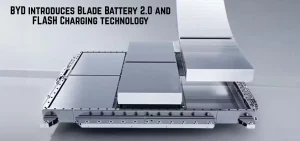
Pack engineering can narrow the difference. BYD’s cell-to-pack Blade architecture shows how efficient packaging can make LFP practical in long-range and performance vehicles. Conversely, sophisticated liquid cooling, structural protection, and software have made NMC viable in some of the world’s most capable EVs.
For an Indian buyer, we recommend examining five questions before choosing:
- How far do you genuinely drive on a demanding day?
- Can you charge at home or work?
- How long will you retain the vehicle?
- What does the battery warranty cover—capacity loss or only failure?
- Does the service network have high-voltage diagnostic capability?
If two EVs meet your range requirements, the affordable LFP model may deliver better lifetime value. If the NMC vehicle provides meaningfully better efficiency, highway range, performance, or interior space, its premium may be justified.
The best battery is the one that meets your real driving pattern without forcing you to pay for unused capacity.
People Also Ask
1. Which is better, an LFP or NMC battery?
LFP is generally better for safety, long cycle life, and affordability. NMC is better when high energy density, low weight, and maximum driving range are priorities. The best choice depends on vehicle engineering and intended use.
2. Is LFP safer than NMC?
Yes, LFP is inherently more thermally stable and less susceptible to thermal runaway. However, neither chemistry is risk-free, and overall safety depends on cell quality, pack protection, cooling, and battery-management software.
3. Does an LFP battery give less range?
Not necessarily. LFP stores less energy per kilogram, but manufacturers can use a larger pack or space-efficient cell-to-pack design. An LFP vehicle may therefore offer more range than another model with a smaller NMC battery.
4. Can an LFP battery be charged to 100% every day?
LFP generally tolerates high states of charge better than NMC. Some manufacturers recommend periodic 100% charging for accurate range estimation. Owners should still follow the vehicle manual and avoid leaving it fully charged for extended periods in intense heat.
5. How long does an LFP EV battery last?
Many LFP cells are designed for more than 2,000 full equivalent cycles, while certain designs claim substantially more. In normal private-car use, this can translate into many years of service, although temperature and calendar ageing remain important.
NMC’s higher energy density helps deliver long range and high power without making the battery excessively large or heavy. This is particularly useful in premium SUVs, performance cars, and vehicles with restricted packaging space.
7. Is LFP suitable for Indian weather?
Yes. Its high thermal stability makes LFP particularly attractive for warm Indian conditions. Effective pack cooling and sensible charging practices are still necessary, especially in regions with extreme summer temperatures.
LEP vs. NMC Battery: FAQs
Is an LFP battery cheaper than an NMC battery?
LFP is usually cheaper per kWh because it uses iron and phosphate rather than costly nickel and cobalt. Vehicle pricing also depends on pack size, localization, features, taxes, and production scale.
Which battery degrades faster: LFP or NMC?
Under comparable conditions, NMC generally experiences faster cycle degradation, especially when repeatedly exposed to high charge levels and heat. Good thermal management can significantly reduce this difference.
Which battery is best for an electric taxi?
LFP is generally preferable for taxis because of its long cycle life, high thermal stability, and tolerance for frequent charging. Route length and downtime requirements must also be considered.
Does fast charging harm LFP batteries?
Frequent high-power charging can increase heat and ageing in any lithium-ion battery. LFP usually tolerates repeated cycling well, but AC charging remains preferable when speed is unnecessary.
Can LFP batteries perform well on highways?
Yes. Highway capability depends more on usable capacity, efficiency, charging speed, and charger availability than cathode chemistry. Several modern LFP vehicles deliver strong highway range and rapid charging.
Is NMC battery technology becoming obsolete?
No. NMC continues to be valuable where low weight and high energy density are essential. LFP is gaining market share, but the two chemistries serve different vehicle and performance requirements.
How do I identify my EV’s battery chemistry?
Check the owner’s manual, technical specification sheet, homologation documents, or manufacturer support channel. Do not assume the chemistry from the term “lithium-ion,” because both LFP and NMC belong to that family.
Conclusion
The LFP vs. NMC battery decision is ultimately a choice between two different engineering priorities.
LFP offers the strongest combination of affordability, thermal stability, long cycle life, and everyday practicality. Those qualities make it particularly well matched to India’s mass-market EVs, commercial fleets, and long ownership patterns.
NMC offers greater energy density, allowing a lighter and more compact battery to deliver impressive range and performance. It remains a logical choice for premium vehicles, highway-focused buyers, and applications where every kilogram matters.
Neither chemistry should be judged in isolation. Battery cooling, cell quality, software, pack protection, usable capacity, warranty coverage and service support can matter just as much as the cathode material.
For more practical battery explainers, electric-car comparisons, charging guides, and India-focused EV industry analysis, explore Electric Vehicle Talks.

Related Articles: