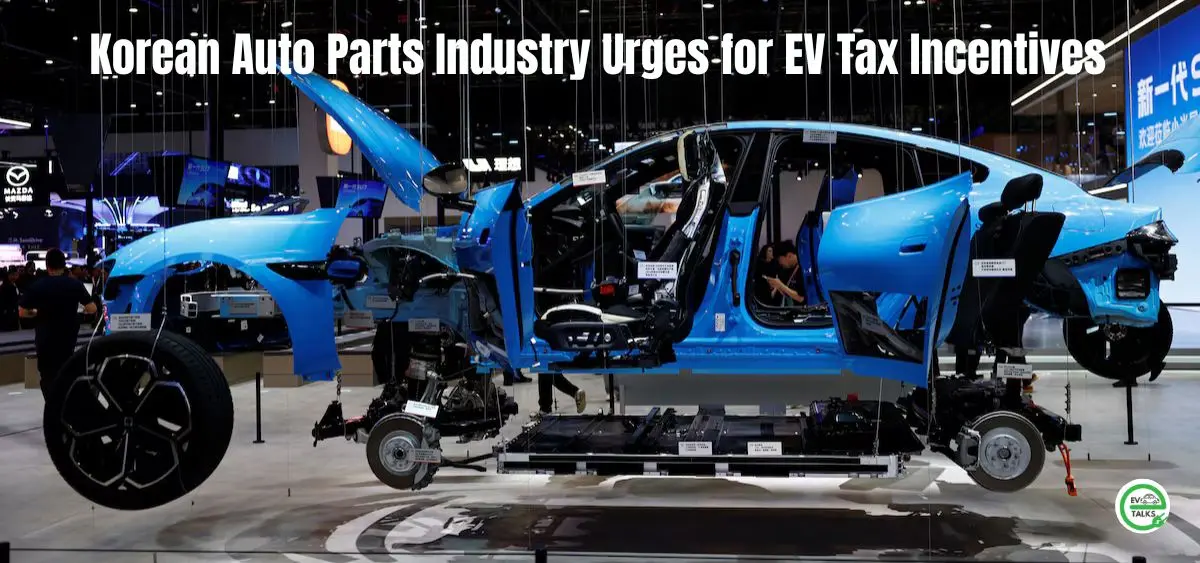

The Korean Auto Parts Industry has called on the South Korean government to introduce direct production tax incentives for electric vehicle (EV) manufacturing, warning that the country’s automotive supply chain faces serious risks if immediate action is not taken.
Leading industry representatives, including the heads of major automotive supplier organizations, have jointly urged policymakers to shift their focus from consumer-focused EV subsidies toward production-based support. Industry leaders argue that the current approach is failing to protect domestic manufacturers and thousands of businesses that depend on local vehicle production.

Growing Concerns Over Overseas EV Production
One of the biggest challenges facing the Korean Auto Parts Industry is the increasing trend of South Korean automakers expanding EV manufacturing operations overseas. Companies are relocating production to international markets to overcome trade barriers and strengthen global competitiveness.
While this strategy may benefit automakers, local component suppliers fear they are being left behind. As more production shifts abroad, domestic parts manufacturers face declining orders, reduced factory utilization, and uncertainty about future investments.
Industry groups warn that continued offshoring could weaken South Korea’s automotive ecosystem, which relies on a vast network of interconnected suppliers, manufacturers, and service providers.
Chinese EV Competition Intensifies Market Pressure
Another major concern is the rapid expansion of Chinese electric vehicle manufacturers. Supported by strong government incentives and large-scale production capabilities, Chinese EV makers have gained a significant cost advantage in global markets.
The Korean Auto Parts Industry argues that these competitive pressures make it increasingly difficult for local suppliers to compete on price. Without targeted production support, domestic manufacturers risk losing market share and investment opportunities to foreign rivals.
Industry Calls for Production-Based Tax Incentives
Industry representatives believe South Korea’s EV policies have historically focused too heavily on consumer purchase incentives and tax exemptions for eco-friendly vehicles. While these measures encourage EV adoption, suppliers argue they do little to strengthen domestic manufacturing capacity or protect jobs.
The Korean Auto Parts Industry is advocating for production-linked tax incentives similar to those implemented in other major automotive markets. Such measures would encourage companies to maintain manufacturing operations within South Korea and help secure long-term investments in EV production.
Protecting South Korea’s Automotive Supply Chain
Industry leaders emphasize that vehicle production depends on thousands of domestic businesses working together across the supply chain. They warn that a large-scale production exodus could create widespread economic consequences, affecting employment, investment, and industrial competitiveness.
As the global EV race accelerates, suppliers believe production-focused incentives are essential to ensuring that South Korea remains a strong manufacturing hub while preserving the long-term stability of its automotive sector.

Related Articles: