
Poland turns to Taiwan to accelerate its ambitions in the electric vehicle (EV) and semiconductor sectors through a major partnership with technology giant Foxconn. The move reflects Poland’s broader strategy to transform itself from a traditional assembly location into a leading European hub for advanced manufacturing, innovation, and technology development.
Foxconn to Build Major EV Production Hub
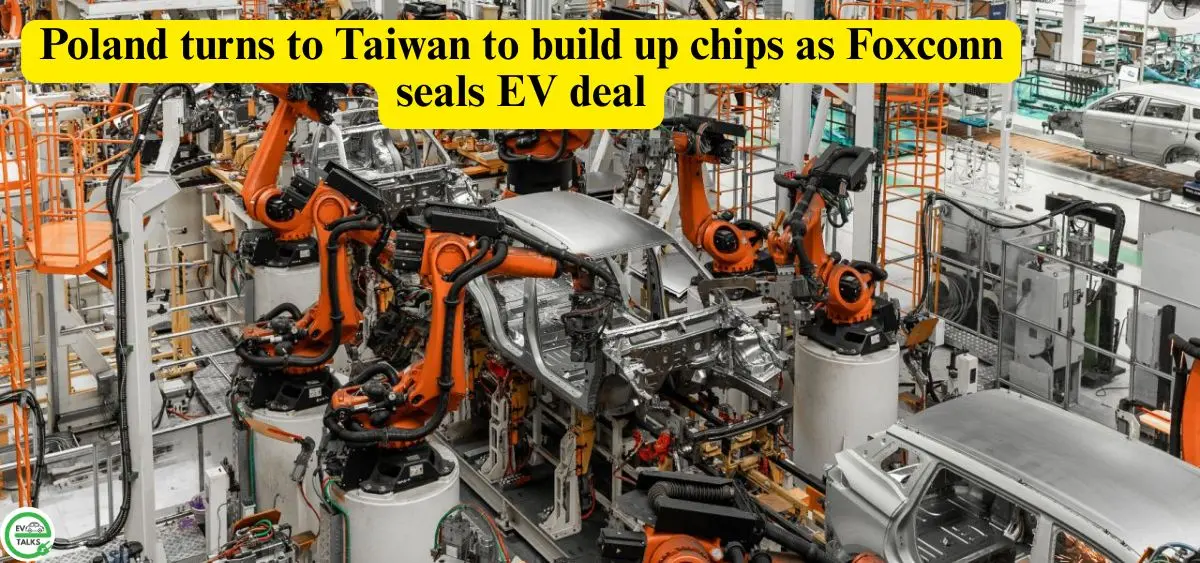
As part of the agreement, state-owned ElectroMobility Poland (EMP) has selected Foxconn and its subsidiary Foxtron as strategic technology partners. The companies plan to establish a large EV production and research hub in Jaworzno, southern Poland.

Construction is expected to begin in spring 2027, while vehicle production is scheduled to start in 2029. The facility is designed to manufacture up to 400,000 midsize electric SUVs annually across three different models. Poland will also receive exclusive distribution rights for these vehicles throughout the European market.
Foxconn is expected to invest more than $1 billion in the project, while the Polish government will provide financial support through 4.5 billion zlotys (€1.1 billion) in loans backed by EU recovery funds.
Semiconductor Expansion Gains Momentum
At the same time, Poland turns to Taiwan to strengthen its semiconductor capabilities. Authorities are finalizing plans with Foxconn to build a new chip manufacturing facility in Miękinia, Lower Silesia.
The site was originally prepared for a large Intel packaging and testing plant before the company halted its European expansion plans. Poland now aims to transform the location into a wider technology park focused on AI server components, automotive electronics, and industrial robotics.
Strategic Shift Away from China
The decision highlights how Poland turns to Taiwan for reliable technology partnerships and supply chains. After moving away from discussions with Chinese automakers, Poland turns to Taiwan to secure technology transfers, attract billions in investment, and strengthen Europe’s high-tech manufacturing footprint while reducing supply chain risks.

Related Articles: