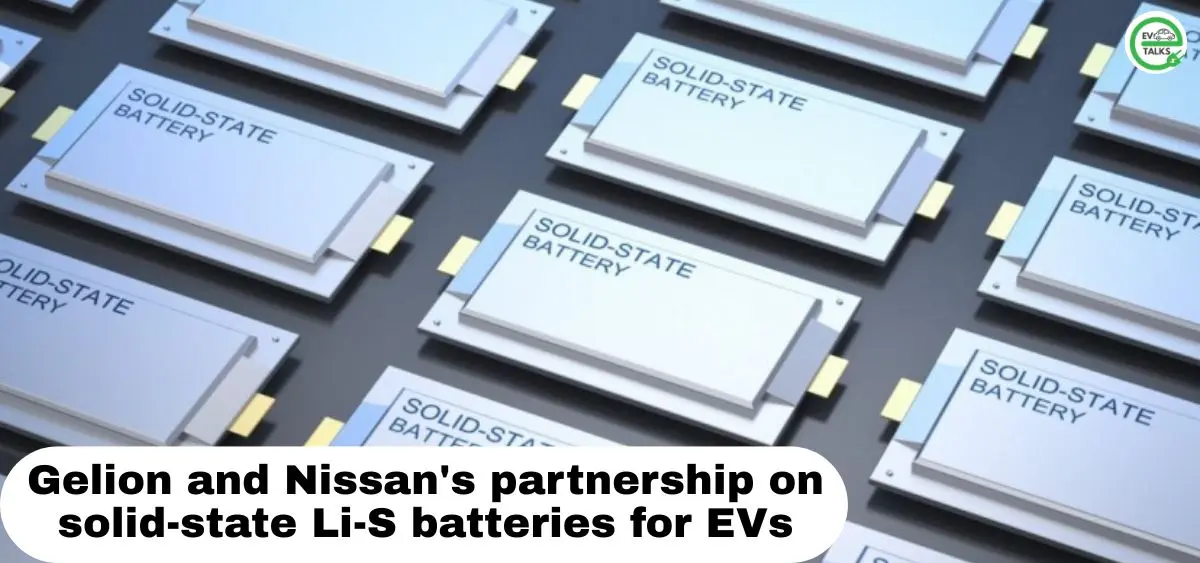

Gelion and Nissan’s partnership is a highly significant recent development in the next-generation electric vehicle (EV) battery space.
Announced in June 2026, UK-based battery innovator Gelion plc, Nissan Technical Centre Europe (NTCE), and the University of Oxford launched a three-year collaborative project to develop next-generation solid-state lithium-sulfur (Li-S) batteries.
Called CoRe-SoLiS (Cost-effective, Resilient Solid-state Li-S), this initiative is poised to be a major milestone for EV technology. Below is a breakdown of what this partnership is, how the technology works, and why it is a potential game-changer.
Project Overview & Funding
- The Budget: The project has a total cost of £3.4 million (around $4.5 million).
- The Funding: It is backed by £2.4 million in grant funding from Innovate UK under the Battery Innovation Concept Development Round 1 competition (with £1.6 million awarded directly to Gelion’s UK subsidiary).
- Timeline: Work commenced in June 2026 and will run for three years, aiming to produce commercial battery prototypes.
The Technology: Why “Lithium-Sulfur” and “Solid-State”?
Currently, most EVs rely on lithium-ion batteries that require expensive, scarce, and supply-constrained materials like nickel and cobalt. CoRe-SoLiS aims to completely swap these out in favor of sulfur.
- Abundance and Cost: Sulfur is incredibly cheap, highly abundant, and a byproduct of other industrial processes. Shifting to sulfur-based cathodes eliminates dependency on fragile nickel and cobalt supply chains.
- Gelion’s NES™ (Nano-Encapsulated Sulfur) Cathode: Historically, lithium-sulfur batteries struggled because sulfur dissolves during charging cycles (forming “polysulfides”), leading to rapid battery degradation and short lifespans. Gelion solves this by chemically encapsulating the sulfur at the nanoscale, trapping it to maintain battery health and enable fast-charging capabilities.
- Solid-State Chemistry (Nissan’s Expertise): Nissan is contributing its advanced solid-state battery development. By replacing traditional flammable liquid electrolytes with solid-state electrolytes, they are targeting a vastly safer battery pack (no risk of fire), have a higher energy density, and are incredibly stable.
- Oxford’s Role: The University of Oxford is contributing its expertise in advanced anodes and cell-level integration to tie the sulfur cathodes and solid electrolytes together.
Why is this a “Game-Changer”?
1. Leveling the Playing Field with China
Currently, China dominates the lithium-ion and LFP (lithium iron phosphate) battery supply chains. Financial analysts (such as Longspur Capital) have highlighted that Gelion’s technology could allow Western automakers to manufacture high-performance batteries more cheaply than China can produce them today. Because sulfur is locally abundant in Europe and the Americas, it offers a pathway to true energy sovereignty.
2. Accelerating Nissan’s EV Roadmap
Nissan is betting heavily on solid-state tech for its EV comeback strategy. The company opened its first pilot solid-state production line at its Yokohama plant in 2025 and aims to launch its first commercial EV powered by solid-state batteries in 2028. Gelion aims to deliver a commercial prototype by fiscal year 2027, lining up perfectly with Nissan’s schedule.
3. Dropping into Existing Factories
One of the most practical benefits of Gelion’s NES™ technology is that it is designed to be “dropped in” to existing global battery manufacturing lines. This means gigafactories won’t need entirely new, multi-billion-dollar overhauls to produce these next-gen batteries.
Conclusion
By blending Gelion’s molecular sulfur engineering with Nissan’s automotive manufacturing muscle and Oxford’s research expertise, the CoRe-SoLiS project represents a major step toward solid-state batteries that are not only safer and longer-lasting but also significantly cheaper than anything on the market today. Gelion and Nissan’s partnership

Related Articles: