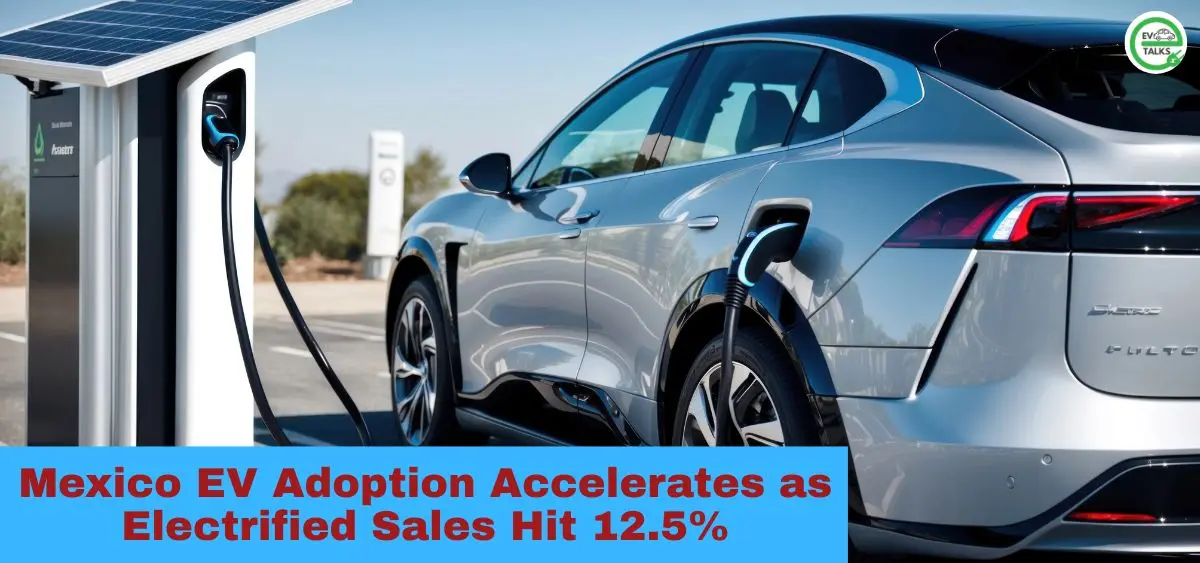

Mexico EV Adoption Accelerates at a remarkable pace, with electrified vehicles accounting for more than one in every eight light vehicles sold during the first four months of 2026. The latest figures highlight a significant transformation in the country’s automotive sector as consumers increasingly embrace electric and hybrid mobility solutions.
According to official automotive industry data, 60,402 electrified vehicles were sold between January and April 2026 out of a total of 500,512 light vehicles sold nationwide. As a result, electrified vehicles captured over 12% of the market, up from 9.6% recorded in 2025.
Electrified Vehicle Sales Continue Rising
The growth trend reflects Mexico’s expanding electromobility ecosystem. During 2025, sales of vehicles equipped with electrified technologies reached 146,724 units, representing an 18% increase compared to 2024.
By the end of the first quarter of 2026, cumulative sales of battery electric vehicles (BEVs), plug-in hybrid electric vehicles (PHEVs), and range-extended electric vehicles had climbed to 235,501 units, demonstrating growing consumer confidence in alternative powertrain technologies.
Hybrid Vehicles Lead While EVs Record Fastest Growth
Hybrid electric vehicles (HEVs) remain the dominant electrified segment in Mexico. Between January and April 2026, HEV sales reached 42,022 units, accounting for 8.4% of total light-vehicle sales.
Meanwhile, plug-in hybrid electric vehicle sales totaled 9,293 units, while battery electric vehicle sales reached 9,087 units. Notably, BEVs recorded the strongest performance among all electrified categories, posting a remarkable 71% year-over-year growth rate.
Industry leaders view this transition as a major opportunity. Experts believe Mexico possesses the manufacturing capabilities, skilled workforce, and strategic geographic location needed to become a leading electrification hub in North America.
Automotive Supply Chain Faces Transformation
As Mexico EV Adoption Accelerates, suppliers are being forced to adapt to rapidly changing industry requirements. Electrified vehicles require batteries, electric motors, energy management systems, high-voltage connectors, and lightweight materials, reducing reliance on many traditional internal combustion engine components.
To remain competitive, suppliers must invest in advanced manufacturing processes, global certifications, and new production capabilities. However, challenges such as extended payment cycles and limited access to financing continue to impact investment decisions.
Regional Demand Drives New Investments
Sales data reveal that Mexico City and the State of Mexico account for approximately 54% of all electrified vehicle sales nationwide. Other important markets include Nuevo Leon, Jalisco, and Guanajuato, which are also major automotive manufacturing hubs.
The growing demand is already attracting substantial investment. During the first quarter of 2026, the State of Mexico secured approximately US$235 million in automotive investments across three projects expected to create around 2,500 jobs. Nuevo Leon attracted an additional US$186.5 million through 12 active automotive projects.
Charging Infrastructure Expands but Challenges Remain
A critical factor behind continued market growth is charging infrastructure development. By the end of the first quarter of 2026, Mexico had 59,602 charging positions nationwide, including 4,378 public charging stations and more than 55,000 private charging installations.
Despite this progress, charging infrastructure remains the biggest obstacle to broader EV adoption. Consumer surveys indicate that 26% of respondents cite limited access to fast-charging stations as their primary concern when considering an electric vehicle purchase.
Vehicle range anxiety also remains a major issue. Another 26% of consumers believe current driving ranges are insufficient, while concerns about battery depletion during longer trips increased from 20% to 24% compared with the previous year.
Infrastructure shortages are particularly noticeable outside major metropolitan regions. Many EV users in cities such as Acapulco, Queretaro, Guadalajara, Puebla, and Cuernavaca report inadequate charging availability.
Home charger installation also presents challenges for some consumers, including permitting requirements, electrical grid connections, and issues related to informal housing developments.
Consumer Confidence in EVs Remains High
Despite infrastructure concerns, customer satisfaction levels continue to rise. Surveys show that 95% of EV owners are satisfied with their vehicles, compared to 93% in 2025. Furthermore, nine out of ten owners indicate they would purchase another electrified vehicle in the future.
Industry experts describe EV adoption and charging infrastructure development as a mutually reinforcing cycle. More vehicles create greater demand for charging stations, while expanded charging networks encourage additional vehicle purchases.
USMCA Review Could Reshape North American Supply Chains
While Mexico EV Adoption Accelerates, the automotive industry is also preparing for major policy changes linked to the upcoming review of the United States-Mexico-Canada Agreement (USMCA).
The United States has proposed increasing regional vehicle content requirements from 75% to 82%, while also requiring at least 50% of a vehicle’s value to originate specifically in the United States. Industry stakeholders argue that these measures could place additional pressure on manufacturers and suppliers across North America to further regionalize sourcing and production.
Outlook: A Defining Moment for Mexico’s Automotive Industry
Mexico EV Adoption Accelerates amid rising consumer demand, expanding infrastructure, growing investment, and evolving trade policies. While challenges related to charging networks, financing, and supply chain adaptation remain, the country is increasingly positioning itself as a key player in North America’s electric mobility future.
As electrification gains momentum, Mexico’s automotive industry faces a defining opportunity to strengthen its role in global EV manufacturing and supply chains while meeting the demands of a rapidly changing transportation landscape.

Related Articles: