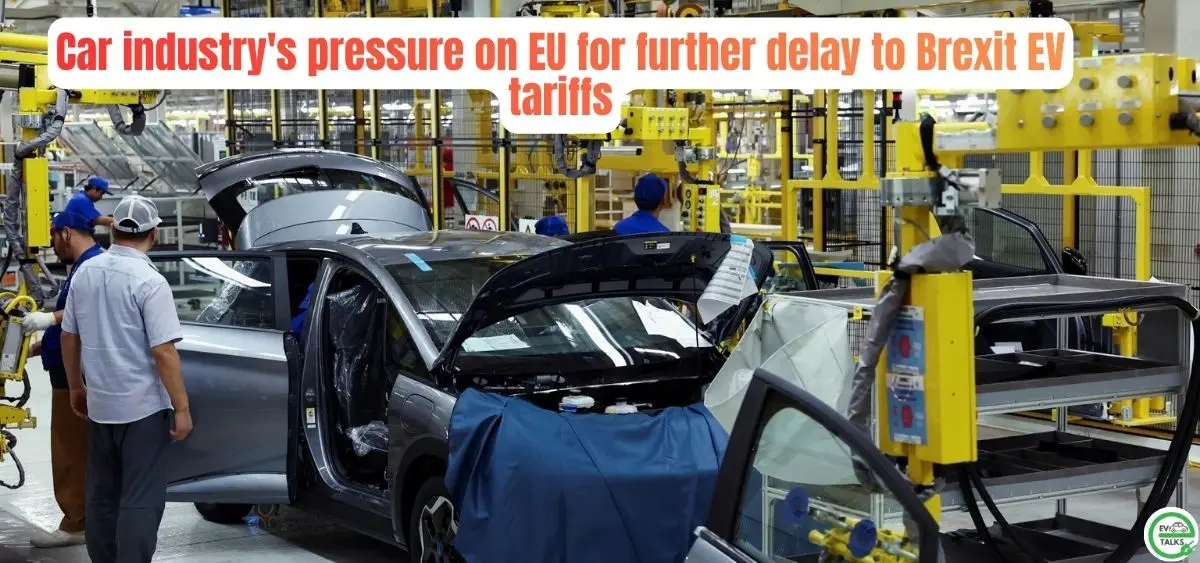

The Car industry’s pressure on EU officials for another extension of Brexit-related electric vehicle (EV) trade rules has intensified as manufacturers warn they are unlikely to meet the strict local-content requirements set to take effect on 1 January 2027. Automotive groups from both the United Kingdom and the European Union are jointly urging the European Commission to suspend the tariffs for a second time to protect the growing EV market.
Without additional flexibility, electric vehicles traded between the UK and EU could face a 10% tariff, potentially increasing prices for consumers and slowing the transition to cleaner transportation.

Why are the Rules of Origin Creating Challenges?
Under the EU-UK Trade and Cooperation Agreement (TCA), electric vehicles must meet specific “rules of origin” requirements to qualify for tariff-free trade. By 2027, at least 55% of a vehicle’s value must originate within the UK or EU. Additionally, 70% of the battery pack and 65% of the battery cell must be produced locally.
These requirements were introduced as part of the 2020 Brexit agreement to encourage investment in domestic battery manufacturing. However, the industry argues that several unforeseen disruptions, including the Covid-19 pandemic and semiconductor shortages linked to geopolitical tensions, have delayed the development of local battery supply chains.
Battery Production Falling Far Short of Expectations
The Car industry’s pressing issues for EU policymakers highlight a significant gap between original expectations and current realities. When the tariff rules were first postponed, industry forecasts suggested that around 60% of batteries used across vehicle segments would be produced in Europe by 2027.
However, current estimates indicate that less than 20% of batteries will be manufactured within the EU by the deadline. While UK production levels are somewhat higher, they remain below the targets needed to comply with the agreement.
Industry leaders argue that battery manufacturing in Europe remains costly, with production expenses estimated to be about 30% higher than in China. Furthermore, establishing a complete battery supply chain—from mining raw materials such as lithium to refining and manufacturing battery cells—requires substantial investment and years of development.
Industry Warns of Competitive Risks
The Car industry pressing EU authorities comes at a challenging time for European automakers. The sector is already dealing with slower consumer demand, rising production costs, and increasing competition from Chinese EV manufacturers benefiting from large-scale production and government support.
Industry representatives believe that imposing tariffs on EVs traded between the UK and EU would undermine efforts to encourage consumers to adopt electric vehicles. They are calling for a pragmatic solution that protects automotive investment, supports battery manufacturing growth, and preserves the competitiveness of Europe’s automotive sector.
What Happens Next?
The Car industry is pressing EU leaders to look toward ongoing EU-UK discussions for a resolution. The European Commission has confirmed it remains in regular contact with stakeholders and is assessing the industry’s preparedness to meet the rules of origin requirements.
With the 2027 deadline approaching and battery production targets still far from being achieved, the future of tariff-free EV trade between the UK and EU remains uncertain. The outcome of these negotiations could play a crucial role in shaping Europe’s electric vehicle market and long-term automotive competitiveness.

Related Articles: