The Top 5 Electric Sedans in India in 2026 are the Tata Tigor EV, BYD Seal, Mercedes-Benz CLA Electric, BMW i5 Long Wheelbase, and Porsche Taycan. These electric cars offer different combinations of affordability, driving range, advanced technology, passenger comfort, and high-performance electric mobility.
India’s electric vehicle market is growing rapidly, and electric sedans are becoming attractive alternatives to conventional petrol and diesel cars. While electric SUVs dominate many buying decisions, sedans offer several advantages, including aerodynamic designs, comfortable driving dynamics, premium interiors, and efficient energy consumption.
From the affordable Tata Tigor EV to the performance-focused Porsche Taycan, electric sedan buyers now have options across multiple price categories.
Buyers considering different body styles can also explore the best electric cars in India to compare more affordable and premium EV options.
According to vehicle registration data, India’s electric passenger vehicle market crossed 3 lakh retail registrations between January 1 and November 9, 2026, reflecting growing consumer interest in electric mobility.
However, choosing the right electric sedan involves more than comparing battery capacity and advertised driving range. Charging infrastructure, real-world efficiency, service availability, safety, and total ownership costs also matter.
This guide examines the five leading electric sedans in India, comparing their specifications, prices, charging capabilities, features, and suitability for different buyers.
Electric Sedans in India: Price and Range Comparison
The following table compares five electric sedans across different price segments.
| Electric Sedan | Ex-Showroom Price | Battery Capacity | Claimed Range |
|---|---|---|---|
| Tata Tigor EV | ₹12.49–13.75 lakh | 26 kWh | 315 km (ARAI) |
| BYD Seal | ₹41.50–53.65 lakh | 61.44–82.56 kWh | Up to 650 km (NEDC) |
| Mercedes-Benz CLA Electric | ₹56.50–64 lakh | 58–85.5 kWh | Up to 792 km (WLTP) |
| BMW i5 LWB | ₹79.60 lakh | 81.6 kWh | 669 km (MIDC) |
| Porsche Taycan | From approximately ₹2.01 crore for the listed 4S | Up to 105 kWh (gross) | Variant-dependent (WLTP) |
1. Tata Tigor EV
The Tata Tigor EV remains one of India’s most accessible electric sedans, offering a practical combination of affordability, low operating costs, and everyday usability.
With a starting ex-showroom price of ₹12.49 lakh, the Tigor EV targets budget-conscious families, office commuters, and buyers switching from petrol-powered compact sedans.
Its compact dimensions make it particularly suitable for crowded Indian cities, where parking space and maneuverability are important.
Budget-conscious buyers can also compare other electric cars under ₹13 lakh in India before choosing their first EV.
Tata Tigor EV Specifications
| Specification | Details |
|---|---|
| Starting price | ₹12.49 lakh |
| Top variant price | ₹13.75 lakh |
| Battery capacity | 26 kWh |
| Electric motor power | 55 kW (approximately 75 PS) |
| Maximum torque | 170 Nm |
| Claimed range | 315 km (ARAI) |
| DC fast charging | 10–80% in approximately 59 minutes |
| Boot space | 316 litres |
| Drivetrain | Front-wheel drive |
| Seating capacity | 5 |
Performance and Driving Experience
The Tata Tigor EV focuses on comfortable urban transportation rather than outright performance.
Its electric motor produces immediate torque, making acceleration smooth in stop-and-go traffic.
Drivers also benefit from quiet operation, regenerative braking, and the convenience of automatic transmission-like driving without conventional gear changes.
Although its certified range reaches 315 km, actual driving distance depends on traffic conditions, air-conditioning usage, vehicle load, and driving speed.
For planning purposes, buyers can consider approximately 180–240 km under varying everyday conditions rather than assuming the full certified range will always be available.
Features and Safety
Depending on the variant, the Tigor EV offers a touchscreen infotainment system, smartphone connectivity, automatic climate control, connected-car features, and electrically adjustable mirrors.
The vehicle received four-star adult and child occupant protection ratings in Global NCAP’s 2021 crash tests.
However, this rating applies to the tested vehicle specification and assessment protocol. Buyers should separately verify the safety equipment offered on their preferred variant.
Who Should Buy the Tata Tigor EV?
The Tigor EV is particularly suitable for:
- Daily office commuters travelling 30–80 km.
- Families looking for an affordable electric sedan.
- Buyers with dedicated home charging.
- Urban users prioritizing affordable maintenance and running costs.
Expert verdict: The Tata Tigor EV offers a sensible entry into electric sedan ownership. Its main limitation is its relatively small battery, making it less convenient for frequent long-distance highway journeys.
2. BYD Seal
The BYD Seal is one of the most compelling electric sedans available in India’s premium EV market.
It combines a sleek aerodynamic body, powerful electric motors, advanced battery technology, and a feature-rich interior.
Starting at ₹41.50 lakh, the BYD Seal provides a level of performance and technology normally associated with considerably more expensive luxury vehicles.
BYD Seal Variants, Battery and Range
| Variant | Battery | Claimed Range | Ex-Showroom Price |
|---|---|---|---|
| Dynamic | 61.44 kWh | 510 km | ₹41.50 lakh |
| Premium | 82.56 kWh | 650 km | ₹46.20 lakh |
| Performance | 82.56 kWh | 580 km | ₹53.65 lakh |
Ranges are NEDC-certified figures. Prices are indicative.
Performance and Battery Technology
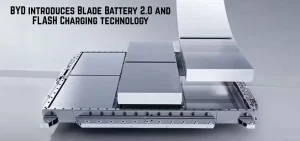
One of the BYD Seal’s biggest strengths is its Blade Battery technology.
The battery uses lithium iron phosphate (LFP) chemistry, which is known for thermal stability, durability, and avoiding nickel and cobalt in its cathode composition.
For a deeper understanding of the differences in battery safety, lifespan, and performance, read our LFP vs. NMC battery comparison.
The Seal also uses Cell-to-Body construction, integrating the battery structure into the vehicle body.
This improves packaging efficiency and contributes to structural rigidity.
The Performance variant features dual-motor all-wheel drive and can accelerate from 0 to 100 km/h in approximately 3.8 seconds.
That makes it one of the quickest electric sedans available near its price category.
Interior, Technology and Safety
Important features include:
- 15.6-inch rotating touchscreen infotainment system.
- Premium Dynaudio sound system.
- Panoramic glass roof.
- Advanced driver assistance systems.
- 360-degree camera.
- Ventilated front seats.
- Vehicle-to-Load capability for compatible external electrical devices.
The Seal also offers a premium cabin layout with a strong emphasis on digital controls and passenger comfort.
Which BYD Seal Variant Offers the Best Value?
The Premium variant is arguably the most balanced choice.
It combines the larger 82.56 kWh battery with the highest advertised range in the lineup, without the additional cost of the Performance model.
The AWD Performance model is more suitable for buyers who prioritize acceleration and driving excitement over maximum efficiency.
Expert verdict: For buyers spending approximately ₹45–50 lakh, the BYD Seal Premium deserves serious consideration. Its combination of range, performance, battery technology, and equipment makes it a strong premium electric sedan.
3. Mercedes-Benz CLA Electric
The Mercedes-Benz CLA Electric represents a major development in luxury electric mobility.
Built on the Mercedes-Benz Modular Architecture (MMA), the CLA Electric combines aerodynamic efficiency, advanced software, and high-voltage charging technology.
To understand how advanced electrical systems improve efficiency and charging performance, explore Mercedes-Benz EV technology.
Its headline specification is a claimed driving range of up to 792 km under the WLTP testing cycle.
This makes the long-range CLA particularly attractive for buyers who want to reduce charging stops during intercity travel.
Mercedes-Benz CLA Electric Specifications
| Specification | CLA 200 | CLA 250+ |
|---|---|---|
| Indicative price | From ₹56.50 lakh | Around ₹59 lakh |
| Battery capacity | 58 kWh usable | Approximately 85–85.5 kWh |
| Claimed range | Up to 542 km WLTP | Up to 792 km WLTP |
| Drivetrain | Rear-wheel drive | Rear-wheel drive |
| Maximum DC charging | 200 kW | Up to 320 kW |
| 0–100 km/h | 7.5 seconds | 6.7 seconds |
The CLA 250+ Launch Edition is positioned at approximately ₹64 lakh.
Why Is the Mercedes CLA Electric So Efficient?
The CLA Electric benefits from an aerodynamic body and an advanced electric powertrain.
Its two-speed transmission helps balance low-speed efficiency with high-speed performance.
The long-range version supports an 800-volt electrical architecture, allowing high charging power when connected to a compatible DC fast charger.
Under suitable conditions, the CLA 250+ can recover a substantial amount of driving range during a short charging stop.
However, maximum charging performance depends on charger capability, battery temperature, and state of charge.
Interior and Technology
The CLA introduces Mercedes-Benz’s MB.OS operating system, bringing advanced digital services and an AI-powered virtual assistant into the cabin.
Other highlights include
- MBUX infotainment technology.
- Available Superscreen configuration.
- Wireless smartphone connectivity.
- Panoramic glass roof.
- Advanced driver assistance features.
- Digital navigation and charging route planning.
- Premium materials and electrically adjustable seating.
Is the Mercedes CLA Electric Suitable for Indian Highways?
Yes, particularly the long-range CLA 250+.
Its efficient powertrain and large battery make it suitable for highway travel between major cities.
Nevertheless, buyers should check high-power charging availability on their regular routes.
Expert verdict: The Mercedes-Benz CLA 250+ is a strong choice for buyers prioritising range, efficiency, technology, and premium driving comfort. Its advanced charging capability becomes most useful where compatible fast-charging infrastructure is available.
4. BMW i5 Long Wheelbase
The BMW i5 Long Wheelbase brings a distinctive approach to India’s premium electric sedan market.
Instead of focusing solely on extreme acceleration, BMW has prioritised rear-seat space, refinement, and executive comfort.
Launched in India in September 2026, the locally assembled i5 LWB is particularly relevant to buyers who frequently travel with a chauffeur.
Its extended wheelbase provides additional legroom, making the vehicle suitable for business executives and luxury-focused families.
BMW i5 LWB Specifications
| Specification | Details |
|---|---|
| Ex-showroom price | ₹79.60 lakh |
| Variant | eDrive35L M Sport |
| Battery capacity | 81.6 kWh gross |
| Motor output | 268 hp |
| Maximum torque | 410 Nm |
| Claimed range | 669 km (MIDC) |
| 0–100 km/h | 6.7 seconds |
| Wheelbase | 3,105 mm |
| Maximum DC charging | 160 kW |
| DC charging time | 10–80% in approximately 33 minutes |
Luxury and Comfort Features
The BMW i5 LWB combines the brand’s signature driving dynamics with a spacious cabin.
Key highlights include:
- BMW Curved Display with digital instrumentation.
- Large central infotainment touchscreen.
- Premium interior upholstery.
- Panoramic glass roof.
- Rear-axle air suspension.
- Multi-zone climate control.
- Advanced parking and driving assistance systems.
- High-quality audio and connected-car technology.
The rear-axle air suspension contributes to passenger comfort, especially when travelling over uneven road surfaces.
Why Does the Long Wheelbase Matter?
The longer wheelbase creates additional space between the front and rear axles.
For Indian buyers, that translates into improved rear legroom and a more relaxed seating experience.
This is especially valuable in cities such as Delhi, Mumbai, Bengaluru, and Hyderabad, where executives may spend considerable time travelling in traffic.
The vehicle also offers sufficient performance for highway overtaking without compromising the refined character expected from a luxury sedan.
Expert verdict: The BMW i5 LWB is particularly attractive for buyers who value rear-seat comfort, premium features, and electric refinement. It is better understood as an electric executive sedan than a dedicated performance machine.
5. Porsche Taycan
The Porsche Taycan demonstrates how electric powertrains can deliver exceptional driving performance.
Unlike conventional luxury sedans, the Taycan places considerable emphasis on handling precision, acceleration, braking, and driver engagement.
Its low-slung design, sophisticated chassis, and advanced electric architecture give it the character of a genuine sports car.
Porsche Taycan Specifications
| Specification | Details |
|---|---|
| Indicative starting price | ₹2.01 crore for the currently listed Taycan 4S |
| Taycan Turbo price | Approximately ₹2.74 crore |
| Battery capacity | Up to 105 kWh gross |
| Electrical architecture | 800-volt |
| Maximum DC charging | Up to 320 kW on compatible configurations |
| Taycan 4S acceleration | 0–100 km/h in 3.7 seconds |
| Taycan Turbo acceleration | 0–100 km/h in 2.7 seconds |
| Drivetrain | Variant-dependent; AWD on listed 4S and Turbo |
| Claimed range | Varies by variant and WLTP specification |
Performance and Driving Dynamics
The Taycan combines immediate electric torque with carefully engineered chassis dynamics.
Its sophisticated suspension and low centre of gravity help deliver excellent stability and cornering capability.
A distinctive feature is its two-speed transmission on the rear axle, designed to combine strong acceleration with efficient high-speed driving.
Higher-performance variants provide sports-car acceleration while maintaining the comfort and usability of a four-door sedan.
Charging and Technology
The Taycan’s 800-volt architecture supports extremely high charging speeds under ideal conditions.
Actual charging performance depends on more than peak power, as explained in our guide to EV charging time.
Depending on the battery and configuration, compatible DC fast chargers can significantly reduce charging stops.
Inside, the Taycan features a driver-focused digital cockpit, configurable displays, premium materials, and optional advanced suspension technology.
However, several high-end features are optional and can substantially increase the final purchase price.
Who Should Buy the Porsche Taycan?
The Taycan is designed for buyers who prioritise:
- Exceptional acceleration and handling.
- Premium sports-car engineering.
- Advanced electric drivetrain technology.
- Exclusive design and customisation.
- A luxury performance driving experience.
Expert verdict: The Porsche Taycan is the most performance-focused choice on this list. Its purchase and maintenance costs are substantial, but its appeal lies in driving precision and engineering sophistication rather than simply reducing running expenses.
Which Electric Sedan Is Best in India?
There is no single electric sedan that suits every buyer. The best option depends on budget, driving requirements, charging access, and comfort preferences.
| Buyer Requirement | Recommended Electric Sedan |
|---|---|
| Best affordable electric sedan | Tata Tigor EV |
| Best value-oriented premium sedan | BYD Seal Premium |
| Best for maximum claimed range | Mercedes-Benz CLA 250+ |
| Best for rear-seat luxury | BMW i5 LWB |
| Best for high-performance driving | Porsche Taycan |
Buyers should prioritise how they actually use their vehicle rather than selecting a model solely because it offers the largest battery or highest claimed range.
Electric Sedan Charging Cost in India
One of the biggest advantages of electric sedan ownership is the possibility of significantly lower energy costs compared with conventional petrol vehicles.
Our detailed guide to electric car charging explains home charging, charging speeds, electricity expenses, and practical charging considerations in India.
However, charging expenses depend on battery capacity, electricity tariffs, charging losses, and the charging method.
Estimated Home Charging Costs
The following calculations assume electricity costs ₹8 per unit and approximately 10% additional energy consumption due to charging losses.
| Electric Sedan | Battery Capacity Used | Estimated Full Charging Cost |
|---|---|---|
| Tata Tigor EV | 26 kWh | ₹229 |
| BYD Seal Premium | 82.56 kWh | ₹727 |
| Mercedes CLA 250+ | 85.5 kWh | ₹752 |
| BMW i5 LWB | 81.6 kWh | ₹718 |
| Porsche Taycan | 105 kWh | ₹924 |
These are illustrative estimates based on nominal or gross battery figures, not guaranteed wall-to-wheel measurements. Actual costs vary with usable battery capacity, charging efficiency, and local tariffs.
Electric Sedan vs. Petrol Sedan Running Cost
Consider an electric sedan consuming approximately 15 kWh per 100 km.
At ₹8 per kWh, its electricity expense is approximately ₹1.20 per kilometre, excluding charging losses.
Now consider a petrol sedan delivering 15 km/litre with petrol costing ₹100 per litre.
Its fuel expense would be approximately ₹6.67 per kilometre.
| Parameter | Electric Sedan | Petrol Sedan |
|---|---|---|
| Energy consumption | 15 kWh/100 km | 15 km/litre |
| Energy price | ₹8/kWh | ₹100/litre |
| Estimated running cost | ₹1.20/km | ₹6.67/km |
| Cost for 1,000 km | ₹1,200 | ₹6,667 |
| Cost for 10,000 km | ₹12,000 | ₹66,667 |
Under these assumptions, the electric sedan saves approximately ₹54,667 in energy expenses over 10,000 km, before accounting for charging losses and other ownership expenses.
Premium EV owners should also consider insurance, tyre replacement, depreciation, and specialist servicing when calculating total ownership costs.
Expert Insight from Electric Vehicle Talks
India’s electric sedan market is entering an interesting stage of development.
Electric SUVs continue to attract strong interest, but sedans remain relevant for buyers who value aerodynamic efficiency, highway refinement, and premium road presence.
One important trend is the increasing use of dedicated EV platforms.
These platforms allow manufacturers to optimise battery placement, cabin packaging, weight distribution, and overall efficiency.
Another development is the shift towards faster charging architectures, particularly in premium models.
However, the fastest-charging vehicle is not necessarily the most convenient EV to own.
A buyer with dependable overnight home charging may find a modestly powered electric sedan more practical than a luxury model that depends on frequent public fast charging.
For Indian buyers, the most important recommendation is to match battery size and charging requirements with actual driving habits.
Someone travelling 40 km daily may not need a battery capable of covering several hundred kilometres.
Conversely, buyers frequently travelling between cities should prioritise efficient highway performance and dependable charging access.
The industry’s long-term opportunity lies in bringing these benefits to more affordable electric sedans rather than concentrating innovation exclusively in luxury segments.
People Also Ask
1. Which is the best electric sedan in India in 2026?
The BYD Seal is a strong overall choice for premium electric sedan buyers because of its combination of price, range, performance, and technology. The Tata Tigor EV is better suited to budget-conscious commuters, while the Mercedes-Benz CLA Electric offers a higher claimed driving range.
2. Which is the cheapest electric sedan in India?
The Tata Tigor EV is one of the most affordable electric sedans available to private buyers in India. Its ex-showroom price starts at approximately ₹12.49 lakh, with a 26 kWh battery and a claimed range of 315 km.
3. Which electric sedan has the highest range in India?
Among the five models compared here, the Mercedes-Benz CLA 250+ has the highest advertised range at up to 792 km under the WLTP testing cycle. Real-world driving range will vary with speed, weather, and driving conditions.
4. Is the BYD Seal better than the Mercedes-Benz CLA Electric?
The BYD Seal generally offers stronger value for money, especially for buyers prioritising performance and features. The Mercedes-Benz CLA Electric places greater emphasis on efficiency, digital technology, and premium brand experience. The better choice depends on budget and ownership priorities.
5. Are electric sedans suitable for long-distance travel in India?
Yes. Modern long-range electric sedans can handle highway journeys comfortably when charging stops are planned properly. Buyers should consider charger reliability, real-world highway efficiency, and charging speed rather than relying only on advertised range.
6. How long does an electric sedan battery last?
Electric vehicle batteries are generally designed for many years of operation. Their lifespan depends on battery chemistry, temperature exposure, charging habits, and usage. Buyers should review the manufacturer’s battery warranty and battery health coverage before purchasing.
7. Are electric sedans cheaper to maintain than petrol sedans?
Electric sedans generally require fewer routine powertrain maintenance operations because they do not need engine oil changes, spark plugs, or conventional engine servicing. However, premium EVs can still have substantial expenses for tyres, suspension components, insurance, and specialist repairs.
FAQs about Top 5 Electric Sedans in India
1. What is the starting price of electric sedans in India?
Electric sedan prices vary significantly. The Tata Tigor EV starts at around ₹12.49 lakh, while premium models such as the BYD Seal start above ₹40 lakh. Luxury and performance-focused electric sedans can cost considerably more.
2. Which electric sedan is best for daily office commuting?
The Tata Tigor EV is a practical option for daily commuting, particularly for buyers who can charge at home. Its compact dimensions, quiet operation, and relatively low energy consumption make it suitable for regular urban journeys.
3. Can I charge an electric sedan at home?
Yes. Most electric sedans support AC home charging. Charging time depends on the vehicle’s onboard charger, battery capacity, electrical supply, and installed charging equipment. A professionally installed dedicated charging point is recommended.
4. Which electric sedan offers the fastest acceleration?
Among the models compared, the Porsche Taycan Turbo is one of the quickest, reaching 100 km/h in approximately 2.7 seconds. The BYD Seal Performance is also impressively quick, achieving 0–100 km/h in approximately 3.8 seconds.
5. Do electric sedans need regular servicing?
Yes, although their maintenance requirements differ from petrol and diesel vehicles. Regular inspections typically include tyres, brakes, suspension, cooling systems, battery health, software, and electrical components.
6. Should I buy an electric sedan or an electric SUV?
An electric sedan can be attractive for buyers prioritising aerodynamic efficiency, comfortable highway driving, and a lower seating position. Electric SUVs may be more practical for buyers seeking higher ground clearance, easier entry and exit, and greater luggage flexibility.
Conclusion
The Top 5 Electric Sedans in India in 2026 demonstrate how rapidly electric mobility is evolving across different price segments.
The Tata Tigor EV offers an affordable entry point into electric sedan ownership, while the BYD Seal combines premium features, strong performance, and competitive pricing.
The Mercedes-Benz CLA Electric pushes efficiency and long-distance capability forward, whereas the BMW i5 Long Wheelbase focuses on executive comfort and luxury.
At the top of the performance spectrum, the Porsche Taycan shows that electric vehicles can deliver exceptional driving engagement without conventional combustion engines.
However, selecting the right electric sedan is about more than choosing the most impressive specifications.
Real-world range, charging convenience, service availability, safety, and long-term ownership costs ultimately determine whether a vehicle fits an individual’s lifestyle.
As India’s charging infrastructure develops and electric vehicle technology becomes more accessible, electric sedans are likely to play an increasingly important role in the country’s transition towards cleaner transportation.
For the latest electric car comparisons, EV technology explanations, charging guides, and practical buying advice, explore more informative content on Electric Vehicle Talks.
Related Article: