
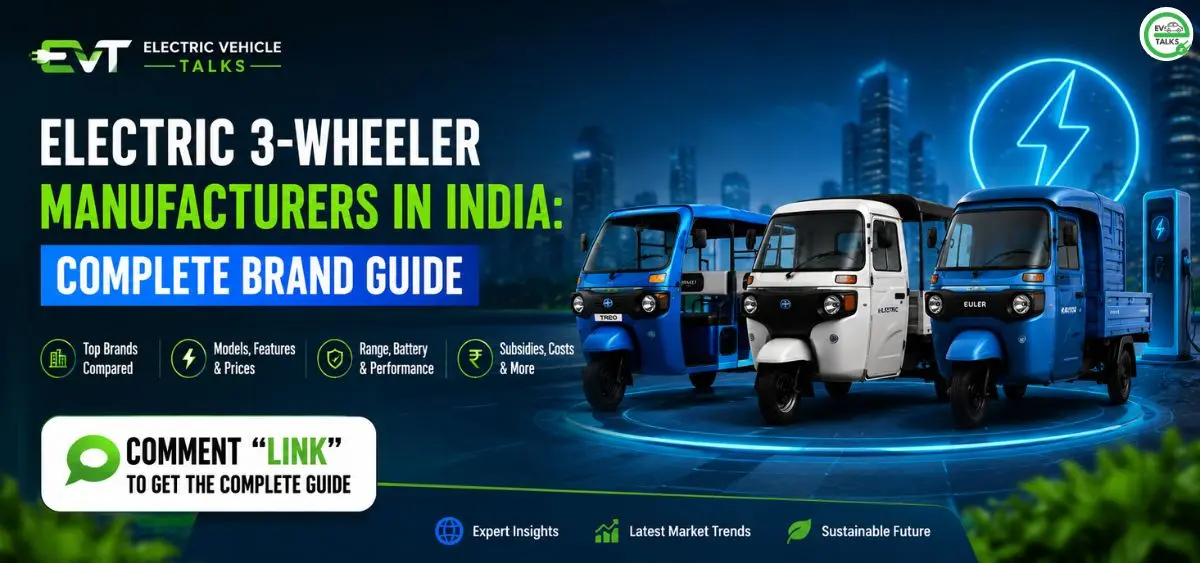

India has become one of the world’s largest markets for electric three-wheelers, driven by rising fuel prices, supportive government policies, and the growing demand for affordable last-mile transportation. Today, several electric 3-wheeler manufacturers in India are transforming urban and rural mobility by offering reliable passenger autos and cargo vehicles that are cleaner, quieter, and significantly cheaper to operate than conventional CNG or diesel models.
Whether you’re a fleet operator, delivery business, driver, or EV enthusiast, understanding the strengths of each manufacturer can help you make an informed investment. This guide explores the leading brands, compares their offerings, and explains why electric three-wheelers are becoming the backbone of India’s sustainable mobility ecosystem.
Why Are Electric Three-Wheelers Growing So Fast in India?
Electric three-wheelers have emerged as one of India’s biggest EV success stories. Unlike electric cars, they serve practical commercial purposes every day—from transporting passengers through crowded city streets to delivering groceries, e-commerce parcels, and industrial goods.
Several factors are accelerating adoption:
- Lower operating costs than petrol, diesel, or CNG vehicles
- Rising fuel prices
- Government EV incentives
- Growth of e-commerce and last-mile delivery
- Expansion of charging infrastructure
- Improved lithium-ion battery technology
- Increasing environmental awareness
According to industry reports, India remains the world’s largest electric three-wheeler market by annual sales, with commercial operators leading the transition toward zero-emission mobility.
Top Electric 3-Wheeler Manufacturers in India
The Indian market includes established automotive giants alongside innovative EV startups. Each manufacturer focuses on different customer needs, including passenger transport, cargo logistics, and fleet operations.
| Manufacturer | Popular Models | Passenger | Cargo | Key Strength |
|---|---|---|---|---|
| Mahindra Last Mile Mobility | Treo, Treo Zor, Zor Grand, e-Alfa Cargo | ✓ | ✓ | Market leader with nationwide service |
| Bajaj Auto | RE E-TEC, Maxima XL Cargo E-TEC | ✓ | ✓ | Trusted brand with extensive dealership network |
| Piaggio Vehicles | Ape E-City, Ape E-Xtra | ✓ | ✓ | Proven commercial reliability |
| Euler Motors | HiLoad EV | — | ✓ | High payload and long range |
| Kinetic Green | Safar Smart, Safar Jumbo | ✓ | ✓ | Diverse product portfolio |
| Montra Electric | Super Cargo | — | ✓ | Fleet-focused commercial solutions |
| Omega Seiki Mobility | Rage+, Stream City | ✓ | ✓ | Strong logistics segment presence |
| YC Electric Vehicles | Yatri Series | ✓ | Limited | Popular e-rickshaw manufacturer |
| Saera Electric | Mayuri, L5 Series | ✓ | ✓ | Affordable passenger mobility |
| Altigreen | neEV Series | — | ✓ | Premium cargo electric vehicles |
Leading Electric 3-Wheeler Manufacturers in India
1. Mahindra Last Mile Mobility
Mahindra has been one of the pioneers of electric mobility in India and remains the market leader in the electric three-wheeler segment. Its vehicles are widely used by commercial drivers, fleet operators, and logistics companies across the country.
Popular Passenger Models
- Treo
- Treo Plus
- e-Alfa Mini
Cargo Models
- Treo Zor
- Zor Grand
- e-Alfa Cargo
Why Buyers Prefer Mahindra
- Proven reliability
- Excellent resale value
- Strong after-sales support
- Wide availability of spare parts
- Comfortable cabin for daily commercial operations
The Treo series has become one of India’s most successful electric auto-rickshaw platforms, offering a balance of performance, low maintenance costs, and dependable range.
2. Bajaj Auto
As India’s largest conventional three-wheeler manufacturer, Bajaj Auto has successfully expanded into electric mobility through the RE E-TEC and Maxima XL Cargo E-TEC.
The company’s experience in manufacturing commercial vehicles gives it a significant advantage in build quality and service support.
Popular Models
- RE E-TEC
- Maxima XL Cargo E-TEC
Highlights
- Trusted nationwide brand
- Large dealership network
- Comfortable passenger cabin
- Reliable cargo solutions
- Competitive operating costs
For fleet owners already familiar with Bajaj vehicles, transitioning to electric models is often seamless due to the extensive service ecosystem.
3. Piaggio Vehicles
Piaggio introduced the iconic Ape range to India decades ago, and today its electric portfolio continues to serve businesses looking for dependable commercial mobility.
Popular Models
- Ape E-City
- Ape E-Xtra
Key Advantages
- Strong brand reputation
- Durable chassis
- Efficient electric powertrain
- Suitable for urban logistics
- Comfortable passenger configuration
The Ape E-Xtra has gained popularity among logistics companies because of its practical payload capacity and dependable performance.
4. Euler Motors
Euler Motors represents the new generation of Indian EV manufacturers focused entirely on commercial electric mobility.
Unlike legacy manufacturers, Euler has designed its products specifically for intensive cargo applications.
Flagship Model
- HiLoad EV
Key Features
- High payload capacity
- Long driving range
- High-torque electric motor
- Excellent ground clearance
- Designed for demanding commercial routes
Its vehicles are increasingly used by logistics providers, grocery delivery companies, and e-commerce businesses operating in metropolitan cities.
5. Kinetic Green
Kinetic Green has successfully leveraged the trusted Kinetic brand name to establish itself in India’s commercial EV market.
The company offers both passenger and cargo electric three-wheelers designed for urban and semi-urban transportation.
Passenger Models
- Safar Smart
- Safar Super DX
Cargo Models
- Safar Jumbo
- Safar Shakti
Why It Stands Out
- Wide product lineup
- Affordable ownership
- Growing dealer network
- Focus on commercial users
6. Montra Electric
Backed by the Murugappa Group, Montra Electric has rapidly expanded its presence in India’s commercial EV sector.
Its electric cargo three-wheelers emphasize productivity, durability, and lower total cost of ownership for fleet operators.
Key strengths include:
- High payload capability
- Fleet management focus
- Robust engineering
- Competitive battery technology
- Nationwide expansion strategy
7. Omega Seiki Mobility
Omega Seiki Mobility has positioned itself as a technology-driven commercial EV manufacturer serving logistics, retail, and urban delivery businesses.
Popular offerings include the following:
- Rage+
- Stream City
Its vehicles are increasingly adopted by courier companies, e-commerce firms, and municipal service providers.
8. YC Electric Vehicles
Headquartered in New Delhi, YC Electric is one of India’s highest-volume electric rickshaw manufacturers, particularly in northern and eastern states.
Popular Series
- Yatri
Strengths
- Affordable pricing
- Strong regional dealer network
- Reliable passenger transport
- Practical design for daily operations
YC Electric has become a preferred choice for independent auto-rickshaw operators looking for low-cost electric mobility.
9. Saera Electric
Saera Electric manufactures the well-known Mayuri range of electric three-wheelers.
Its vehicles are widely used for passenger transport in Tier-2 and Tier-3 cities where affordability and easy maintenance are key purchase considerations.
Popular models include:
- Mayuri
- L5 Series
10. Altigreen
Bengaluru-based Altigreen focuses on premium commercial electric vehicles engineered specifically for cargo applications.
Unlike many manufacturers that adapt existing platforms, Altigreen has developed purpose-built EVs optimized for Indian logistics operations.
Its vehicles are increasingly deployed by:
- E-commerce companies
- FMCG distributors
- Fleet operators
- Urban delivery businesses
The company’s emphasis on performance, efficiency, and intelligent fleet technology makes it one of the fastest-growing names in India’s commercial EV sector.
How to Choose the Right Electric Three-Wheeler Manufacturer
Selecting the right manufacturer involves more than comparing prices. Buyers should evaluate the complete ownership experience.
Consider the following factors before making a purchase:
- Intended use (passenger or cargo)
- Daily driving distance
- Battery chemistry and warranty
- Charging time and charging options
- Payload requirements
- Availability of service centres
- Spare parts network
- Financing options
- Government subsidies available in your state
- Brand reputation and resale value
For commercial operators, total cost of ownership over five years is often a more important metric than the initial purchase price.
As EV adoption continues to accelerate, independent research and expert resources from Electric Vehicle Talks can help buyers stay informed about new launches, policy updates, charging infrastructure, and ownership best practices.
Benefits of Electric Three-Wheelers in India
The rapid growth of electric 3-wheeler manufacturers in India is not just about replacing conventional auto-rickshaws—it is about creating a more sustainable and profitable transportation ecosystem. For commercial operators, every rupee saved on fuel directly improves daily earnings, making electric three-wheelers an attractive long-term investment.
1. Significantly Lower Running Costs
Electricity is substantially cheaper than petrol, diesel, or CNG. Depending on local electricity tariffs and battery size, an electric three-wheeler typically costs ₹0.60–₹1.20 per kilometre to operate, whereas conventional fuel-powered models can cost ₹2.50–₹4.50 per kilometre.
For drivers covering 100–150 km daily, these savings can amount to thousands of rupees every month.
2. Lower Maintenance Requirements
Electric powertrains have fewer moving parts than internal combustion engines. There are no engine oil changes, clutch replacements, fuel filters, or exhaust systems to maintain.
Routine maintenance generally includes the following:
- Brake inspection
- Tyre maintenance
- Suspension checks
- Battery health monitoring
- Software diagnostics (on connected EVs)
This results in reduced downtime and lower servicing expenses over the vehicle’s lifespan.
3. Environmentally Friendly Mobility
Electric three-wheelers produce zero tailpipe emissions, helping reduce urban air pollution and greenhouse gas emissions. They also operate much more quietly than conventional vehicles, contributing to lower noise pollution in densely populated cities.
4. Government Support
The Indian government continues to promote electric mobility through financial incentives, manufacturing support, and charging infrastructure development. While incentive structures evolve, policies such as the PM E-DRIVE Scheme, state EV policies, reduced registration fees, and lower road taxes have improved the affordability of electric commercial vehicles.
5. Better Driving Experience
Many drivers appreciate electric three-wheelers for their
- Instant torque
- Smooth acceleration
- Minimal vibrations
- Quiet operation
- Easy maneuverability in congested urban traffic
These characteristics reduce driver fatigue during long working hours.
Challenges of Electric Three-Wheelers
Although the market has matured significantly, buyers should be aware of certain practical challenges before making a purchase.
a) Limited Public Charging in Some Regions
Major metropolitan areas are witnessing rapid growth in charging infrastructure, but smaller towns and rural locations may still have limited public charging options. Businesses operating fixed routes often overcome this challenge by installing dedicated charging points at depots or homes.
b) Higher Upfront Purchase Price
Electric three-wheelers generally cost more initially than comparable petrol or CNG models. However, the higher purchase price is often offset over time through lower fuel and maintenance costs.
c) Battery Replacement Costs
The battery pack is the most expensive component of an electric vehicle. While modern lithium-ion batteries are designed to last several years under normal operating conditions, replacement costs should be factored into long-term ownership planning.
d) Service Availability
Leading manufacturers have established broad service networks, but support quality can vary depending on the region. Buyers should verify the availability of authorized service centers before making a purchase.
Common Mistakes Buyers Should Avoid
Many first-time EV buyers focus only on the purchase price. A more informed decision considers the vehicle’s total cost of ownership, operational requirements, and after-sales support.
Avoid these common mistakes:
- Choosing a vehicle without calculating daily range requirements
- Ignoring payload capacity for cargo operations
- Overlooking battery warranty terms
- Not checking local service center availability
- Purchasing solely based on the lowest price
- Ignoring the charging infrastructure at the operating location
- Failing to compare financing and insurance options
A careful evaluation of these factors can prevent unexpected expenses and improve long-term satisfaction.
Passenger vs Cargo Electric Three-Wheelers
Different business needs require different vehicle configurations.
| Feature | Passenger Electric 3-Wheeler | Cargo Electric 3-Wheeler |
|---|---|---|
| Primary Use | Passenger transport | Goods delivery |
| Seating | Driver + passengers | Driver only |
| Payload | Moderate | High |
| Typical Users | Auto-rickshaw operators | E-commerce, FMCG, logistics |
| Daily Routes | Urban and suburban | Warehousing, distribution, city logistics |
| Focus | Passenger comfort | Load capacity and efficiency |
Choosing the correct category ensures higher productivity and better returns on investment.
Battery Technology Used by Electric Three-Wheeler Manufacturers in India
Battery technology has evolved rapidly over the past decade and is one of the biggest reasons for the success of India’s electric three-wheeler market.
a) Lithium-Ion Batteries
Most modern electric three-wheelers now use lithium-ion batteries due to their
- Higher energy density
- Longer lifespan
- Faster charging
- Lower maintenance
- Better efficiency
- Improved safety systems
Lithium-ion technology has become the preferred choice for commercial applications because it offers consistent performance over thousands of charging cycles.
b) LFP (Lithium Iron Phosphate)
Several manufacturers are increasingly adopting LFP battery chemistry because it offers:
- Longer cycle life
- Better thermal stability
- Enhanced safety
- Lower degradation over time
Although LFP batteries may have slightly lower energy density than some alternatives, they are well suited to India’s demanding operating conditions.
Charging Options for Electric Three-Wheelers
Charging convenience is a major advantage for commercial EV owners.
1) Home Charging
Most operators charge their vehicles overnight using a standard AC charger installed at home or in a parking area. This is the most economical and widely used charging method.
2) Depot Charging
Fleet operators often install multiple charging points at centralized depots to ensure vehicles are fully charged before beginning daily operations.
3) Public Charging
The availability of public charging stations is steadily increasing across India’s highways and urban centers. Fast-charging solutions are becoming more common, particularly for commercial fleets requiring quicker turnaround times.
Running Cost Comparison
The financial advantages of electric mobility become evident when comparing daily operating expenses.
| Expense | Electric 3-Wheeler | Petrol/CNG 3-Wheeler |
| Energy/Fuel Cost per km | ₹0.60–₹1.20 | ₹2.50–₹4.50 |
| Engine Oil | Not Required | Required |
| Regular Maintenance | Low | Moderate to High |
| Noise | Very Low | Higher |
| Tailpipe Emissions | Zero | Yes |
| Long-Term Operating Cost | Lower | Higher |
Actual costs vary depending on electricity tariffs, driving conditions, payload, and maintenance practices.
Government Incentives and Policy Support
India’s transition toward electric mobility is supported by a combination of central and state-level initiatives.
Key policy measures include the following:
- Financial incentives for eligible electric commercial vehicles under applicable government schemes
- Reduced registration charges in many states
- Lower road tax in several EV-friendly states
- Production-linked incentives encouraging domestic EV manufacturing
- Expansion of charging infrastructure through public and private investment
Several state governments also offer additional benefits, which may include purchase incentives, permit exemptions, and support for fleet electrification. Since these policies are periodically revised, buyers should verify the latest eligibility criteria before purchasing.
Market Trends Shaping India’s Electric Three-Wheeler Industry
The market is evolving rapidly, driven by technology, policy support, and changing business requirements.
Key trends include:
a) Fleet Electrification
Large logistics companies, e-commerce platforms, and retail distributors are increasingly adopting electric cargo three-wheelers to reduce operating costs and meet sustainability goals.
b) Connected Vehicle Technology
Modern electric three-wheelers now feature the following:
- GPS tracking
- Fleet management systems
- Remote diagnostics
- Battery monitoring
- Predictive maintenance alerts
These digital capabilities improve operational efficiency and reduce downtime.
c) Domestic Manufacturing
India is strengthening its EV supply chain through increased localization of batteries, motors, controllers, and power electronics. This is expected to lower production costs and improve long-term competitiveness.
d) Improved Financing
Banks and non-banking financial companies (NBFCs) are expanding financing options for electric commercial vehicles, making EV ownership more accessible to individual drivers and small businesses.
Expert Insight from Electric Vehicle Talks
From our analysis at Electric Vehicle Talks, the Indian electric three-wheeler industry has entered a new phase of maturity. Early concerns around range, reliability, and charging infrastructure are steadily being addressed through better battery technology, stronger service networks, and expanding public charging facilities.
For first-time buyers, selecting an established manufacturer with dependable after-sales support is often more valuable than choosing the lowest-priced vehicle. Fleet operators should evaluate total cost of ownership, battery warranty, charging strategy, and vehicle uptime rather than focusing solely on purchase price.
Looking ahead, advancements in battery chemistry, localized manufacturing, and connected vehicle technologies are expected to make electric three-wheelers even more efficient and cost-effective, reinforcing their role as a cornerstone of India’s sustainable mobility future.
For readers seeking independent EV news, buying guides, charging insights, and ownership resources, Electric Vehicle Talks provides practical, research-driven content to support informed decision-making throughout the EV ownership journey.
People Also Ask (PAA)
1. Which is the best electric 3-wheeler manufacturer in India?
The best manufacturer depends on your requirements. Mahindra Last Mile Mobility is widely recognized for its strong market presence and reliable passenger and cargo models. Bajaj Auto and Piaggio Vehicles offer trusted commercial solutions backed by extensive service networks, while Euler Motors, Montra Electric, and Altigreen excel in high-performance cargo applications.
2. Which electric three-wheeler is best for cargo transportation?
Cargo-focused models such as the Euler HiLoad EV, Mahindra Treo Zor, Piaggio Ape E-Xtra, Montra Super Cargo, and Altigreen neEV are designed for commercial deliveries. The ideal choice depends on payload requirements, driving range, route conditions, and after-sales support.
3. How much does an electric three-wheeler cost in India?
Prices vary based on battery capacity, vehicle type, and features. Passenger electric three-wheelers typically start from around ₹2 lakh, while premium cargo models with larger battery packs can exceed ₹5 lakh (ex-showroom). Government incentives and financing options may reduce the effective purchase cost.
4. How far can an electric three-wheeler travel on a full charge?
Most modern electric three-wheelers offer a certified range between 100 km and 180 km per charge. Real-world range depends on factors such as payload, driving style, terrain, traffic, weather, and battery condition.
5. Are electric three-wheelers cheaper to maintain?
Yes. Electric three-wheelers generally require less maintenance than petrol, diesel, or CNG models because they have fewer moving parts and do not require engine oil changes, clutch replacements, or exhaust system repairs.
6. Is charging an electric three-wheeler difficult?
Not anymore. Most owners charge their vehicles overnight using home or depot charging. Public charging infrastructure is expanding rapidly across India, making charging increasingly convenient for commercial operators.
7. Is buying an electric three-wheeler a good investment?
For businesses with high daily vehicle usage, an electric three-wheeler can provide substantial long-term savings through lower energy and maintenance costs. Evaluating total cost of ownership, warranty coverage, and service support is essential before making a purchase.
FAQs about Electric 3-Wheeler Manufacturers in India
1. Which company sells the highest number of electric three-wheelers in India?
Mahindra Last Mile Mobility has consistently been among the leading manufacturers in India’s organized electric three-wheeler market, with a strong portfolio of passenger and cargo vehicles. Best Electric Auto Rickshaws in India
2. What battery type is commonly used in electric three-wheelers?
Most modern electric three-wheelers use lithium-ion batteries, while many manufacturers are increasingly adopting Lithium Iron Phosphate (LFP) batteries due to their enhanced safety, durability, and longer cycle life.
3. Can electric three-wheelers be used in rural areas?
Yes. Improved battery range, better road capability, and expanding charging infrastructure have made electric three-wheelers suitable for many rural and semi-urban applications. However, buyers should assess local charging availability and service support before purchasing.
4. What factors should I consider before buying an electric three-wheeler?
Key considerations include the following:
- Daily travel distance
- Passenger or cargo requirements
- Battery warranty
- Charging options
- Payload capacity
- Service network
- Financing availability
- Total cost of ownership
- Brand reputation
5. Do electric three-wheelers qualify for government incentives?
Eligible vehicles may benefit from central or state government incentives, depending on the prevailing policy framework and state-specific regulations. Buyers should verify the latest eligibility criteria before purchasing.
6. How long does the battery of an electric three-wheeler last?
Most lithium-ion battery packs are designed to last several years under normal commercial use. Battery life depends on charging habits, operating conditions, maintenance, and manufacturer specifications.
7. Which electric three-wheeler is better for fleet operators?
Fleet operators should prioritize vehicles with proven reliability, comprehensive warranty coverage, widespread service support, telematics, and a low total cost of ownership. Models from established manufacturers often provide better long-term value for commercial operations.
Conclusion
India’s electric three-wheeler industry has evolved from a niche segment into one of the strongest pillars of the country’s electric mobility revolution. From passenger auto-rickshaws navigating busy city streets to cargo vehicles powering e-commerce deliveries, electric three-wheelers are transforming how people and goods move across urban and rural India.
For buyers, the most important decision is not simply choosing the lowest-priced vehicle but selecting a manufacturer that offers dependable after-sales service, a strong warranty, readily available spare parts, and a proven track record of reliability. Evaluating total cost of ownership, daily usage patterns, and charging accessibility will help maximize returns on investment.
Whether you’re an entrepreneur, fleet operator, delivery business, or first-time commercial EV buyer, today’s electric three-wheelers provide a practical, sustainable, and financially rewarding alternative to conventional fuel-powered vehicles.
To stay updated on the latest EV launches, industry news, expert buying guides, charging solutions, and ownership insights, explore the in-depth resources available at Electric Vehicle Talks.
Related Article:









