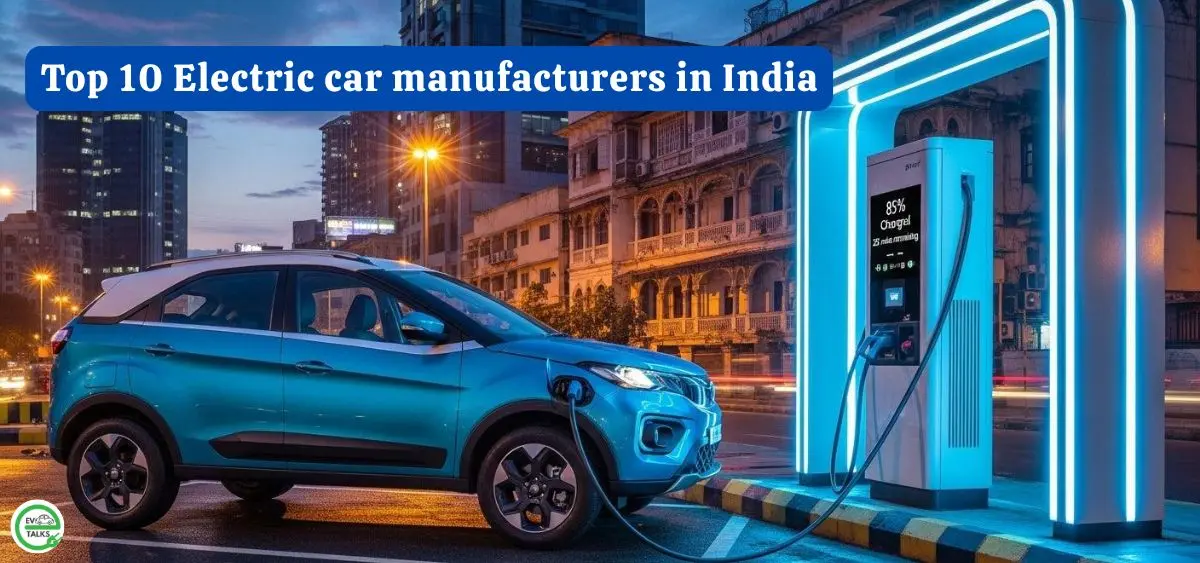

India’s electric vehicle revolution is no longer a future prediction—it’s happening right now. The Top 10 Electric car manufacturers in India are transforming how people commute by offering cleaner, smarter, and more affordable mobility solutions.
From affordable city hatchbacks to premium electric SUVs, manufacturers are investing billions in battery technology, charging infrastructure, software, and local manufacturing. Whether you’re planning to buy your first EV or simply want to understand India’s rapidly evolving electric mobility ecosystem, this guide covers everything you need to know.
Why Electric Car Manufacturers Matter More Than Ever
India has become one of the world’s fastest-growing EV markets. Rising fuel prices, government incentives, improved charging infrastructure, and increasing consumer awareness are accelerating EV adoption across the country.
According to industry estimates:
| Market Indicator | Status |
|---|---|
| EV Market Growth | One of the fastest globally |
| Passenger EV Sales | Growing annually at over 30% |
| Charging Stations | 30,000+ public charging points announced and operational/planned |
| Battery Manufacturing | Massive investments under PLI schemes |
| Government Support | FAME, PM E-Drive, state EV policies |
The competition among Electric car manufacturers in India is leading to better technology, improved safety, longer driving ranges, and lower ownership costs.
Top 10 Electric Car Manufacturers in India
1. Tata Motors
Tata Motors continues to dominate India’s passenger EV market and has played a major role in mainstream EV adoption.
- Country of Origin: India
- Founded: 1945
- Headquarters: Mumbai
- EV Leadership: India’s largest electric passenger vehicle manufacturer.
- Known For: Affordable EVs, wide dealership network, Ziptron technology, and localized manufacturing.
Popular Electric Cars
- Nexon EV
- Punch EV
- Tiago EV
- Tigor EV
- Curvv EV
- Harrier EV
Why Tata Leads
- Largest EV market share
- Extensive dealership network
- Strong after-sales support
- Growing fast-charging ecosystem
- Made-in-India battery development
Best For
- First-time EV buyers
- Families
- Fleet operators
2. Mahindra & Mahindra
Mahindra is rapidly expanding its born-electric SUV lineup while leveraging decades of SUV expertise.
- Country of Origin: India
- Founded: 1945
- Headquarters: Mumbai
- Known For: Electric SUVs, born-electric INGLO platform, commercial EVs, and innovation in electric mobility.
Popular EVs
- XUV400
- BE 6
- XEV 9e
Strengths
- SUV-focused platform
- High-performance electric architecture
- Advanced ADAS features
- Premium interiors
Mahindra’s INGLO platform represents one of India’s biggest investments in next-generation EV technology.
3. JSW MG Motor India
MG has become synonymous with feature-rich electric vehicles offering excellent value.
- Country of Origin: India (JSW-MG joint venture)
- Headquarters: Gurugram
- Known For: Smart connected EVs, Battery-as-a-Service (BaaS), the Windsor EV, the Comet EV, and the ZS EV.
Popular Models
- Comet EV
- Windsor EV
- ZS EV
Key Advantages
- Battery-as-a-Service (BaaS)
- Connected car technology
- Large touchscreen infotainment
- Competitive pricing
The Windsor EV has significantly expanded consumer interest by reducing upfront ownership costs.
4. Hyundai Motor India
Hyundai combines global EV expertise with Indian market understanding.
- Country of Origin: South Korea
- Indian Headquarters: Gurugram
- Known For: Premium EV technology, long-range batteries, Ioniq platform, and expanding local EV production.
Models
- Creta Electric
- Ioniq 5
Highlights
- E-GMP technology
- Ultra-fast charging
- Premium design
- Long driving range
- Excellent safety
Hyundai’s global EV leadership gives Indian buyers access to cutting-edge battery technology.
5. BYD India
BYD is one of the world’s largest electric vehicle manufacturers and battery producers.
- Country of Origin: China
- Indian Headquarters: Chennai
- Known For: Blade Battery technology, global leadership in EVs, and premium electric SUVs and sedans.
Popular EVs
- Atto 3
- Seal
- eMAX 7
Why Buyers Consider BYD
- Blade Battery technology
- Excellent efficiency
- Premium cabin
- Global EV expertise
Its Blade Battery is regarded as one of the safest lithium iron phosphate (LFP) battery technologies available today.
6. Kia India
Kia is gradually expanding its electric portfolio with a strong focus on premium SUVs.
- Country of Origin: South Korea
- Indian Headquarters: Anantapur
- Known For: Premium electric SUVs, modern design, advanced driver assistance, and fast-charging capability.
Current & Upcoming EVs
- EV6
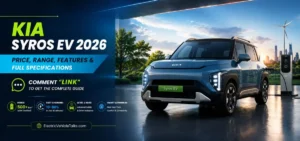
- Syros EV (expected)
- Carens EV (expected)
Strengths
- Premium design
- Advanced safety systems
- Fast charging capability
- Global EV platforms
7. Citroën India
Citroën focuses on affordable urban electric mobility.
- Country of Origin: France
- Indian Headquarters: Chennai
- Known For: Affordable electric hatchbacks designed for urban commuters.
Model
- eC3
Best For
- Daily city commuters
- Budget-conscious buyers
- Compact urban driving
8. BMW India
BMW has introduced multiple premium electric luxury cars.
EV Portfolio
- i4
- i5
- i7
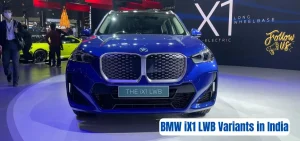
- iX
Why It Stands Out
- Luxury interiors
- Performance
- Advanced battery systems
- Excellent driving dynamics
9. Mercedes-Benz India
Mercedes continues expanding luxury electric mobility.
- Country of Origin: Germany
- Indian Headquarters: Gurugram
- Known For: Luxury electric sedans and SUVs with high-performance electric drivetrains.
Popular Models
- EQS
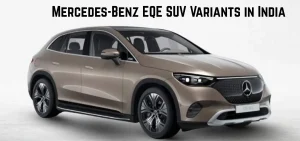
- EQE SUV
- EQA
- EQB
Highlights
- Luxury experience
- Long-range batteries
- Advanced infotainment
- High safety ratings
10. Volvo Cars India
Volvo has embraced an all-electric future globally.
- Country of Origin: Sweden
- Indian Headquarters: Bengaluru
- Known For: Safety-first electric SUVs, sustainable materials, and premium Scandinavian engineering.
Models
- EX40
- EC40
- EX30 (expected)
Known For
- Safety
- Scandinavian design
- Sustainable materials
- Efficient electric powertrains
Comparison of the Top Electric Car Manufacturers in India
| Company | Headquarters | Founded | EV Presence in India | Popular EV Models | Key Strengths |
|---|---|---|---|---|---|
| Tata Motors | Mumbai, Maharashtra | 1945 | India’s largest passenger EV manufacturer | Nexon EV, Punch EV, Tiago EV, Curvv EV, Harrier EV | Market leader, strong service network, affordable EVs, local manufacturing (Autocar) |
| Mahindra & Mahindra | Mumbai, Maharashtra | 1945 | Pioneer in electric SUVs | XUV400, BE 6, XEV 9e | SUV expertise, INGLO EV platform, premium technology (The Economic Times) |
| JSW MG Motor India | Gurugram, Haryana | 2019 (MG India) | Fast-growing passenger EV brand | Windsor EV, Comet EV, ZS EV | Connected technology, BaaS model, feature-rich vehicles (Autocar) |
| Hyundai Motor India | Gurugram, Haryana | 1996 | Premium and mass-market EVs | Creta Electric, Ioniq 5 | Global EV technology, E-GMP platform, fast charging (The Economic Times) |
| BYD India | Chennai, Tamil Nadu | 2007 | Premium EV manufacturer | Atto 3, Seal, eMAX 7 | Blade Battery technology, global EV leadership (IMARC Group) |
| Kia India | Anantapur, Andhra Pradesh | 2017 | Expanding EV portfolio | EV6, upcoming EVs | Modern design, premium features, global EV platforms (The Times of India) |
| Citroën India | Chennai, Tamil Nadu | 2021 | Affordable city EVs | eC3 | Budget-friendly urban mobility |
| BMW India | Gurugram, Haryana | 2007 | Luxury EV segment | i4, i5, i7, iX | Premium performance, luxury, advanced battery systems |
| Mercedes-Benz India | Pune, Maharashtra | 1994 | Luxury electric mobility | EQS, EQE SUV, EQA, EQB | Luxury, safety, cutting-edge technology |
| Volvo Car India | Bengaluru, Karnataka | 1998 | Premium electric SUVs | EX40, EC40 | Safety, sustainability, Scandinavian design |
What Should Buyers Consider Before Choosing an EV Manufacturer?
Choosing the right manufacturer is about more than just the car.
Consider:
- Service network
- Charging compatibility
- Battery warranty
- Software updates
- Resale value
- Brand reliability
- Availability of spare parts
- Roadside assistance
Battery Technology Used by Leading Manufacturers
| Battery Type | Used By | Benefits |
|---|---|---|
| LFP | Tata, MG, BYD | Long life, safer |
| NMC | Hyundai, Kia, BMW | Higher energy density |
| Blade Battery | BYD | Enhanced safety |
| Advanced Lithium-ion | Mahindra | Better efficiency |
Battery technology directly affects charging speed, range, lifespan, and long-term ownership costs.
Charging Infrastructure in India
India’s charging ecosystem has expanded significantly.
Available charging options include:
a) Home Charging
- Overnight charging
- Lowest charging cost
- Ideal for daily commuters
b) AC Public Charging
Suitable for offices, malls, hotels, and apartment complexes.
c) DC Fast Charging
Perfect for highways and long-distance travel.
Charging corridors on major highways are making intercity EV travel increasingly convenient.
Government Support Driving EV Growth
Government initiatives continue to encourage EV adoption.
Major support includes:
- PM E-Drive Scheme
- Production Linked Incentive (PLI)
- State EV policies
- Road tax exemptions
- Registration fee waivers
- Charging infrastructure funding
Some states also provide additional purchase incentives depending on vehicle type and eligibility.
Cost of Owning an Electric Car
| Expense | Electric Car | Petrol Car |
|---|---|---|
| Running Cost | Low | High |
| Maintenance | Lower | Higher |
| Engine Oil | Not Required | Required |
| Fuel Cost | Electricity | Petrol |
| Annual Maintenance | Lower | Higher |
Although purchase prices can be higher, many owners recover the difference through lower operating and maintenance costs over time.
Benefits of Buying from Established Electric Car Manufacturers
- Better resale value
- Larger service network
- Reliable battery warranties
- Frequent software updates
- Better financing options
- Higher customer trust
- Stronger charging partnerships
Challenges Facing Electric Car Manufacturers in India
Despite rapid progress, several challenges remain:
- Limited rural charging infrastructure
- Battery raw material dependence
- Higher upfront vehicle prices
- Consumer awareness gaps
- Charging time compared to fuel refilling
- Skilled EV service workforce shortage
However, these challenges are gradually being addressed through investments and policy support.
Common Mistakes EV Buyers Should Avoid
- Buying solely based on maximum range
- Ignoring service availability
- Not checking home charging feasibility
- Overlooking battery warranty terms
- Choosing an unsuitable charging connector
- Ignoring total ownership cost
Sustainability Impact
Electric vehicles contribute significantly to cleaner transportation.
Benefits include:
- Reduced greenhouse gas emissions
- Lower urban air pollution
- Less dependence on imported fossil fuels
- Increased renewable energy integration
- Quieter cities
As India’s electricity mix becomes greener, the environmental benefits of EVs are expected to increase further.
Future Outlook for Electric Car Manufacturers in India
The next five years are expected to bring:
- More affordable EVs below ₹10 lakh
- Faster charging technologies
- Solid-state battery research
- Vehicle-to-Grid (V2G) capabilities
- Improved battery recycling
- Greater localization of components
- Expansion into Tier-2 and Tier-3 cities
Competition will likely lead to better features, improved software, and more choices for consumers.
Expert Insight from Electric Vehicle Talks
The Indian EV market is moving beyond the early-adopter stage and entering mainstream acceptance. Buyers today are no longer choosing electric cars solely for environmental reasons—they are evaluating total ownership cost, software experience, charging convenience, safety, and long-term reliability.
From our analysis at Electric Vehicle Talks, manufacturers with strong service networks, reliable battery warranties, and continuous software improvements are best positioned to build long-term customer trust. As charging infrastructure expands and locally manufactured batteries become more common, ownership costs are expected to decline further. For most urban drivers covering 30–60 km daily, a modern electric car can already meet practical mobility needs while reducing fuel and maintenance expenses. Explore more expert guides and EV resources at https://electricvehicletalks.com/.
People Also Ask
Which company is the largest electric car manufacturer in India?
Tata Motors currently leads India’s passenger electric car market with a broad portfolio that includes the Tiago EV, Punch EV, Nexon EV, Curvv EV, and Harrier EV.
Which electric car brand offers the longest driving range?
Premium models from manufacturers such as BYD, Hyundai, Mercedes-Benz, BMW, and Volvo offer some of the longest driving ranges available in India, depending on the model and battery configuration.
Is buying an electric car in India worth it?
For most urban and suburban drivers, electric cars can provide lower running costs, reduced maintenance, quieter driving, and lower emissions. Buyers should also evaluate charging access, driving patterns, and long-term ownership costs.
Which EV manufacturer has the best charging network support?
Manufacturers increasingly partner with charging providers, while home charging remains the most convenient option for many owners. Brands with strong after-sales support and connected charging solutions often provide a smoother ownership experience.
Which electric car is best for first-time buyers?
Affordable models such as the Tata Tiago EV, Tata Punch EV, MG Comet EV, and Citroën eC3 are commonly considered by first-time EV buyers due to their pricing and city-friendly usability.
Will electric cars become cheaper in India?
Industry experts expect prices to become more competitive as battery costs decline, local manufacturing increases, and production volumes grow.
FAQs about the Top 10 Electric car manufacturers in India
1. Which is the best electric car manufacturer in India?
Tata Motors currently holds a leading position in the mass-market EV segment, while other manufacturers excel in premium, luxury, and technology-focused categories.
2. Which electric car manufacturer offers the longest battery warranty?
Battery warranty terms vary by manufacturer and model. Buyers should compare warranty duration, mileage limits, and coverage before making a purchase.
3. Are electric cars suitable for long-distance travel in India?
Yes. With improving highway fast-charging networks and newer models offering longer ranges, long-distance EV travel is becoming increasingly practical.
4. How much does it cost to charge an electric car at home?
The cost depends on local electricity tariffs, battery size, and charging efficiency. In many regions, home charging remains significantly cheaper than refueling a comparable petrol vehicle.
5. Do electric cars require less maintenance?
Generally, yes. Electric cars have fewer moving parts, no engine oil changes, and reduced wear on braking systems due to regenerative braking.
Conclusion
The Top 10 Electric car manufacturers in India are accelerating the country’s transition toward cleaner, smarter, and more sustainable mobility. From Tata Motors’ strong mass-market presence to Mahindra’s next-generation SUVs, MG’s technology-driven approach, Hyundai and BYD’s global expertise, and the growing premium offerings from BMW, Mercedes-Benz, and Volvo, buyers now have more choices than ever before.
As charging infrastructure expands, battery technology advances, and government support continues, electric vehicles are becoming an increasingly practical option for Indian households and businesses alike. The coming years are expected to bring greater affordability, faster charging, and wider adoption across cities and emerging markets.
If you’re researching your next EV, stay informed with detailed buying guides, ownership advice, charging insights, and industry updates from Electric Vehicle Talks.
Related Article: