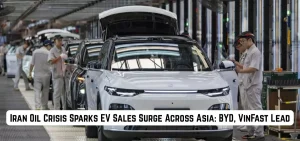
Thailand is preparing to reshape its electric vehicle market, making fully imported models more expensive to encourage carmakers to build locally. The National EV Policy Board has agreed in principle to a revised excise tax framework, as cheaper Chinese imports put pressure on domestic factories, suppliers, and established Japanese manufacturers. The decision for Thailand to raise the EV import tax signals a shift from accelerating adoption towards securing industrial investment.
Proposed rates will distinguish finished imports from local assembly and domestic production, with officials targeting September finalization. However, the percentages, implementation timetable, and transition arrangements still require clarification before buyers assess costs.
Thailand’s proposed policy means higher excise duties on fully built imported electric cars, while local assembly and production receive preferential rates. The measure aims to protect manufacturing, attract investment, and strengthen domestic supply chains. Final rates remain pending.

Three Tax Tiers Explained
The proposed framework links tax treatment to manufacturing activity:
- Lowest rate: EVs manufactured in Thailand using substantial local content.
- Intermediate rate: Locally assembled vehicles using imported components, testing imports, or qualifying manufacturers transitioning towards approved domestic production.
- Highest rate: Completely built-up imports, known as CBUs, above the current 10% excise baseline.
Excise official Pornchai Thiraveja outlined the differentiated approach. Earlier industry proposals suggested CBU rates exceeding 30%, but that figure should not be treated as a final, approved rate.
The change concerns excise taxation, which is separate from customs duties or tariffs applied at the border.
Why Cheap Imports Triggered Action
Thailand’s move to raise the EV import tax reflects concerns that rising sales have not translated sufficiently into domestic industrial growth.
Earlier incentives accelerated adoption, but industry representatives estimate Chinese manufacturing offers a 30% to 40% cost advantage over Thai production. That gap has intensified competition for local factories, component suppliers, and Japanese automakers.
Electric vehicles, hybrids, and plug-in hybrids together accounted for 55% of new car registrations during the first seven months of 2026. According to the Board of Investment, their combined registrations surpassed internal combustion vehicles for the first time.
Turning Demand Into Jobs
Thailand remains a major regional vehicle production and export hub, hosting manufacturers including BYD and Toyota.
As of August 2026, cumulative Board of Investment approvals across the EV ecosystem reached $4.59 billion through 189 projects.
BOI chief Narit Therdsteerasukdi said the transition must translate consumer demand into lasting investment, local technology capabilities, and quality employment.
The framework also seeks stronger accountability for production commitments associated with earlier incentives, including EV 3.0. Import privileges under such programmes were linked to subsequent local manufacturing obligations.
What Happens Next?
Finance Ministry Permanent Secretary Lavaron Sangsnit said rates would be determined by September’s end, ahead of formal approval.
A grace period will allow automakers to adapt, although its duration remains undecided. Previously ordered vehicles are expected to receive transitional consideration.
For buyers, Thailand’s move to raise EV import tax could change imported models’ pricing, depending on final rates and how manufacturers absorb costs.

Related Articles: