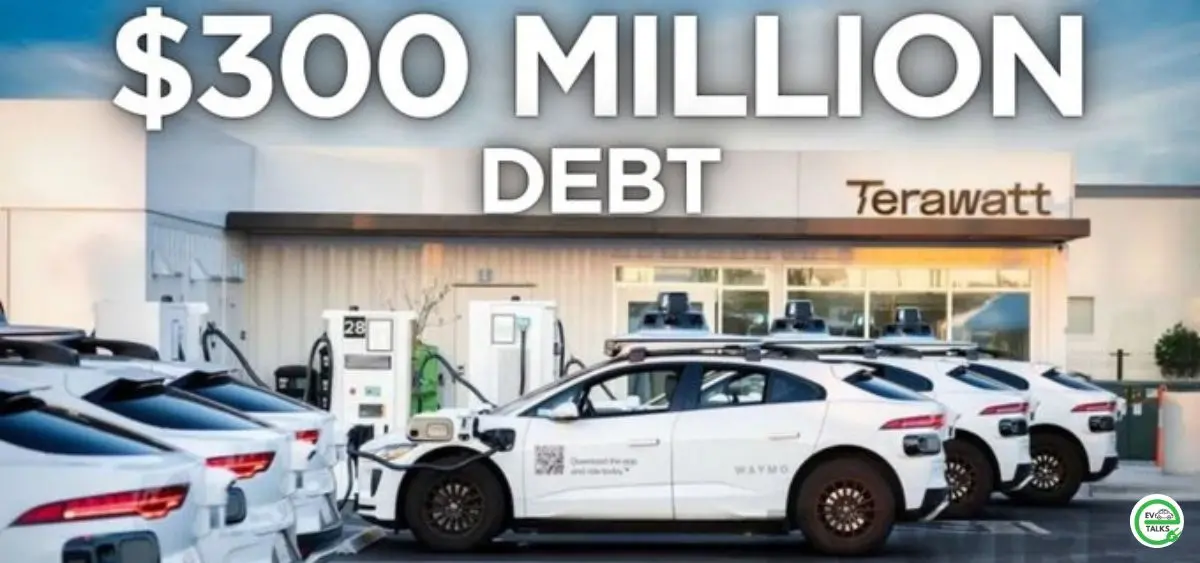

Terawatt Secures Up to $300 Million Debt Financing in a landmark move to accelerate the expansion of its electric vehicle (EV) and autonomous vehicle (AV) charging infrastructure. The five-year senior secured debt facility includes an initial committed tranche of $150 million, with an option to increase the total financing to $300 million. The transaction marks the company’s first commercial bank financing facility, highlighting growing institutional confidence in fleet charging infrastructure as a bankable asset class.

Strong Banking Consortium Supports the Deal
The financing was structured by RBC Capital Markets as the sole structuring agent and lead arranger, with participation from Sumitomo Mitsui Banking Corp. (SMBC) and UBS Investment Bank. Legal support was provided by Vinson & Elkins for Terawatt and Milbank for the lenders, while DNV Energy USA served as the technical advisor.
Capital to Expand EV and Robotaxi Charging Depots
Led by Co-Founder and CEO Neha Palmer, Terawatt Secures Up to $300 Million Debt Financing to fund the acquisition, development, and expansion of purpose-built charging depots for commercial EV fleets and autonomous vehicles across the United States, with potential international growth.
Integrated Business Model Drives Market Growth
Unlike traditional charging equipment providers, Terawatt owns and manages the complete charging ecosystem, including real estate, power delivery, charging hardware, and proprietary energy management software. This vertically integrated approach allows fleet operators to shift charging expenses from large upfront capital investments to predictable operating costs.
Growing Demand for Fleet Charging Infrastructure
Terawatt Secures Up to $300 Million Debt Financing as demand for heavy-duty commercial fleet charging and robotaxi infrastructure continues to rise. The company already serves major customers such as Waymo. With the global robotaxi market projected to reach $415 billion by 2035, Terawatt Secures Up to $300 Million Debt Financing to strengthen its position in building the charging infrastructure required for the next generation of electric and autonomous transportation.

Related Articles: