
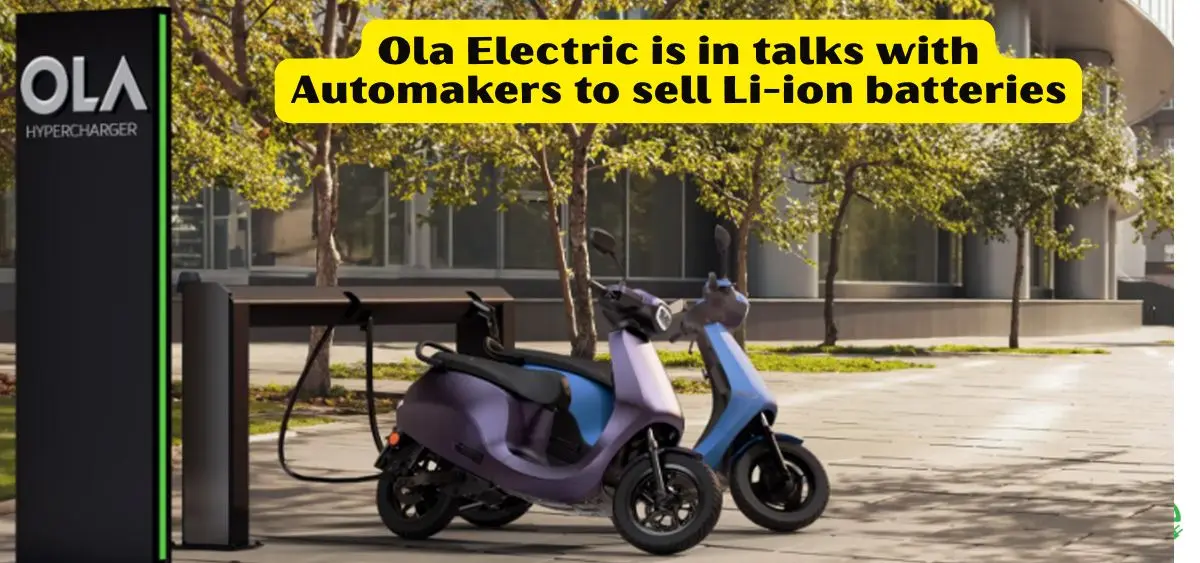

Ola Electric is making a strategic shift beyond its core electric two-wheeler business, as Ola Electric is in talks with automakers, signalling a major push into lithium-ion battery supply. According to sources, the company is currently engaging with both domestic and global automotive manufacturers to supply advanced battery cells and packs from its Tamil Nadu-based gigafactory.
Expanding Beyond Electric Scooters
Led by Bhavish Aggarwal, the Bengaluru-based EV firm is leveraging its in-house battery innovation, particularly the 4680 Bharat Cell, to enter the broader EV supply chain. This move highlights how Ola Electric, in talks with automakers, is part of a long-term strategy to diversify revenue streams and establish itself as a key battery manufacturer.
Currently, the company operates a gigafactory in Krishnagiri with an installed capacity of 6 gigawatt-hours (GWh). However, expansion plans are already underway to scale this capacity to 12 GWh by July 2027 and further to 20 GWh by the end of FY2028.
Third-Party Supply and Market Strategy
Sources indicate that nearly one-third of the planned 20 GWh capacity will be allocated for third-party sales to automotive OEMs. This means Ola Electric is in talks with automakers, is not just exploratory—it is a calculated move to capture a share of the growing EV battery market.
Potential clients are reportedly evaluating the company’s manufacturing capabilities before committing to long-term supply agreements, reflecting both opportunity and cautious optimism in the industry.
Investment and Policy Support
In February 2026, the company announced an investment of approximately ₹5,300 crore into manufacturing, battery technology, and R&D. This significant capital infusion underscores the seriousness behind Ola Electric in talks with automakers and its ambition to become a global battery supplier.
Additionally, favourable government policies could further boost demand. Proposed EV Policy 2.0 is expected to mandate only electric two-wheelers in Delhi by FY2028-29, potentially accelerating adoption and battery demand.
Strong Sales Momentum
Ola Electric has also reported steady growth in its vehicle segment. Registrations rose to 12,116 units in April 2026, marking a 20% increase from March’s 10,133 units. This growth complements its battery ambitions, reinforcing its ecosystem approach.
Stock Market Performance
Despite these developments, the company’s stock remained largely unchanged. Shares closed at ₹36, slightly down by 0.06% from the previous close on the National Stock Exchange of India.
Over the past year, the stock has declined by 30%, with a 4% drop in 2026 so far. However, short-term trends show some recovery, with a 2.6% gain over the last five sessions. The stock previously hit a 52-week high of ₹71.25 in September 2025 and a low of ₹22.25 in March 2026. The company’s current market capitalization stands at ₹15,887 crore.
Conclusion
With strong investments, expanding manufacturing capacity, and strategic partnerships, Ola Electric is in talks with automakers, reflecting a pivotal shift in India’s EV landscape. If executed effectively, this move could position Ola Electric as a major player not just in vehicles but in the global battery supply chain.

Related Articles:









