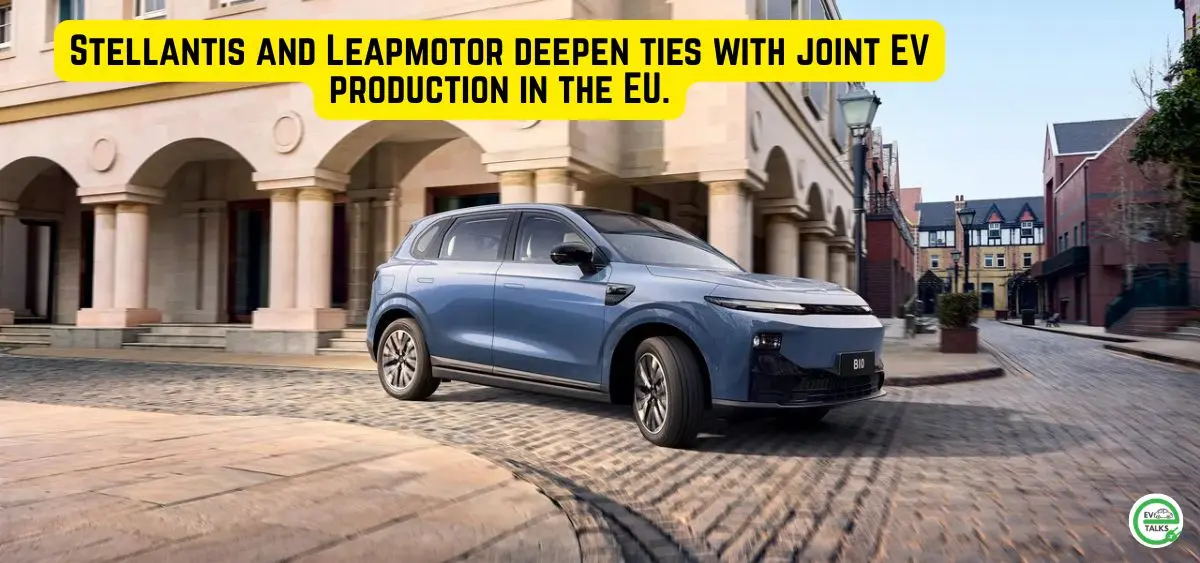

In a significant move for the global electric vehicle (EV) industry, Stellantis and Leapmotor have announced plans to expand their partnership from distribution into full-scale manufacturing in Europe. This development marks a new chapter as Stellantis and Leapmotor deepen ties to strengthen their foothold in the rapidly growing EV market.
Expansion from Sales to Manufacturing
The collaboration, previously focused on sales through their joint venture Leapmotor International (LPMI), will now include production of electric vehicles in Europe. The partners plan to manufacture two new models in Spain, signaling a strategic shift toward localized production. This move aligns with Stellantis’ broader efforts to boost its EV portfolio and regain market share across Europe and North America.

The announcement comes ahead of Stellantis’ upcoming business strategy presentation, led by CEO Antonio Filosa, who is working to revitalize operations and improve competitiveness.
Strategic Benefits for Both Companies
As Stellantis and Leapmotor deepen ties, the partnership offers mutual advantages. Stellantis aims to utilize its underused manufacturing capacity in Europe, particularly in Spain, while Leapmotor gains faster access to European production without building new facilities from scratch.
The initiative is also expected to support affordable EV manufacturing and accelerate localization in Europe. For Leapmotor, producing vehicles locally could help avoid potential European Union tariffs on Chinese-made electric cars, improving pricing competitiveness.
Production Plans in Spain
Under the new agreement, Stellantis’ Zaragoza plant will play a central role. The facility is set to produce Leapmotor’s B10 electric SUV alongside a new electric C-SUV developed under the Opel brand.
This jointly developed Opel model will integrate Leapmotor’s advanced EV architecture and battery technology with Opel’s design and engineering expertise. According to Opel CEO Florian Huettl, the model is expected to be developed in less than two years, highlighting the speed and efficiency of the collaboration.
Future Plans and Deeper Integration
Looking ahead, Stellantis and Leapmotor deepen ties further by exploring the possibility of allocating additional Leapmotor models to Stellantis’ Madrid plant from 2028. There is also consideration of transferring ownership of the facility to the joint venture LPMI, signaling deeper operational integration.
The companies also plan to collaborate on parts procurement, leveraging China’s EV supply chain expertise alongside Europe’s manufacturing capabilities. This approach aims to reduce costs, enhance resilience, and accelerate time-to-market for new models.
Strengthening the EV Ecosystem
Overall, as Stellantis and Leapmotor deepen ties, the partnership reflects a broader trend of collaboration between European and Chinese automakers. By combining strengths in technology, production, and supply chains, both companies are positioning themselves to compete more effectively in the global EV market while delivering affordable electric mobility solutions.

Related Articles: