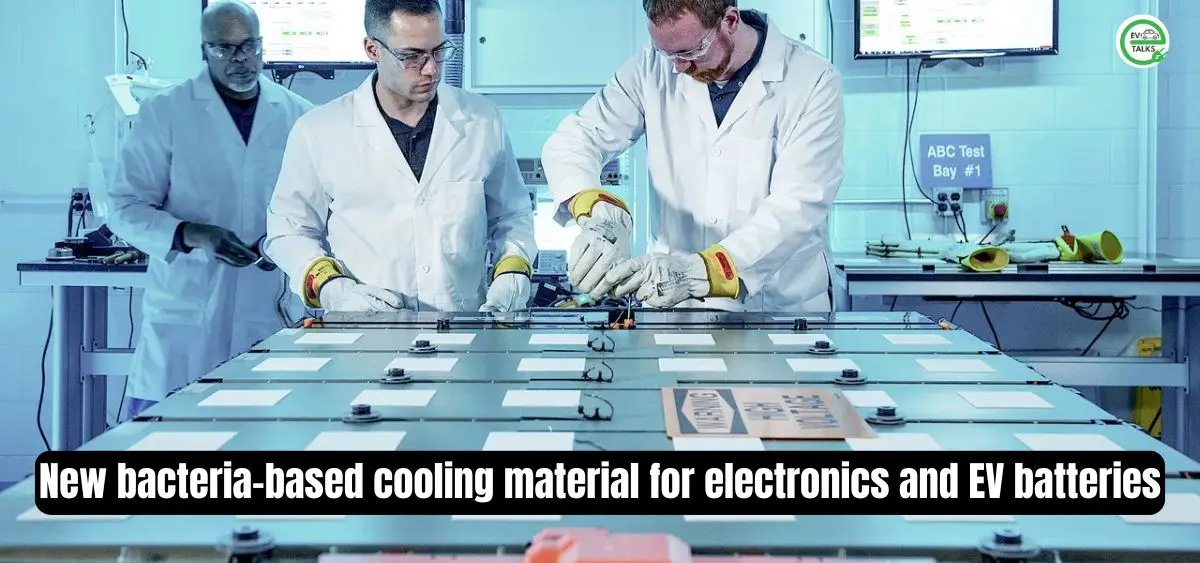

As electric vehicles (EVs), drones, smartphones, and advanced computing systems become more powerful, managing the heat they generate has become a major challenge. Researchers have now introduced a New bacteria-based cooling material that could significantly improve thermal management while reducing environmental impact.
A team of scientists led by Professor Weinan Xu from the Department of Materials Science and Engineering at the University of Tennessee, Knoxville, has developed an innovative biocomposite material that uses microbial biosynthesis to achieve exceptional heat-transfer performance. The breakthrough research has been published in the journal Matter.

Up to 10 Times Better Heat Conductivity
The newly developed material acts as a thermal interface material, which is placed between electronic components and cooling systems to eliminate microscopic air gaps and improve heat transfer.
According to the researchers, the New bacteria-based cooling material delivers thermal conductivity that is five to ten times higher than conventional thermal interface materials. This enhanced performance can help electronic devices operate more efficiently, improve reliability, and reduce overheating-related performance issues.
How Bacteria Create the Material
Unlike traditional manufacturing methods that rely on high temperatures and harsh chemicals, the new process uses bacteria to produce the material naturally.
Researchers feed selected bacteria with sugars as a carbon source and metal ions as precursors. The microbes then generate a unique inorganic-organic biocomposite material in a water-based environment at room temperature. This sustainable approach dramatically reduces energy consumption and environmental impact.
Major Benefits for EVs, Drones, and Electronics
The New bacteria-based cooling material has attracted significant interest because of its potential applications in critical industries.
For electric vehicles, the material can help maintain optimal battery temperatures, improving battery lifespan, charging efficiency, safety, and driving range. In drones and next-generation electronics, it can reduce thermal throttling and enhance overall performance. The technology could also improve the reliability of large-scale energy storage systems.
The project has received support from the Defense Advanced Research Projects Agency (DARPA), highlighting its importance for both military and commercial applications.
Commercialization Remains the Next Challenge
Despite its promising performance, large-scale production remains a challenge. The biological manufacturing process currently requires several days to weeks to produce the final material.
Researchers are now working with industry partners to reduce production costs and accelerate manufacturing. The New bacteria-based cooling material may also have future applications in rare-earth element recovery and biomedical tissue engineering, opening doors to a wide range of sustainable technologies.
If successfully commercialized, this innovation could transform the future of thermal management in EV batteries, electronics, and energy storage systems worldwide.

Related Articles: