
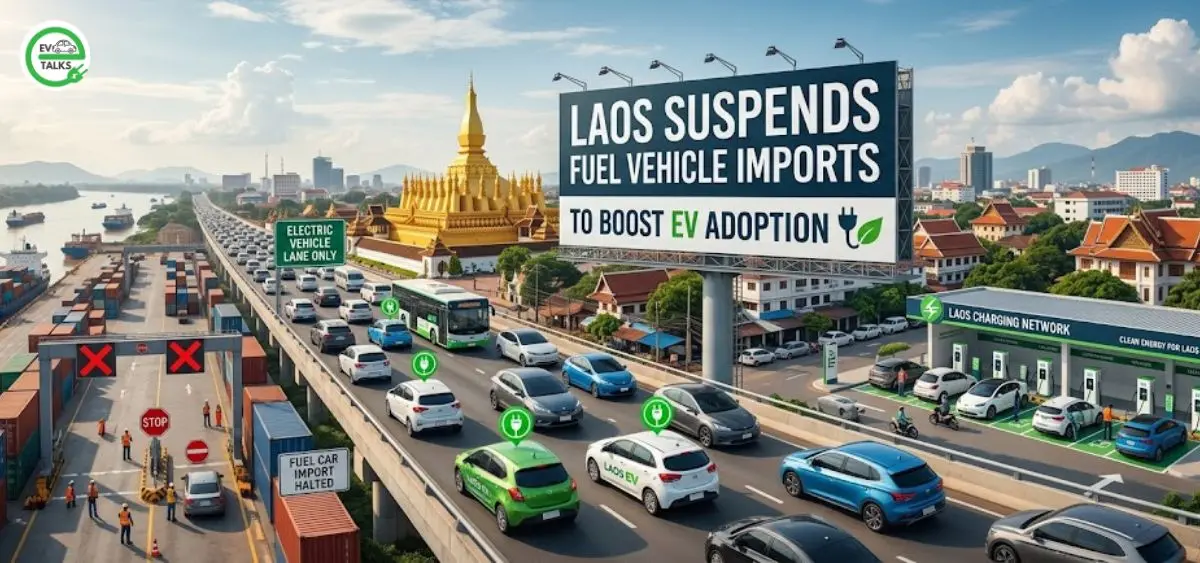

In a major policy shift aimed at transforming its transportation sector, Laos suspends fuel-powered vehicle imports from June 1, 2026, through the end of the year. The temporary ban on petrol- and diesel-powered vehicle imports is part of the government’s broader strategy to accelerate electric vehicle (EV) adoption, reduce dependence on imported fossil fuels, and strengthen economic stability.
The directive will take effect once administrative procedures are completed by the relevant government agencies. While the restrictions apply to most fuel-powered passenger vehicles, several exemptions have been granted, including public transport vehicles, heavy machinery, trucks used for development projects, and specialized professional vehicles.

Why Does Laos Suspend Fuel-Powered Vehicle Imports?
The decision comes as Laos seeks to address rising fuel import costs and reduce pressure on its foreign currency reserves. Despite being rich in hydropower resources and generating substantial renewable electricity, the country relies heavily on imported petroleum products.
By encouraging the use of EVs powered by domestically generated electricity, Laos aims to create a more sustainable and energy-independent transportation system. The government has set an ambitious target for electric vehicles to represent more than 30% of all vehicles on the nation’s roads by 2030.
Government Introduces Consumer Protection Measures
As Laos suspends fuel-powered vehicle imports, authorities are also implementing measures to ensure electric vehicles remain affordable. The Ministry of Industry and Commerce has been instructed to establish a standardized EV pricing structure covering factory prices, transportation costs, taxes, duties, and approved profit margins.
These price controls are designed to prevent excessive markups and encourage broader consumer adoption of electric mobility.
Part of a Larger EV Transition Strategy
The import suspension follows a series of policies introduced earlier in 2026 to accelerate the country’s transition toward cleaner transportation. In March, registration and service fees for EVs were reduced by 30%, while fees for petrol and diesel vehicles increased by 30%.
Additionally, logistics and transportation companies are now required to ensure that at least 10% of their fleets consist of electric vehicles by the end of 2026. These measures highlight the government’s commitment as Laos suspends fuel-powered vehicle imports and promotes sustainable mobility solutions.
Southeast Asia’s Growing EV Market
The announcement comes amid rapid growth in electric vehicle adoption across Southeast Asia. Industry experts expect emerging markets in the region to play an increasingly important role in global EV expansion.
As Laos suspends fuel-powered vehicle imports, the country is positioning itself as one of the region’s most proactive adopters of electric mobility. The move reflects a long-term vision focused on energy security, lower emissions, and a cleaner transportation future.

Related Articles:









