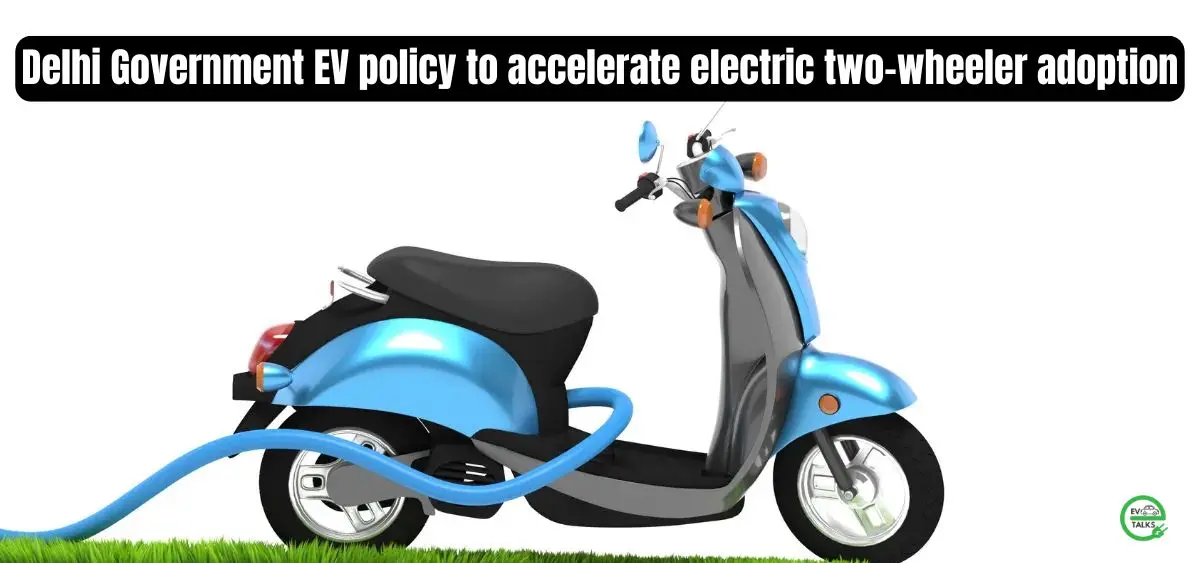

The Delhi Gov. EV policy has received cabinet approval, marking a major step toward accelerating electric vehicle adoption in the national capital. The new policy introduces attractive purchase incentives, mandatory electric two-wheeler registrations from 2028, and a large-scale expansion of EV charging infrastructure. The initiative is expected to strengthen Delhi’s transition toward cleaner transportation while reducing pollution and dependence on fossil fuels.
The policy, approved by the cabinet led by Chief Minister Rekha Gupta, is expected to come into effect on July 1 and remain valid until March 31, 2030. The Delhi government has allocated ₹15,000 crore for its implementation.

Attractive Incentives for Electric Two-Wheelers
One of the biggest highlights of the Delhi Government EV policy is the financial support offered to buyers of electric two-wheelers.
Under the new scheme:
- ₹30,000 incentive for electric two-wheelers purchased during the first year.
- ₹20,000 incentive in the second year.
- ₹10,000 incentive in the third year.
In a significant move, only electric two-wheelers will be eligible for fresh registration in Delhi from April 1, 2028. Existing petrol and diesel-powered two-wheelers can continue operating under current regulations and will not be affected by the new registration rule.
Major Opportunity for EV Manufacturers
Delhi remains one of India’s largest two-wheeler markets, making the policy a significant opportunity for electric vehicle manufacturers.
Companies expected to benefit include:
- Ather Energy
- Ola Electric
- TVS Motor Company
- Bajaj Auto
- Ultraviolette Automotive
The long-term roadmap is expected to provide greater confidence for manufacturers to invest in production, innovation, and advanced EV technologies.
Industry Leaders Welcome the New Policy
Industry leaders have widely welcomed the approval of the policy.
Tarun Mehta, Co-founder and CEO of Ather Energy, described the policy as one of the most significant city-level EV initiatives introduced in India. According to him, the combination of purchase incentives, phased electrification mandates, and charging infrastructure creates a strong foundation for large-scale EV adoption. He also noted that if Delhi successfully becomes a majority EV market, it could serve as a model for other states across India.
Mehta further emphasised that long-term policy certainty encourages investments and supports continuous product development across the EV ecosystem.
Narayan Subramaniam, CEO and Head of Design at Ultraviolette Automotive, praised the price-agnostic incentive structure, stating that it enables consumers to select electric vehicles based on range, performance, technology, and design rather than only price. He also highlighted the government’s focus on charging infrastructure as a crucial component of the overall EV ecosystem.
Meanwhile, Anurag Mehrotra, Managing Director of JSW MG Motor India, said the proposed scrappage incentives would encourage replacement of older, polluting vehicles with cleaner electric alternatives, ultimately improving air quality while reducing India’s dependence on crude oil imports.
Benefits Extend Beyond Two-Wheelers
The Delhi Government EV policy is not limited to electric motorcycles and scooters.
It also provides:
- Subsidies of up to ₹50,000 for electric three-wheelers during the first year.
- Incentives of up to ₹1 lakh for N1 category commercial electric trucks.
- Scrappage incentives for older BS-IV vehicles to promote cleaner transportation.
These measures are expected to accelerate electrification across both passenger and commercial vehicle segments.
Massive Expansion of EV Charging Infrastructure
To support growing EV adoption, the government plans to install 32,000 public charging points over the next four years.
The charging network will be developed with support from the PM eDrive Scheme and the Delhi government. A wider charging infrastructure is expected to reduce range anxiety and improve convenience for EV owners across the city.
Policy Aims to Reduce Delhi’s Air Pollution
According to Transport Commissioner Niharika, commercial goods vehicles contribute nearly 33% of Delhi’s pollution, while two-wheelers and three-wheelers account for another 46%. This explains why the policy places strong emphasis on electrifying these vehicle categories.
Earlier, Bhavish Aggarwal, founder of Ola Electric, had welcomed the draft version of the policy, calling it “the beginning of the end for ICE vehicles.”
With financial incentives, mandatory future EV registrations, expanded charging infrastructure, and support for commercial electrification, the Delhi Government EV policy is expected to become one of India’s most ambitious clean mobility initiatives and could set a benchmark for EV adoption across the country.

Related Articles: