
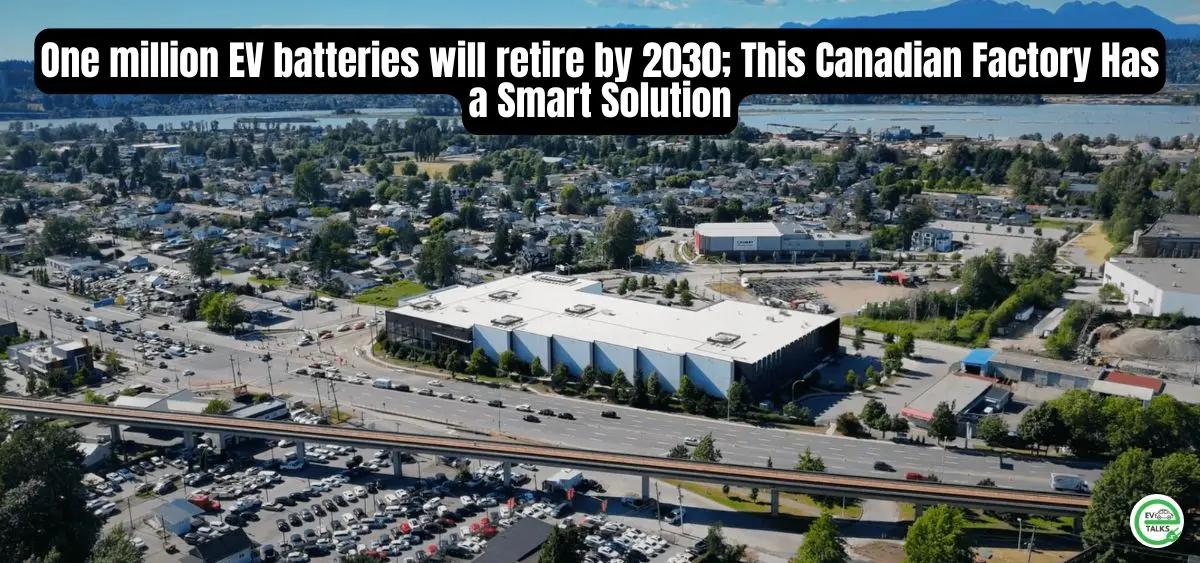

One million EV batteries will retire by 2030, creating a major challenge for the global electric vehicle industry. While most EV batteries are replaced once their capacity drops below 80%, they still retain significant energy storage potential. Instead of sending these batteries directly for recycling or disposal, Canada’s Moment Energy has introduced an innovative solution through its newly launched Megafactory 1 in Vancouver.

Why EV Battery Retirement Is a Growing Concern
As electric vehicle adoption continues to rise, one million EV batteries will retire by 2030, increasing pressure on recycling systems and critical mineral supplies. Although these batteries no longer deliver the driving range expected by EV owners, they still contain valuable materials such as lithium, cobalt, and nickel, along with enough remaining capacity for stationary energy storage applications.
Megafactory 1 Converts Waste into Energy Storage
Built in just six weeks, Megafactory 1 is currently recognized as the world’s largest facility dedicated to repurposing retired EV batteries. Every battery undergoes rigorous health, safety, and capacity inspections before being integrated into commercial Battery Energy Storage Systems (BESS). These repurposed systems are designed to support power grids, hospitals, factories, and AI data centers by providing affordable energy storage and reducing peak electricity demand.
The facility also operates under strict UL 1974 battery repurposing certification standards and relies entirely on a North American supply chain, helping keep battery processing and valuable minerals within the region.
A Sustainable Future for EV Batteries
By 2030, the company aims to achieve an annual production capacity of 1 GWh of battery storage systems. As one million EV batteries will retire by 2030, repurposing them before final recycling can reduce waste, ease pressure on raw material supplies, lower energy storage costs, and strengthen clean energy infrastructure. This approach ensures that one million EV batteries retiring by 2030 become not just an environmental challenge but also an opportunity to build a more sustainable energy future.

Related Articles:









