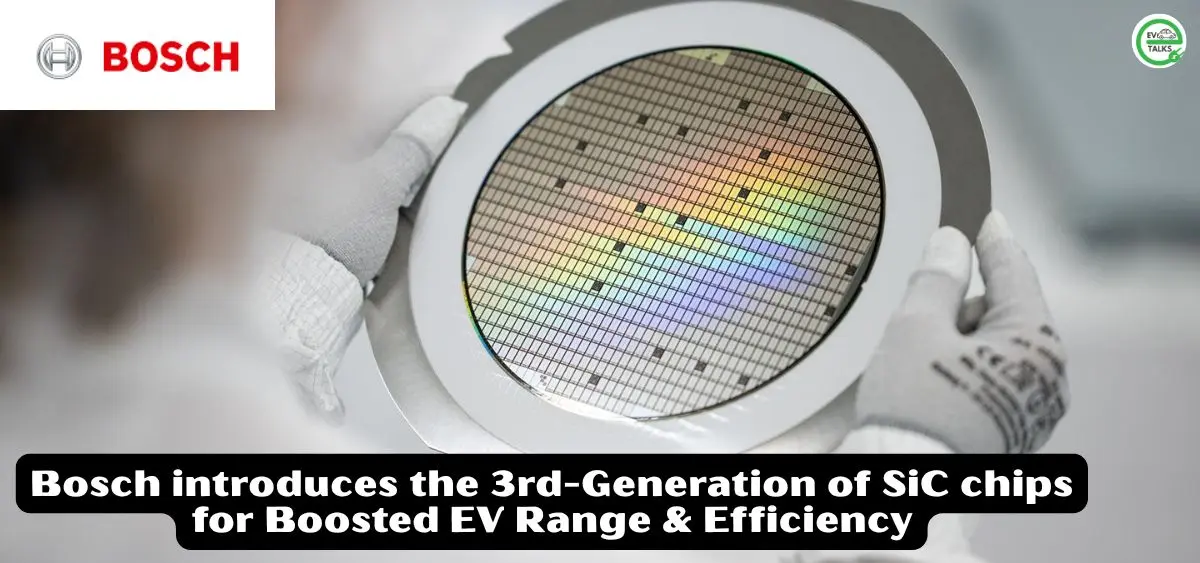

Bosch introduces the 3rd generation of SiC chips, marking a major advancement in electric vehicle (EV) technology. The new silicon carbide (SiC) MOSFET chips are designed to improve energy efficiency, enhance vehicle performance, and extend driving range. Bosch has already begun supplying samples of these advanced semiconductors to global automakers, paving the way for broader adoption in future EV models.
Significant Performance Improvements
The latest generation of Bosch SiC chips delivers substantial technical upgrades over conventional silicon-based power semiconductors. According to the company, the new chips offer a 20% reduction in resistance, helping minimize energy losses during operation. They also feature 10% lower switching losses, enabling faster, more efficient power conversion in EV traction inverters.

In addition, the chips are 40% thinner, with a die thickness of just 100 micrometers, improving heat dissipation and overall thermal management. Bosch has also increased the chips’ durability with 10% higher ruggedness, enhancing short-circuit protection in high-voltage powertrain systems.
Boosting EV Range and Performance
Bosch introduces the third generation of SiC chips to serve as the intelligent core of EV traction inverters, controlling the flow of energy between the battery and electric motor. These improvements can deliver up to 6% greater driving range while simultaneously increasing power density and overall vehicle efficiency.
Expanding Global Manufacturing Capacity
To support growing demand, Bosch introduces the 3rd-Generation of SiC chips through a large-scale manufacturing strategy. The chips are produced on advanced 200 mm wafers at the company’s Reutlingen facility in Germany, increasing production efficiency and reducing costs.
Backed by a €3 billion European IPCEI investment and a $1.9 billion expansion in Roseville, California, Bosch is strengthening its global semiconductor supply network. Bosch introduces the third generation of SiC chips using its renowned “Bosch Process,” a precision etching technology adapted to create advanced dual-channel trench architectures, reinforcing the company’s ambition to become a global leader in silicon carbide semiconductor manufacturing.

Related Articles: