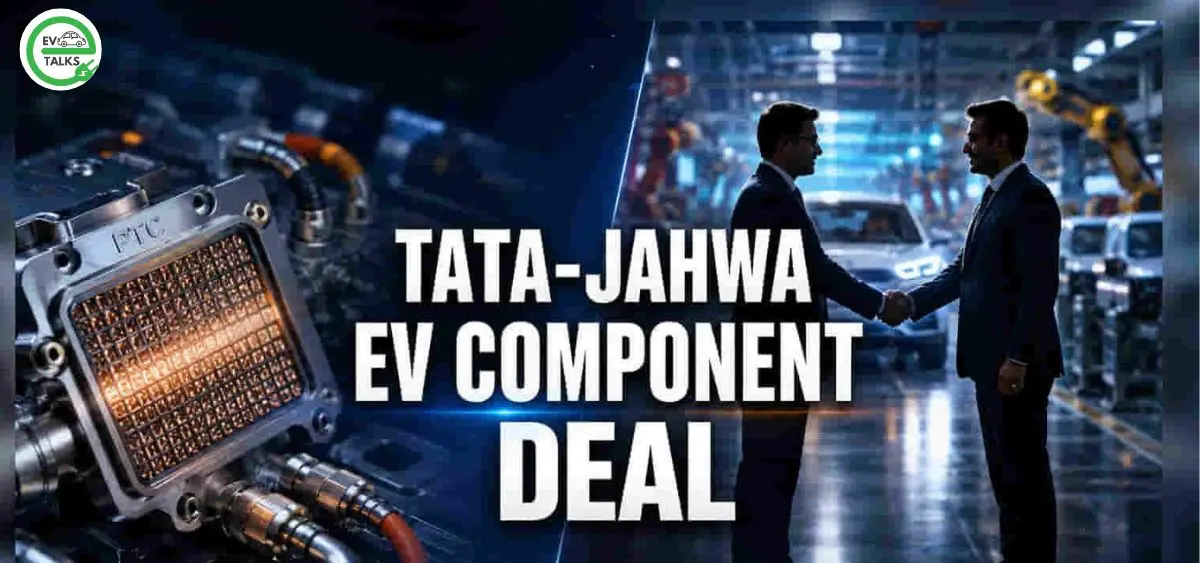

Tata AutoComp & Jahwa Partner to Strengthen India’s EV Ecosystem. Tata AutoComp Systems has entered into a strategic joint venture with Jahwa Electronics to manufacture advanced Positive Temperature Coefficient (PTC) heaters for electric and hybrid vehicles in India. The partnership marks a major step toward strengthening the country’s electric mobility supply chain and localizing critical EV components.
The announcement comes at a time when India’s electric vehicle industry is witnessing rapid expansion, with both domestic and global automakers increasing investments in electrification technologies.
Focus on High-Voltage and Low-Voltage PTC Heaters
Under the new venture, Tata AutoComp & Jahwa partner to locally manufacture both low-voltage and high-voltage PTC heaters. These components are essential for thermal management systems in electric and hybrid vehicles.
PTC heaters help maintain cabin comfort and regulate battery temperatures, especially in EVs where traditional engine-generated heat is unavailable. Efficient thermal management is crucial for battery performance, passenger comfort, and overall vehicle efficiency.
The collaboration combines Jahwa Electronics’ expertise in advanced thermal technologies and magnetic materials with Tata AutoComp’s strong manufacturing capabilities and extensive domestic supply chain network.
India to Become a Strategic EV Manufacturing Hub
According to Jahwa Electronics CEO Chanyong Kim, India’s fast-growing EV and hybrid vehicle market presents a major opportunity for expansion. Tata AutoComp & Jahwa partner to establish a stable market foundation as automakers aggressively scale EV production.
The joint venture is also expected to position India as a strategic manufacturing hub for Jahwa Electronics, serving both domestic and global automotive markets. The localized production model will reduce dependency on imports while supporting upcoming electric vehicle launches in India.
Boost for Future Electric Vehicle Production
Industry experts believe Tata AutoComp & Jahwa partnered at the right time, as demand for localized EV components continues to rise. The move is expected to support future electric mobility projects, including next-generation electric SUVs and hybrid vehicles planned for the Indian market.
With this partnership, India moves one step closer toward becoming a global center for electric vehicle component manufacturing and advanced automotive technologies.

Related Articles: