
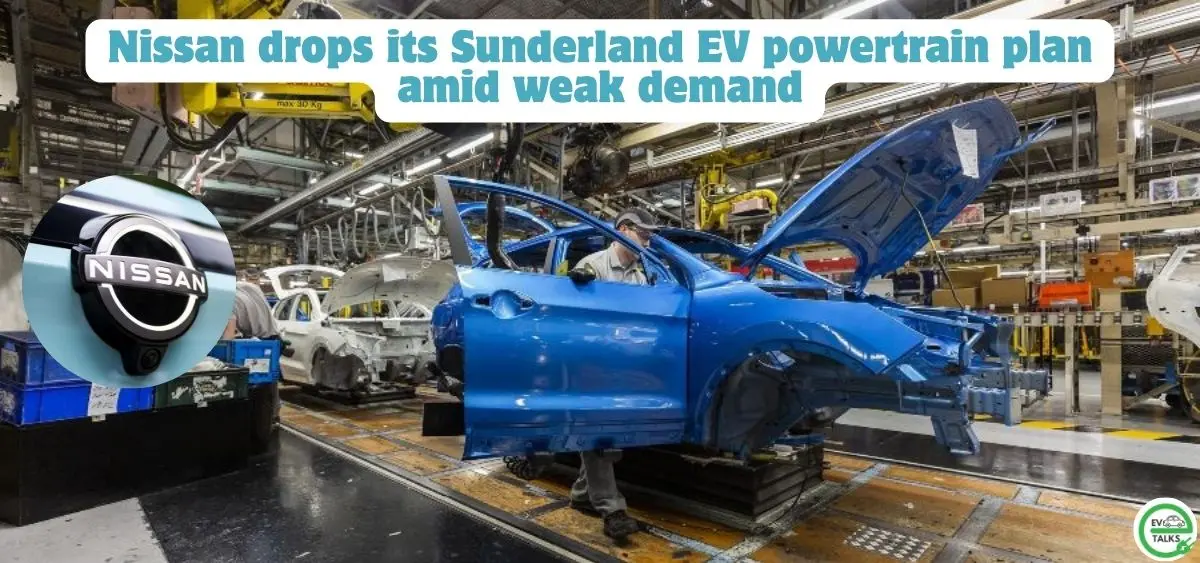

In a significant development for the UK’s electric vehicle sector, Nissan’s unit scraps its plan to make EV powertrains at its proposed Sunderland facility. The decision comes just months after Nissan subsidiary JATCO announced a £48.7 million investment to establish a new manufacturing operation dedicated to electric vehicle powertrains.
The project, unveiled in January 2025, was expected to produce up to 340,000 EV powertrain units annually. These advanced systems were designed to integrate key EV components, including the motor, inverter, and reducer, into a single compact unit.

Weak European EV Demand Behind the Decision
The primary reason Nissan scrapped its plan to make EV powertrains is the slowdown in demand for Nissan’s electric vehicles across Europe. While the broader European EV market has continued to grow, Nissan’s own EV sales in the region have reportedly fallen by 22%, raising concerns about future production requirements.
As a result, Nissan has decided to source EV drive units directly from Japan instead of manufacturing them locally in the UK.
Nissan’s Global Restructuring Effort
Another key factor behind the move is Nissan’s ongoing global restructuring program. The automaker has faced mounting financial pressure due to declining sales in major markets such as the United States and China.
To improve efficiency and reduce costs, the company plans to reduce its global vehicle production network from 17 plants to just 10 facilities. As part of this strategy, all powertrain factories are undergoing operational reviews. Consequently, Nissan’s unit scraps plans to make EV powertrains as part of a broader effort to streamline operations worldwide.
Sunderland Plant Remains Important
Despite the setback, Nissan’s unit scraps plans to make EV powertrains, which does not affect the long-term future of Sunderland’s vehicle assembly operations. Nissan remains committed to building future electric vehicle models at the site and will continue working with battery partner AESC to support local battery production and strengthen the region’s EV ecosystem.

Related Articles:









