
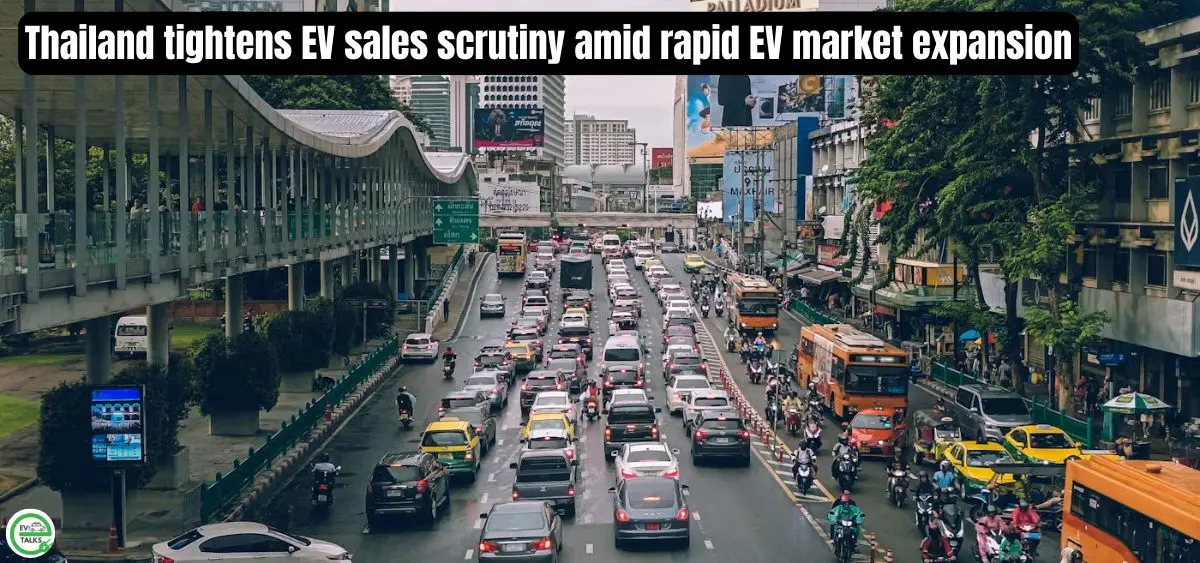

Thailand tightens EV sales scrutiny as the government introduces stricter regulations to protect consumers following a sharp rise in complaints related to electric vehicle (EV) sales. The country’s EV market has expanded rapidly over the past few years, driven by generous subsidies, tax incentives, and fierce competition among automakers, particularly Chinese brands. However, this rapid growth has also exposed gaps in consumer protection, prompting authorities to strengthen oversight of dealerships and manufacturers.
According to government officials, more than 1,300 consumer complaints highlighted issues such as misleading driving range claims, unclear battery warranty conditions, delayed repairs, lack of spare parts, sudden vehicle price reductions, and concerns over the long-term stability of some EV brands operating in Thailand.
Why Thailand tightened regulations on EV sales
Thailand recorded approximately 140,000 electric vehicle sales in 2025, representing nearly a 70% year-on-year increase and accounting for nearly one-quarter of all new vehicle sales. Chinese automakers now command over 70% of Thailand’s EV market, supported by more than US$4 billion in EV investments encouraged through government incentive programs.
While increased competition has reduced EV prices and expanded consumer choices, studies by consumer organizations found that buyers often faced confusing warranty terms, slow insurance claims, lengthy spare-part delays, and uncertainty regarding after-sales support. Sudden price cuts by several manufacturers also significantly reduced resale values, leaving early buyers with unexpected financial losses.
New rules introduced as Thailand tightens EV sales scrutiny
To improve transparency and consumer confidence, the Office of the Consumer Protection Board (OCPB) has launched a nationwide enforcement campaign.
1. Mandatory showroom inspections
Authorities will inspect EV dealerships across Bangkok before expanding inspections nationwide to ensure compliance with consumer protection regulations.
2. EVs classified as label-controlled products
Dealers must clearly display standardized labels that include:
- Complete vehicle specifications
- Battery condition and performance
- Safety information
- Pricing details
- Battery warranty duration and conditions
3. Standardized driving range disclosure
Manufacturers and dealers must clearly identify the testing method used to determine driving range, including internationally recognized standards such as
- WLTP
- NEDC
- CLTC
- EPA
They must also disclose the testing environment to prevent misleading advertising.
4. Standardized sales contracts
The EV retail industry has also been designated as a controlled contract business, requiring dealerships to use transparent contracts covering booking terms, cancellation rights, delivery conditions, and final vehicle pricing.
Businesses failing to comply with disclosure requirements may face legal action, including fines and possible imprisonment.
Consumer concerns are driving stronger protection
Several factors prompted regulators to strengthen oversight:
- Hidden clauses in battery warranties
- Limited availability of trained EV technicians
- Long waiting periods for replacement parts
- Weak after-sales service networks
- Aggressive price wars reducing resale values
- Financial risks caused by brand exits or dealership closures
Research by consumer organizations and market analysts also found that while Thai consumers appreciate the advanced technology and affordability of many EVs, concerns over resale value and long-term support continue to influence purchasing decisions.
The proposed Lemon Law aims to strengthen buyer rights
As Thailand tightens scrutiny of EV sales, lawmakers are also considering a proposed Product Liability Law, commonly referred to as the Lemon Law. The bill has already passed its first reading in the House of Representatives and would provide consumers with stronger legal rights, including refunds, vehicle replacements, or recalls for defective high-value products such as electric vehicles.
Until the legislation is fully enacted, authorities have confirmed that existing consumer protection, labeling, and advertising laws will be strictly enforced to ensure buyers receive complete, accurate, and non-misleading information before making purchasing decisions.
Outlook
Thailand tightens scrutiny of EV sales at a crucial time as the country positions itself as Southeast Asia’s leading EV manufacturing hub. By improving transparency, strengthening dealer accountability, and enhancing consumer protections, the government aims to restore buyer confidence while supporting the long-term sustainability of Thailand’s rapidly growing electric vehicle industry.

Related Articles:









