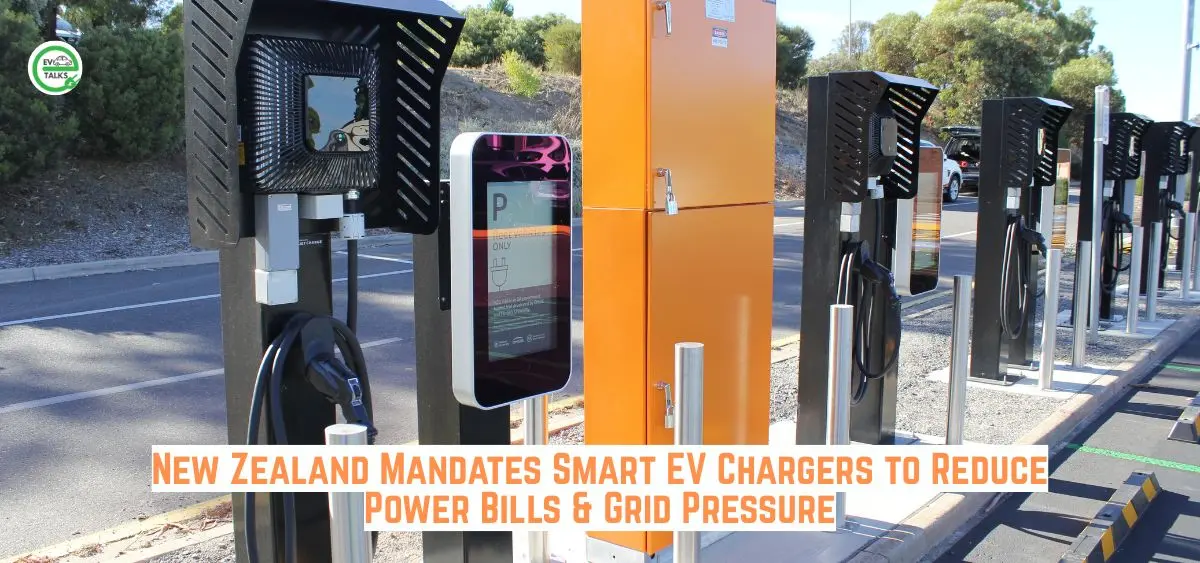

New Zealand is taking a major step toward a more efficient and future-ready energy system as it rolls out new regulations under the initiative “New Zealand Mandates Smart EV Chargers.” The policy will require all electric vehicle (EV) chargers sold in the country to meet minimum smart functionality standards, aiming to lower electricity costs and reduce pressure on the national grid.
Smarter Charging, Lower Power Bills
At the core of the reform is intelligent charging technology that automatically shifts EV charging to off-peak hours, such as overnight, when electricity demand is lower and prices are lower. Under the plan, New Zealand Mandates Smart EV Chargers to help households save up to $220 annually on power bills by 2050.

The initiative is also expected to deliver nationwide benefits by avoiding up to $4 billion in electricity network costs. By optimizing when energy is used, the system reduces the need for expensive infrastructure upgrades and additional power generation.
Preventing Grid Overload
As EV adoption continues to grow rapidly, unmanaged charging could significantly strain the electricity network. Officials warn that without intervention, peak household electricity demand could rise by up to 40%, especially during evening hours when most people plug in their vehicles.
This is where New Zealand Mandates Smart EV Chargers plays a critical role. By spreading demand across off-peak periods, the system ensures that electricity usage remains balanced and avoids costly spikes that would ultimately impact consumers.
How Smart EV Chargers Work
Smart chargers are designed to respond dynamically to multiple factors, including time-of-use pricing, real-time grid signals, and network capacity. Drivers simply plug in their vehicles, and the system automatically schedules charging to ensure the car is ready when needed—while minimizing costs and reducing strain on the grid.
The new regulations will apply to chargers with a capacity above 2.4 kW, covering most residential and commercial installations.
A Sustainable and Resilient Energy Future
The move aligns with global trends, as countries like Australia, the United Kingdom, and the European Union adopt similar smart charging standards. Beyond financial savings, the policy supports renewable energy integration, lowers emissions, and reduces reliance on fossil-fuel-based peak generation.
To make adoption easier, compliant chargers will carry clear labels, helping consumers identify energy-efficient options. Ultimately, New Zealand Mandates Smart EV Chargers is a forward-looking strategy designed to ensure that the country’s transition to electric mobility remains affordable, efficient, and sustainable for years to come.

Related Articles: