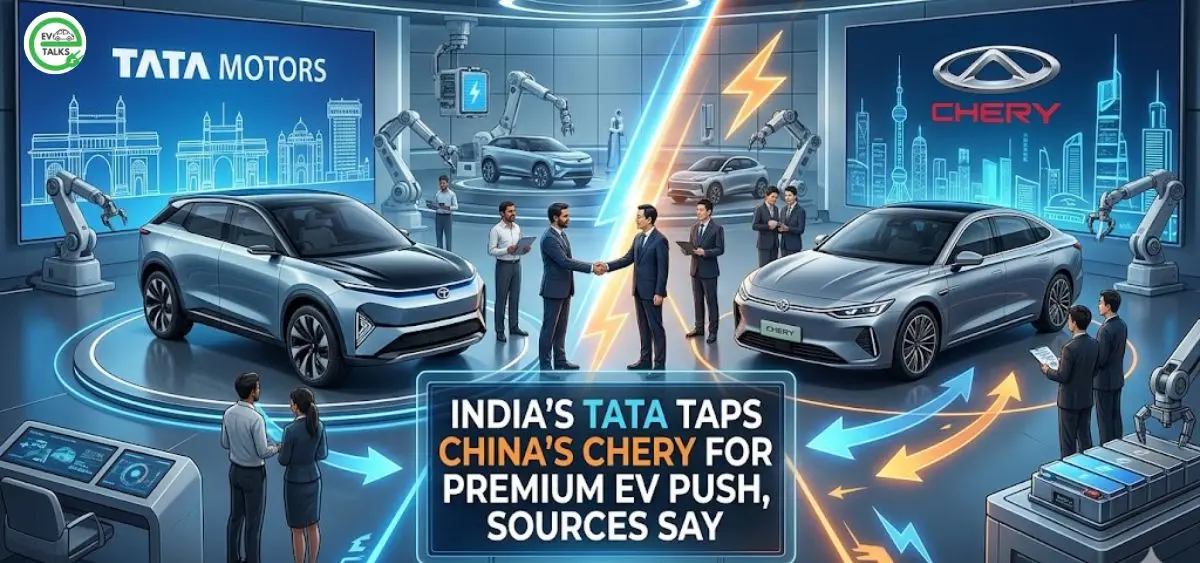

India’s Tata taps China’s Chery in a significant strategic move aimed at accelerating the development of its premium electric vehicle portfolio under the Avinya brand. According to industry sources, Tata Motors has decided to license an advanced electric vehicle architecture from Chinese automaker Chery Automobile, marking a major shift in its premium EV roadmap.
The decision comes as Tata seeks to strengthen its position in India’s rapidly growing electric vehicle market while reducing development costs and speeding up product launches.
Why Tata Chose Chery’s EV Platform
Initially, Tata Motors planned to build its Avinya vehicles using Jaguar Land Rover’s Electrified Modular Architecture (EMA). However, industry insiders revealed that the EMA platform proved too expensive for the pricing and production volumes targeted for the Avinya range.
As a result, India’s Tata taps China’s Chery by adopting the Freelander platform, which was developed within the Chery-Jaguar Land Rover (CJLR) joint venture ecosystem in China. The move is expected to significantly reduce engineering expenses and shorten vehicle development timelines.
Launch Timeline and Production Plans
The first Avinya electric vehicle is expected to launch in 2027, while a second model is scheduled for 2029. Under the current plan, initial vehicles will be imported from China as completely knocked-down (CKD) kits and assembled at Tata’s upcoming manufacturing facility in Tamil Nadu.
Over time, Tata Motors intends to increase local sourcing of components, supporting domestic manufacturing and reducing dependence on imports.
Cost Savings and Supply Chain Advantages
Industry experts believe India’s Tata taps China’s Chery to gain immediate access to a mature EV ecosystem and highly scaled supply chain. The partnership provides Tata with a practical bridge solution while the company continues developing its own long-term dedicated premium EV architecture.
Navigating India’s Regulatory Environment
Importantly, India’s Tata taps China’s Chery through a technology licensing arrangement rather than an equity partnership. This structure helps Tata navigate India’s stricter post-2020 regulations governing Chinese foreign direct investment while still benefiting from advanced EV technology.
The collaboration highlights Tata Motors’ commitment to expanding its premium EV presence and maintaining leadership in India’s evolving electric mobility sector.

Related Articles: