
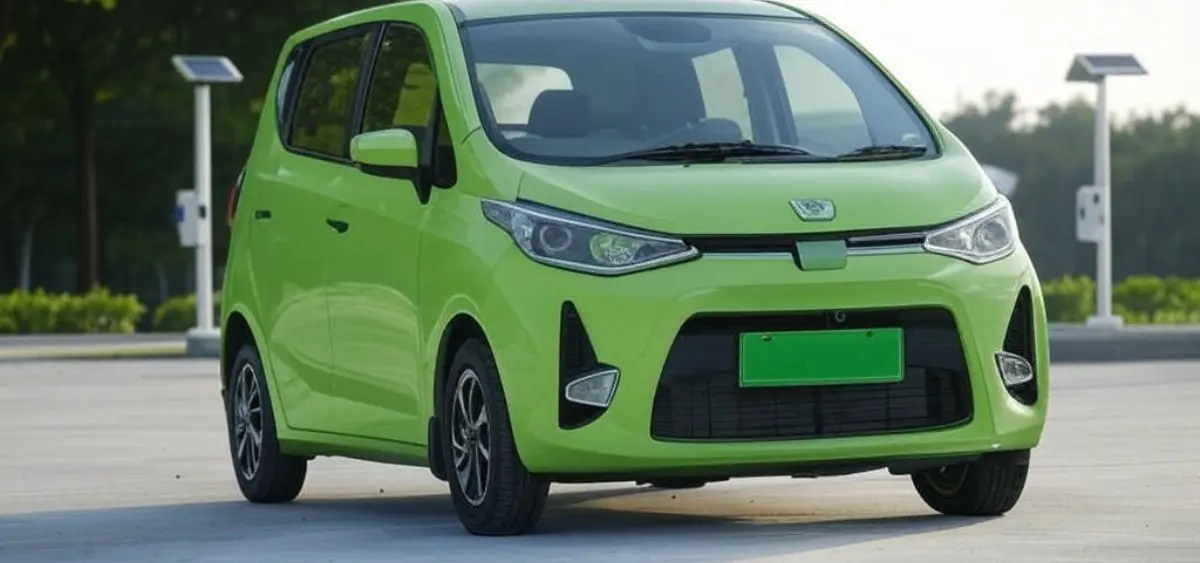

If you see a green number plate on a car, scooter, motorcycle, three-wheeler, or other registered vehicle in India, it generally identifies a battery-operated electric vehicle. Private EVs use white registration characters on a green background, while battery-operated transport vehicles use yellow characters on a green background. The green registration mark is a regulatory identifier—not a standalone subsidy or tax benefit. For EV buyers in 2026, that distinction matters. The central government has waived specified registration-related fees for battery-operated vehicles, while road-tax exemptions, parking concessions, and other incentives can vary by state or city. The registration process has also become increasingly dealer- and digitally driven through the national vehicle-registration ecosystem. Green Number Plate for EVs in India
Green Number Plate for EVs: Key Takeaways
| Question | Answer |
|---|---|
| What does a green number plate mean? | It identifies a battery-operated electric vehicle. |
| Are green plates mandatory? | Yes, for registered battery-operated EVs covered by the applicable CMVR provisions. |
| Private EV plate colour | Green background with white registration characters |
| Commercial/transport EV plate colour | Green background with yellow registration characters |
| Do hybrids get green plates? | No. Conventional and plug-in hybrids do not qualify as battery-operated vehicles merely because they have an electric drivetrain. |
| Is EV registration free? | Specified registration-related fees are exempted for battery-operated vehicles under GSR 525(E). |
| Is road tax automatically zero everywhere? | No. Road tax is primarily governed by applicable state/UT rules. |
| Is a separate “green plate application” normally required? | Usually no. For a new EV, registration is generally processed through the dealer/RTO registration system. |
| Is HSRP required? | Registered vehicles must comply with applicable HSRP requirements. |
| Does a green plate automatically mean free tolls or parking? | No. Such concessions depend on local policy. |
What Is a Green Number Plate for EVs in India?
A Green Number Plate for EVs is a registration plate with a green background used to identify battery-operated vehicles.
The system was established through an amendment to the Central Motor Vehicles Rules. MoRTH’s G.S.R. 749(E), dated 7 August 2018, specified that the registration mark for battery-operated transport vehicles would be displayed in yellow on a green background, while other battery-operated vehicles would use white on green.
This is important because many online articles incorrectly describe the green plate as a scheme introduced in 2020. The legal foundation for the EV registration colour actually predates that.
The green background provides an immediately recognizable visual distinction between electric and conventional vehicles.
Why do electric cars have green number plates?
The primary purpose is identification.
A green plate enables enforcement agencies and transport authorities to identify registered battery-operated vehicles more easily. That can help with the implementation of EV-specific policies, registration records, incentives, and regulatory measures.
It is therefore more accurate to think of the green plate as a regulatory identification system rather than as the benefit itself.
What Does the Green Number Plate in India Mean?
The colour combination tells you two things:
- The vehicle is battery-operated/electric, and
- The vehicle’s use category can be identified through the registration characters.
A) Green plate with white letters
This is used for non-transport/private battery-operated vehicles.
Examples can include:
- Private electric cars
- Private electric scooters
- Electric motorcycles
- Other eligible privately registered battery-operated vehicles
B) Green plate with yellow letters
This applies to battery-operated transport vehicles.
Examples may include:
- Electric taxis
- Electric commercial three-wheelers
- Electric buses
- Electric goods vehicles
- Other registered battery-operated transport vehicles
The distinction is important because some articles incorrectly describe every commercial EV as having a black registration number on green. The central government has specifically stated that battery-operated transport vehicles use yellow characters on a green background.
Which Vehicles Are Eligible for a Green Number Plate?
The basic requirement is that the vehicle falls within the regulatory definition of a battery-operated vehicle.
In practical terms, the green registration mark is intended for vehicles powered exclusively by electric energy from a traction battery, rather than vehicles that continue to rely on an internal-combustion engine as part of their propulsion system.
EVs that qualify
Generally, eligible registered battery-electric vehicles include:
- Electric scooters
- Electric motorcycles
- Electric cars
- Electric three-wheelers
- Electric buses
- Electric trucks
- Other approved battery-operated vehicle categories
Do hybrid cars get green number plates?
No.
A conventional hybrid combines an internal-combustion engine with an electric motor. A plug-in hybrid also uses both electric propulsion and an internal-combustion engine.
Consequently, being partly electric does not automatically make a vehicle a battery-operated vehicle for green registration-plate purposes.
The supplied industry sources also consistently identify hybrids and plug-in hybrids as outside the green-plate category.
Green Number Plate vs. Other Vehicle Number Plates in India
India uses different registration-plate formats to distinguish vehicle categories and purposes.
| Plate type | Typical purpose |
|---|---|
| White background + black characters | Private/non-transport vehicles |
| Yellow background + black characters | Transport/commercial vehicles |
| Green background + white characters | Private battery-operated EVs |
| Green background + yellow characters | Battery-operated transport EVs |
| Black background | Certain rental/self-drive categories under applicable rules |
| Blue | Diplomatic/consular vehicles |
| Red temporary registration | Temporary registration |
| Military format | Defense vehicles |
The important point is that green is specifically associated with battery-operated vehicles, while other colors identify different registration or usage categories.
Is a Green Number Plate Mandatory for EVs in India?
For a registered battery-operated vehicle covered by the applicable Central Motor Vehicles Rules, yes.
The green registration mark is not an optional decorative plate that an EV owner can choose instead of a conventional white or yellow plate.
The vehicle’s registration must correspond with the approved registration format, and the number plate must comply with applicable HSRP requirements.
Using a customized plate, an incorrectly colored plate, or an unauthorized registration plate can create compliance problems.
What Is HSRP, and Why Does It Matter for an EV?
HSRP stands for High Security Registration Plate.
It is a standardized registration plate designed with security and traceability features. MoRTH’s HSRP framework requires plates to conform to specified standards and provides for their supply and affixation through authorized channels.
For an EV owner, this means the green number plate should not simply be a locally printed green plate.
A compliant plate should be obtained through the appropriate registration/dealer/authorized HSRP process.
What should an EV owner check?
Before accepting delivery, check that:
- The registration number matches the RC.
- The plate colour corresponds to the vehicle category.
- The front and rear plates are correctly fitted.
- The HSRP is properly affixed.
- The registration details appear correctly in the vehicle registration system.
- Any required third registration mark/sticker is handled according to applicable rules.
MoRTH has also repeatedly emphasized the use of authorized HSRPs and proper recording in the VAHAN ecosystem.
How to Apply for a Green Number Plate for EVs in India
There generally isn’t a separate government form called a “Green Number Plate Application.”
Instead, the green plate is a consequence of registering the eligible electric vehicle in the appropriate category.
For a new EV, the process is commonly handled by the dealer through the registration system.
Step 1: Purchase an eligible EV.
Buy a type-approved battery-electric vehicle from an authorized manufacturer/dealer.
The dealer provides the required vehicle documentation, including the sales certificate and other registration-related information.
Step 2: Complete vehicle registration.
The vehicle must be registered with the relevant registering authority.
Parivahan identifies Form 20 as the application for registration of a motor vehicle.
For new vehicles, dealer-point registration has reduced the need for customers to personally handle every RTO step.
Step 3: Submit the required documents.
Depending on the state, vehicle category, and registration circumstances, documents can include:
- Identity proof
- Address proof
- Form 20
- Sales certificate/Form 21
- Roadworthiness documentation/Form 22 where applicable
- Valid insurance
- Temporary registration, if issued
- PAN/Form 60/61 where applicable
- Dealer/manufacturer invoice
- Financing or hypothecation documents, if applicable
The exact document checklist can vary, so the registering authority/dealer’s current checklist should take precedence. Parivahan’s registration guidance provides the central framework.
Step 4: Registration details are entered.
The dealer/RTO processes the registration and assigns the vehicle’s registration mark.
For a qualifying battery-operated vehicle, the registration mark follows the green-background format.
Step 5: HSRP fitment
The compliant HSRP is manufactured/issued through the authorized process and fitted to the vehicle.
For most new EV buyers, this is normally coordinated through the dealership rather than requiring the customer to independently manufacture a plate.
Step 6: Verify your documents
Before leaving the dealership, check:
RC → Registration number → HSRP → Insurance → Chassis/VIN
All important details should match.
Can You Apply for a Green Number Plate Online?
Vehicle registration services can be accessed digitally through the Parivahan/VAHAN ecosystem, but there is not necessarily a separate standalone “green number plate online” application.
For a new EV, the dealer often completes the registration workflow.
Parivahan provides online vehicle-related services and registration forms, while dealer-point registration has made new-vehicle registration more streamlined.
So if you search for “Green Number Plate for EVs in India Application is online or offline?”, the practical answer is:
The registration process can involve online VAHAN/Parivahan services and dealer-point processing; physical RTO involvement depends on the transaction and applicable state procedure.
Do not pay a third party simply because it advertises a special “green number plate application” unless it is an authorized service provider.
What Documents Are Required for an EV Green Number Plate?
There is no universal separate green-plate document package. Instead, the documents are largely those required for vehicle registration.
| Document | Why it may be required |
|---|---|
| Form 20 | Motor vehicle registration application |
| Identity proof | Establishes the registered owner’s identity |
| Address proof | Establishes registration jurisdiction |
| Sales certificate/Form 21 | Confirms vehicle purchase |
| Roadworthiness certificate/Form 22 | Vehicle compliance documentation |
| Insurance | Mandatory motor insurance requirement |
| Temporary registration | Where temporary registration has been issued |
| PAN/Form 60/61 | Where applicable |
| Dealer/manufacturer invoice | Vehicle and transaction details |
| Hypothecation documents | If the EV is financed |
Parivahan’s current registration guidance should be treated as the primary checklist, with state-specific requirements taking precedence where applicable.
How Much Does a Green Number Plate for an EV Cost?
This is another area where online articles often create confusion.
The registration fee exemption does not mean every component of EV registration is necessarily ₹0.
Under G.S.R. 525(E), dated 2 August 2021, battery-operated vehicles are exempt from specified fees for issuance or renewal of the registration certificate and assignment of a new registration mark.
However, an owner can still encounter costs associated with:
- HSRP/plate fitment
- Dealer processing
- Applicable state taxes
- Insurance
- Choice/fancy registration number
- Other statutory or transaction-specific charges
Therefore, there is no sensible nationwide answer such as “a green plate costs ₹X.”
Registration fee vs. road tax
These are also different.
Registration-fee exemption is a central rule. Road-tax treatment depends on the applicable state/UT policy.
That distinction is particularly important when calculating the on-road price of an EV.
Do EVs Get Road-Tax Exemption in India?
Not uniformly across India.
Road tax is substantially a state/UT matter, so an EV buyer should check the policy applicable in the state where the vehicle is registered.
For example, Delhi’s current EV policy provides substantial exemptions, but its terms include vehicle-price conditions for electric cars. The Delhi government states that eligible electric vehicles registered during the policy period receive road-tax and registration-fee exemptions, with specific provisions for electric cars above and below the ₹30 lakh ex-showroom threshold.
Other states have their own:
- EV policies
- Tax exemptions
- Time limits
- Vehicle-category restrictions
- Price caps
- Subsidies
This is why an article should not claim that every EV automatically gets 100% road-tax exemption across India.
What Benefits Do Green Number Plates Actually Provide?
The most important distinction is this:
The green number plate itself does not create every EV benefit. It identifies the vehicle so that applicable EV policies can be administered.
1. Registration-fee exemption
Battery-operated vehicles receive exemption from specified registration-related fees under the central rules.
2. Potential road-tax savings
Depending on the state, EV owners may receive:
- Full road-tax exemption
- Partial exemption
- Time-limited exemption
- Category-specific exemption
- No exemption
3. Easier EV identification
The green plate allows enforcement authorities, parking operators, and other stakeholders to identify EVs.
4. Potential local concessions
Some states, cities, or institutions may offer EV-specific:
- Parking concessions
- Charging privileges
- Local incentives
- Toll-related benefits
But these are not universal nationwide benefits.
5. Permit-related advantages for certain transport EVs
MoRTH has separately exempted battery-operated transport vehicles from permit requirements under the relevant notification. This is a regulatory benefit associated with the vehicle category, not simply a reward for physically displaying a green plate.
Do Green Number Plate EVs Need a PUC Certificate?
A battery-electric vehicle has no tailpipe exhaust emissions, so the conventional emissions-testing logic applied to petrol, diesel and other combustion vehicles does not operate in the same way.
However, EV owners should avoid treating every registration document as automatically irrelevant.
The registration system and Parivahan documentation still include PUC-related fields and requirements for many vehicle transactions, while the applicability to a particular battery-operated vehicle can differ.
For everyday ownership, an EV’s absence of tailpipe emissions means there is no combustion exhaust to measure, but owners should follow the current Parivahan/RTO requirements for their specific vehicle and transaction.
Green Number Plate and PM E-DRIVE: Are They the Same Thing?
No.
This is one of the most important distinctions for EV buyers in 2026.
The green number plate is a vehicle-registration identification requirement.
PM E-DRIVE is a government programme designed to accelerate electric mobility through demand incentives and support for areas including charging infrastructure and the EV ecosystem.
The PM E-DRIVE scheme was initially approved with a ₹10,900-crore outlay. Its implementation has subsequently been extended, with different terminal dates and amendments applying to different EV segments.
Therefore:
Green plate ≠ PM E-DRIVE subsidy.
A vehicle may have a green number plate without the buyer receiving a particular PM E-DRIVE incentive.
Likewise, eligibility for a government incentive depends on the applicable scheme rules, vehicle category, manufacturer compliance, and available allocation—not simply on the colour of the number plate.
Green Number Plate Rules Buyers Should Know in 2026
Rule 1: The plate must match the vehicle category.
Private and transport EVs have different registration-character colors.
Rule 2: Hybrids do not receive the standard EV green plate.
Having an electric motor does not automatically make a vehicle a battery-operated EV for registration purposes.
Rule 3: Use a compliant HSRP.
Avoid locally printed or customized plates.
Rule 4: Register the vehicle properly.
A green plate is not a substitute for legal vehicle registration.
Rule 5: Do not assume state incentives are nationwide.
Road-tax, parking, and other concessions must be checked against the relevant state/city policy.
Rule 6: Keep registration and insurance details consistent.
The registration number, chassis/VIN, and insurance information should match.
What Has Changed for EV Buyers in 2026?
The green plate itself has not transformed into a new subsidy programme. The bigger change is the broader EV ecosystem around it.
India’s EV policy landscape now includes the PM E-DRIVE program, charging infrastructure support, state-level policies, and expanding domestic EV manufacturing initiatives.
The Ministry of Heavy Industries says PM E-DRIVE has a ₹10,900 crore outlay and supports multiple categories, including e-2Ws, e-3Ws, e-ambulances, e-trucks, e-buses and charging infrastructure.
As of 2026, the programme has also continued to evolve through amendments. The official PM E-DRIVE portal lists further scheme notifications issued during 2026, demonstrating that incentive and implementation conditions can change over time.
For consumers, the practical lesson is simple: check the current scheme rules at the time of purchase rather than relying on an old EV subsidy article.
Green Number Plate: Common Misconceptions
| Myth | Reality |
|---|---|
| Green plate means free tolls everywhere. | No. Toll concessions are location/policy specific. |
| Every EV gets a 100% road-tax exemption. | No. State policies differ. |
| Hybrid cars get green plates. | No. Green registration marks are for qualifying battery-operated vehicles. |
| The green plate itself is a subsidy. | No. It is primarily an identification/registration requirement. |
| EV registration means no other charges. | No. HSRP, insurance, and other applicable charges can remain. |
| You must always visit the RTO personally. | Not necessarily. Dealer-point and online processes have reduced physical visits for many new-vehicle registrations. |
| Any green plate is acceptable. | No. It should comply with the applicable registration and HSRP requirements. |
Green Number Plate for EVs: Practical Ownership Checklist
When taking delivery of an electric car, scooter, or motorcycle, spend five minutes checking the following:
Before leaving the dealership:
- Confirm the registration number.
- Check that the plate has the correct green background.
- Verify white or yellow characters according to vehicle use.
- Confirm HSRP fitment.
- Match the plate number with the RC.
- Check insurance details.
- Verify the chassis/VIN.
- Check whether applicable state EV incentives have been reflected in the invoice.
- Keep digital copies of registration and insurance documents.
The last point is particularly useful because digital transport-document systems such as mParivahan provide access to registration, insurance, tax, and other vehicle information.
Expert Insight from Electric Vehicle Talks
The biggest misunderstanding surrounding the Green Number Plate for EVs is that the plate itself is the incentive.
It isn’t.
The plate is best understood as a visual and regulatory identifier for battery-electric vehicles. The financial advantage comes from separate government measures such as central registration-fee exemptions, state road-tax policies, and applicable EV incentive schemes.
For a buyer in 2026, this distinction can prevent an expensive assumption.
For example, two identical electric cars can have the same green plate but produce very different on-road prices depending on the state in which they are registered. One state may provide a major road-tax concession, while another may offer a smaller or time-bound benefit.
The second important point is that EV registration has become more digital and dealer-driven. Buyers should therefore focus less on finding a separate “green plate application” and more on verifying that the vehicle has been correctly registered as a battery-operated vehicle and that the authorized HSRP has been fitted.
Finally, EV buyers should separate three things when comparing ownership costs:
registration benefits + state EV incentives + purchase subsidy/demand incentives.
They are not interchangeable.
The EV ecosystem itself is also moving beyond passenger cars. PM E-DRIVE continues to cover multiple electric vehicle categories and charging infrastructure, while government programmes are expanding support for buses, trucks, ambulances, and other commercial applications.
That makes the green number plate increasingly useful as a simple visual identifier across India’s growing electric mobility fleet.
People Also Ask
1. What is a Green Number Plate for EVs?
A Green Number Plate identifies a qualifying battery-operated electric vehicle in India. Private EVs generally use white registration characters on a green background, while battery-operated transport vehicles use yellow characters on green.
2. Are Green Number Plates mandatory for electric vehicles?
Yes. Registered battery-operated EVs must use the applicable green-background registration format under the Central Motor Vehicles Rules.
3. Why do electric cars have green number plates?
The green plate makes electric vehicles easily identifiable and helps authorities administer EV-specific registration, policies, and incentives.
4. Can a hybrid car get a green number plate?
No. Conventional and plug-in hybrid vehicles use an internal-combustion engine and do not qualify as battery-operated vehicles simply because they also have electric propulsion.
5. Is the EV registration fee waived in India?
Specified fees for issuing or renewing the registration certificate and assigning a new registration mark are exempted for battery-operated vehicles under GSR 525(E). Other charges may still apply.
6. Do green number plate EVs get free tolls?
Not as a nationwide rule. Toll concessions depend on the relevant highway, state, or local policy.
7. Can I apply for a green number plate online?
The vehicle-registration process can use online Parivahan/VAHAN services and dealer-point registration. There is generally no separate standalone application simply for the colour of the plate.
Green Number Plate for EVs in India: FAQs
Is a green number plate available for electric scooters?
Yes. A registered battery-operated electric scooter falls under the EV registration framework and uses the applicable green-background registration mark.
What colour is the number plate of an electric taxi?
A battery-operated transport vehicle uses a green background with yellow registration characters under the central registration-mark rule.
Is a full green number plate compulsory for EVs?
The applicable EV registration format uses a green background. It should not be confused with the green fuel sticker/strip used for other regulatory purposes on conventional vehicles.
Do electric vehicles pay registration fees?
Specified registration-related fees for battery-operated vehicles are exempt under the central rules. This does not mean every cost associated with vehicle registration is eliminated.
Does a green number plate reduce insurance premiums?
Not automatically. Insurance pricing depends on the vehicle, insurer, coverage, risk factors, and policy terms. The green colour of the registration plate itself does not guarantee a particular premium.
Can an old electric vehicle get a green number plate?
The green registration format applies to qualifying battery-operated vehicles, including existing vehicles where applicable. The exact process for an already registered EV depends on its registration status, age, and the applicable state/HSRP procedure.
Where can I check my EV registration details?
The official Parivahan/VAHAN ecosystem provides vehicle-registration and related digital services. Owners can also use mParivahan for access to relevant vehicle records and documents.
Conclusion
The Green Number Plate for EVs in India is now a familiar part of the country’s transition toward electric mobility. But its significance is more practical than symbolic.
It tells authorities and other road users that the registered vehicle is a qualifying battery-operated EV. Private vehicles use white characters on green, while transport EVs use yellow characters on green.
The financial advantages associated with EV ownership come from separate policies. Central rules provide specified registration-fee exemptions, while road-tax relief and local concessions vary across states and cities. Meanwhile, programmes such as PM E-DRIVE continue to evolve and support different parts of India’s electric-mobility ecosystem.
For buyers, the safest approach is therefore straightforward: verify the current state incentive, confirm the registration category, ensure HSRP compliance, and check the final on-road price rather than assuming that every green-plate EV receives identical benefits.
As India’s electric fleet expands across two-wheelers, cars, three-wheelers, buses, and commercial vehicles, the green registration mark will remain an important part of the country’s EV regulatory framework.
For more practical EV ownership guides, charging information, technology updates, and electric-mobility news, explore Electric Vehicle Talks.

Related Articles:









