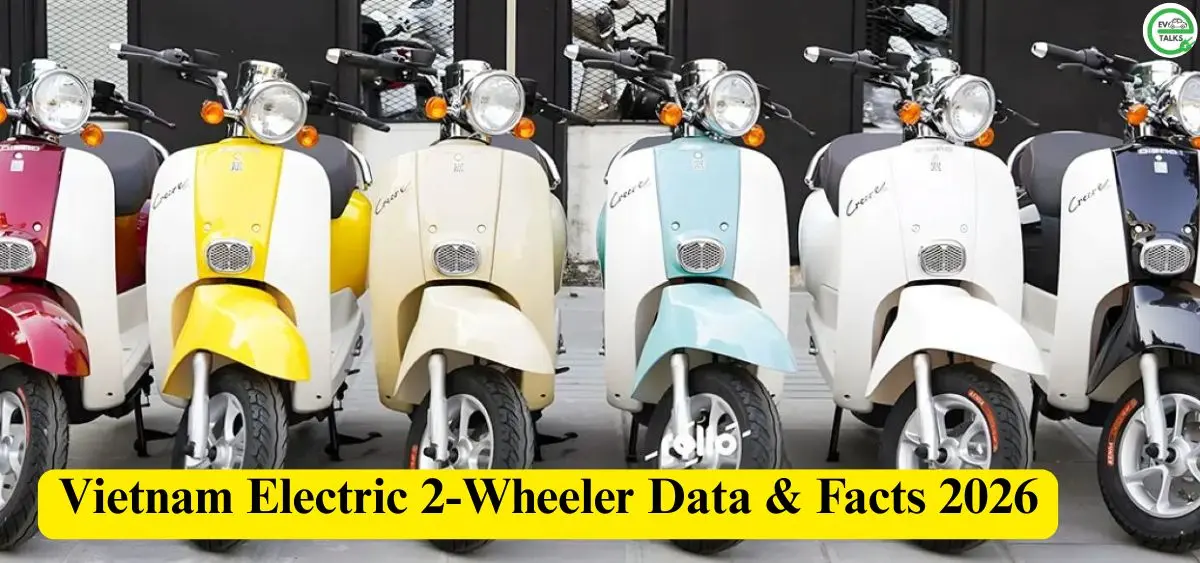

The latest Vietnam Electric 2-Wheeler Data & Facts 2026 highlights the country’s rapid transformation into one of the world’s most important electric mobility markets. Vietnam is now the third-largest electric two-wheeler (E2W) market globally and the largest in Southeast Asia. Rising fuel prices, stricter emissions regulations, expanding charging infrastructure, and government-backed urban mobility reforms are accelerating the shift from gasoline-powered motorcycles to electric alternatives.
With electric scooter adoption reaching record levels over the past year, Vietnam is positioning itself as a leading force in the global electric transportation industry.

Electric Two-Wheeler Market Records Explosive Growth
Vietnam’s electric two-wheeler market has experienced extraordinary momentum in 2026. Following a sharp increase in petrol prices beginning in March, electric vehicle sales surged dramatically, recording an impressive 84.5% year-to-date growth.
According to the latest Vietnam Electric 2-Wheeler Data & Facts 2026, the consumer electric two-wheeler market is expected to reach a valuation of approximately USD 271 million in 2026, up from USD 222 million in 2025. Meanwhile, the commercial electric fleet segment—including delivery services, logistics operators, and ride-hailing companies—contributes an additional USD 248 million as businesses increasingly electrify their operations.
Industry analysts forecast a long-term compound annual growth rate (CAGR) between 9.76% and 11.40% through 2032–2034.
Electric Scooters Dominate the Market
Electric scooters remain the preferred choice among Vietnamese consumers, accounting for nearly 75% of the electric two-wheeler market. Electric bicycles continue to serve students and short-distance commuters but hold a smaller market share.
Battery technology has also matured rapidly. Approximately 95% of electric two-wheelers now use lithium-ion or Lithium Iron Phosphate (LFP) battery systems, offering improved durability, safety, and driving range.
Manufacturers are serving a broad range of buyers, from low-speed electric bicycles that do not require a driver’s license to premium high-performance electric motorcycles designed for urban professionals.
VinFast Leads the Competitive Charge
Vietnam’s domestic EV champion VinFast has become one of the biggest success stories in the sector. The company surged into second place in overall two-wheeler sales, behind only Honda, after recording an extraordinary 204.9% growth rate.
In March 2026 alone, VinFast sold more than 90,000 electric units. The company also celebrated a major milestone in June by producing its one-millionth electric motorcycle since its inception.
Other key competitors include Yadea, which posted 47.2% growth, alongside Pega, DK Bike, Yamaha, and SYM, all strengthening their presence in the fast-growing electric segment.
Low Emission Zones Accelerate EV Adoption
A major catalyst behind market growth is the Vietnamese government’s new Low Emission Zone (LEZ) strategy.
Beginning July 1, 2026, stricter emissions controls and gasoline vehicle restrictions will take effect within Hanoi’s Ring Road 1. Rather than implementing a blanket ban on motorcycles, authorities are targeting high-pollution urban zones to encourage cleaner transportation.
The roadmap extends restrictions to Ring Road 2 by January 2028, with the long-term objective of establishing large-scale zero-emission urban centres by 2030. Local governments are also offering trade-in incentives and subsidies to help residents replace older gasoline-powered motorcycles with electric scooters.
Urban Mobility Challenges Drive the Transition
The findings in Vietnam Electric 2-Wheeler Data & Facts 2026 show that urban mobility pressures are becoming a critical factor behind EV adoption.
Vietnam has approximately 77 million registered motorcycles serving a population of around 101 million people. About 86% of households own at least one motorcycle, while two-wheelers account for 85–90% of road traffic and roughly 96% of passenger vehicles nationwide.
Ho Chi Minh City alone is home to an estimated 8–9 million motorcycles, making it one of the densest two-wheeler markets in the world. The metropolitan area exceeds 14 million residents, while Hanoi has approximately 8.8 million inhabitants. Five additional metropolitan regions each have populations exceeding one million people.
Although Vietnam is investing heavily in transportation infrastructure, with public investment surpassing 5.7% of GDP, congestion and air pollution remain major challenges. As a result, electric two-wheelers are increasingly viewed as a practical solution for reducing emissions, improving urban air quality, and supporting sustainable mobility.
Outlook
The latest Vietnam Electric 2-Wheeler Data & Facts 2026 confirms that Vietnam is entering a decisive phase in its transportation transition. Strong consumer demand, supportive regulations, growing commercial fleet electrification, and domestic manufacturing expansion are expected to keep the country at the forefront of the global electric two-wheeler revolution for years to come.

Related Articles: