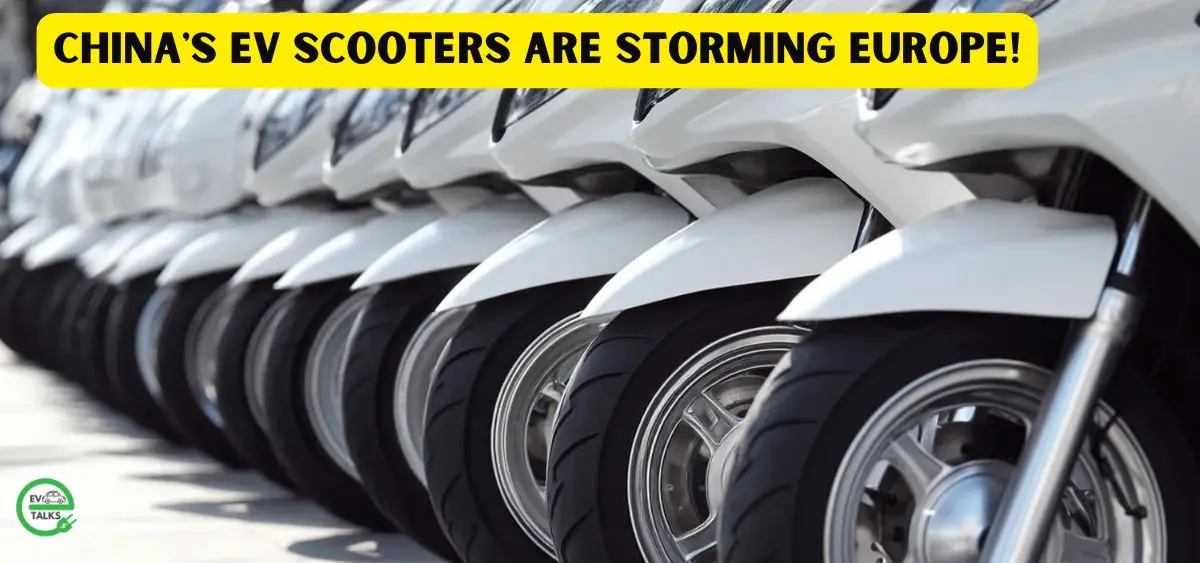

Chinese electric mobility giants are accelerating their global ambitions as China’s two-wheelers ride the EV wave into Europe, targeting a fast-growing market driven by sustainability goals and rising fuel costs. After dominating the domestic EV sector, these companies are now focusing on Europe to replicate similar success.
Strategic Expansion Through Localisation
Leading the charge is Yadea Group, the world’s largest electric two-wheeler maker by sales. The company is planning to establish a manufacturing facility in Hungary, aiming to overcome logistical challenges and build a localised supply chain. This move reflects a broader shift from simple exports to full-scale regional integration.
Chinese brands are also investing in flagship retail outlets to strengthen their presence. Yadea’s premium showroom in Budapest highlights how companies are moving away from white-label distribution and building direct consumer engagement across Europe.
Tech-Driven Disruption in Urban Mobility
Companies like NIU Technologies, Segway-Ninebot, and Tezeus are reshaping the market with advanced electric scooters and e-bikes. These vehicles feature IoT-enabled systems, AI-powered sensors, and high-performance graphene batteries, appealing to tech-savvy urban commuters.
This innovation-driven approach is helping Chinese brands stand out in a competitive European market where legacy manufacturers have been slower to scale electric alternatives.
Competitive Edge Over European Brands
One of the key reasons China’s two-wheelers have successfully ridden the EV wave into Europe is their pricing advantage. Leveraging massive domestic production capacity, Chinese manufacturers offer e-bikes priced between $400 and $800, significantly lower than European counterparts that often exceed $1,000.
Additionally, Chinese models typically provide higher battery capacity (400–600 Wh) and stronger motor output, making them more attractive for daily urban use. Extended warranties further enhance their value proposition.
Market Drivers Fueling Growth
Several factors are accelerating this expansion. Rising oil prices, partly triggered by geopolitical tensions such as the Iran conflict, have increased demand for cost-effective electric mobility. Yadea has reported a 70% surge in overseas sales compared to 2024, with strong demand across Southeast Asia and South America.
European cities like London and Paris are also becoming key targets due to strict emission regulations and worsening traffic congestion. These conditions create an ideal environment for electric two-wheelers to thrive.
Challenges and Regulatory Hurdles
Despite strong momentum, challenges remain. European regulators are closely scrutinising data security, software integration, and trade practices. While two-wheelers face fewer barriers than electric cars, compliance requirements still pose risks for rapid expansion.
A Market Full of Potential
With electric vehicles accounting for just 15% of the global two-wheeler market, the growth potential remains vast. As infrastructure improves and demand rises, China’s two-wheelers riding the EV wave into Europe is expected to intensify in the coming years.
The trend clearly signals a shift in global mobility, where affordability, technology, and sustainability converge—firmly placing Chinese manufacturers at the forefront as China’s two-wheelers ride the EV wave into Europe, which continues to reshape urban transportation.

Related Articles: