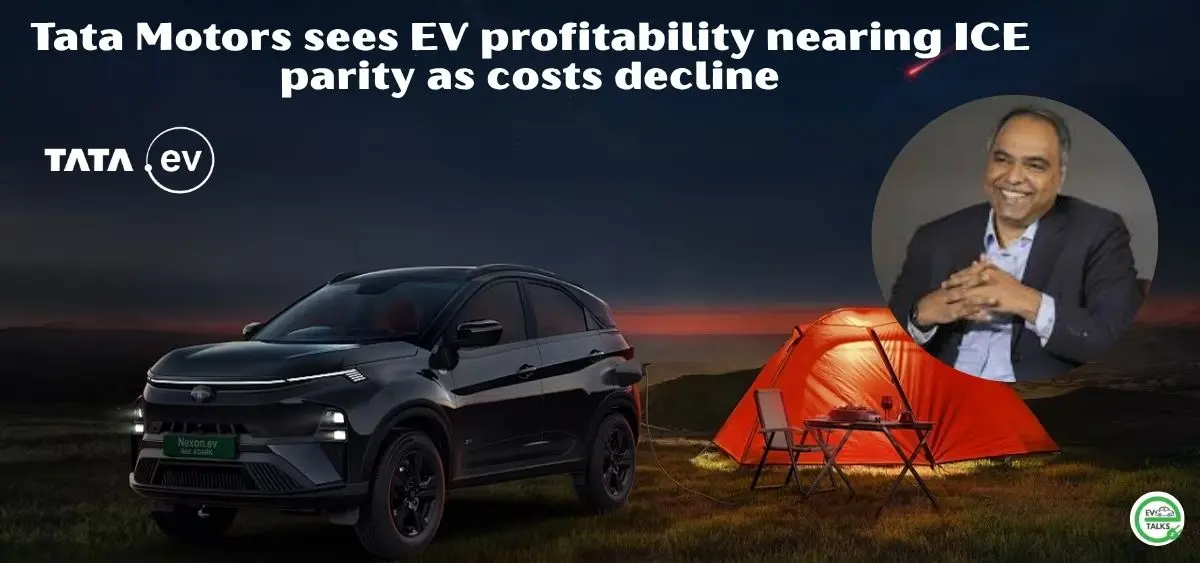

In a significant development for India’s automotive industry, Tata Motors sees EV profitability steadily approaching parity with internal combustion engine (ICE) vehicles. This shift is being driven by falling battery costs, increased localisation, and rising regulatory expenses associated with petrol and diesel vehicles. The company’s strong performance in FY26, with record EV sales surpassing 92,000 units, highlights the growing acceptance and viability of electric mobility in the country.
Strong Financial Momentum in EV Segment
According to Tata Motors, the EV business is already delivering healthy profitability despite intense competition. Speaking during the FY26 earnings call, Managing Director and CEO Shailesh Chandra emphasized that EV margins are slightly lower than those of ICE vehicles but are rapidly closing the gap. This reinforces the view that Tata Motors sees EV profitability as a sustainable and scalable business model in the near future.

Key Drivers Behind Improving EV Economics
Several critical factors are contributing to this transformation. One of the most important is the steady decline in battery costs, currently hovering around $130 per kWh. This reduction significantly improves the cost structure of electric vehicles, making them more competitive with traditional cars.
Additionally, Tata Motors has focused heavily on localisation and vertical integration. By manufacturing battery packs and components domestically and collaborating with group companies such as Tata AutoComp, the company has successfully reduced dependency on imports and lowered production costs. This strategy further supports the claim that Tata Motors sees EV profitability improving at a rapid pace.
Regulatory Pressure on ICE Vehicles
While EV costs are decreasing, the cost of manufacturing ICE vehicles is expected to rise. Stricter emission norms and regulatory requirements will increase the need for advanced technologies, making petrol and diesel vehicles more expensive. This regulatory pressure is likely to accelerate the transition toward electric mobility, strengthening the position that Tata Motors sees EV profitability nearing parity sooner than expected.
Focus on Affordable EVs and Market Expansion
Tata Motors is also strategically targeting the mass-market segment, particularly vehicles priced under ₹10 lakh. Innovative solutions like battery-as-a-service (BaaS), already introduced in models like the Punch EV, aim to reduce upfront costs and make EVs more accessible to a wider audience.
With these initiatives, the company is targeting a consistent 50% market share in India’s rapidly growing EV segment. As price parity with ICE vehicles comes closer—some models already within a 10% difference—the adoption of EVs is expected to accelerate further.
No Shift Towards Hybrid Technology
Despite industry trends, Tata Motors remains committed to pure electric mobility and has no immediate plans to introduce hybrid vehicles. The company’s confidence in EV economics signals a clear long-term strategy focused on sustainability and innovation.
Conclusion
With declining costs, supportive policies, and strategic execution, Tata Motors sees EV profitability aligning closely with ICE vehicles. This transition not only strengthens the company’s market leadership but also marks a pivotal moment in India’s journey toward cleaner and more sustainable transportation.

Related Articles: