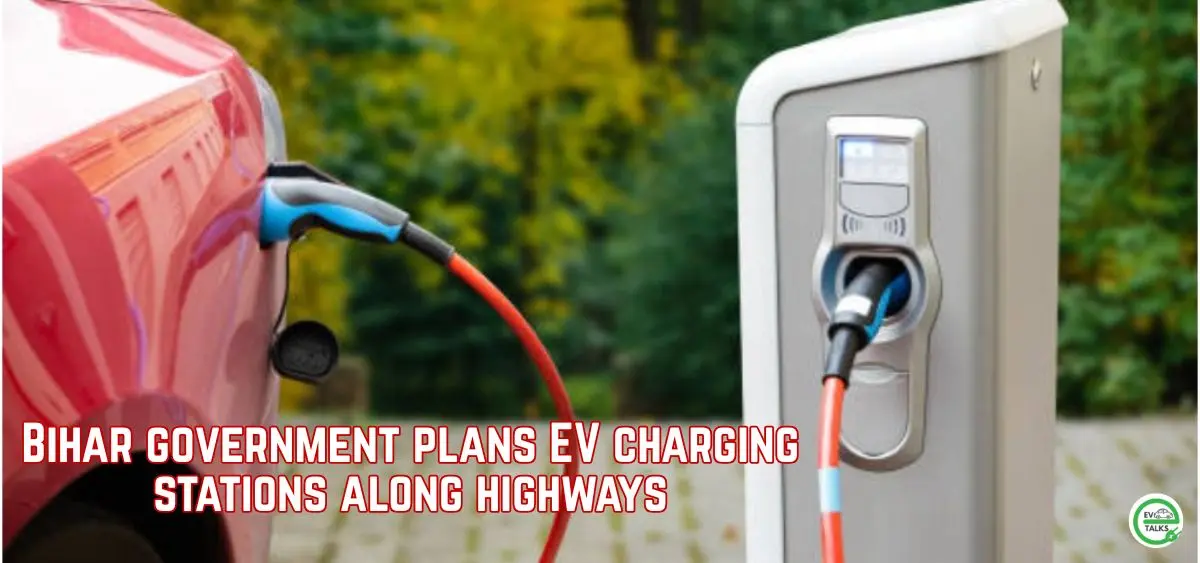

In a major push towards sustainable mobility, the Bihar government plans EV charging stations along highways to strengthen electric vehicle infrastructure across the state. This strategic move is aimed at making long-distance EV travel more convenient while supporting the upcoming deployment of electric public transport.
Highway Charging Network Expansion
To address the growing demand for EV infrastructure, the Bihar government plans EV charging stations along highways at key roadside locations such as dhabas, hotels, motels, and petrol pumps. These locations have been carefully selected to ensure accessibility and convenience for travelers, especially those covering long distances.

The initiative directly tackles the issue of “range anxiety,” a common concern among EV users regarding battery life and the availability of charging points. By placing stations at frequent intervals along highways, the government aims to create a seamless travel experience.
Digital Integration for Easy Access
To further enhance user convenience, the state transport department is working on an integrated digital platform. This platform will display all EV charging station locations via Google Maps, enabling users to easily locate the nearest charging points.
This digital solution will play a crucial role as the Bihar Govt. plans EV charging stations along highways, ensuring that drivers can plan their journeys efficiently without worrying about charging availability.
Collaboration with Industry Stakeholders
Transport Secretary Raj Kumar recently held discussions with automobile manufacturers, petroleum companies, and original equipment manufacturers (OEMs). The focus of the meeting was to finalize technical standards, operational requirements, and infrastructure planning.
Companies have been directed to submit details of existing and proposed charging stations to ensure coordinated expansion. This collaborative approach is expected to accelerate the development of a robust EV ecosystem.
Supporting Electric Bus Rollout
The infrastructure development is being aligned with the Centre’s plan to provide around 400 electric buses to Bihar. The government intends to have the charging network fully operational before these buses are deployed.
The distribution plan includes:
- Patna: 150 buses (75 for city routes and 75 for intercity services like Rajgir and Biharsharif)
- Muzaffarpur, Gaya, Bhagalpur, Darbhanga, and Purnia: 50 buses each
This makes it even more critical as the Bihar government plans EV charging stations along highways to support both public and private EV usage.
Policy Goals and Incentives
Under the Bihar Electric Vehicle Policy, the state has set ambitious targets:
- 15% EV share in new registrations by 2028
- 30% EV share by 2030
To encourage adoption, the government is offering:
- 75% subsidy on registration charges
- 25% capital subsidy (up to ₹10 lakh) for the first 250 public charging stations
- Industrial electricity rates for EV charging
Conclusion
With a clear roadmap and strong policy backing, the Bihar government plans EV charging stations along highways as part of a broader vision to promote clean mobility. This initiative not only strengthens infrastructure but also sets the stage for a greener and more efficient transport system in the state.

Related Articles: