
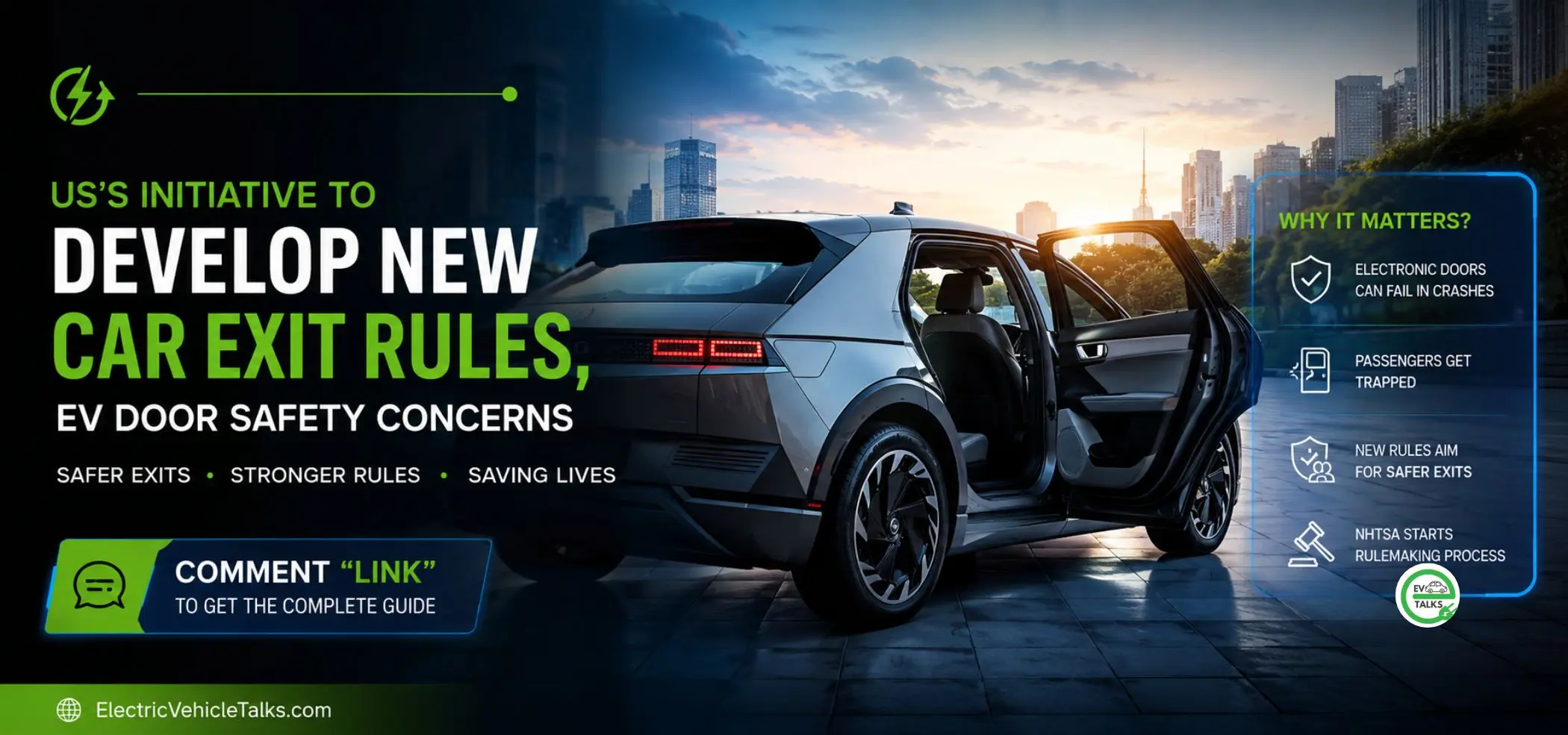

The US’s initiative to develop new car exit rules marks a major step toward improving vehicle safety after several incidents in which drivers and passengers became trapped inside crashed vehicles with electronically operated doors. The National Highway Traffic Safety Administration (NHTSA) has officially started the federal rulemaking process to establish new standards that ensure occupants can safely exit vehicles even if electrical systems fail during or after a collision.
The move follows growing concerns over electric door systems used by Tesla and several other automakers, where flush-mounted electronic door handles have reportedly made emergency exits difficult after crashes and vehicle fires.
Why is NHTSA introducing new vehicle exit safety rules?
NHTSA approved a petition submitted by a Silicon Valley engineer, who argued that modern electronic door systems have created a critical safety gap. Many electric vehicles rely on low-voltage electrical systems to unlock and unlatch doors. If power is lost during a crash, these electronic mechanisms may stop working completely, preventing occupants from escaping.
Although several EVs include manual emergency door releases, these backup systems are often hidden, poorly labeled, or difficult to locate during high-stress situations. In some models, rear passengers must access concealed mechanical release cables beneath seat coverings, making emergency evacuation even more challenging.
Fatal crashes highlight the safety issue
The US’s initiative to develop new car exit rules follows multiple high-profile incidents involving vehicles with electronic door systems. Investigations have documented cases where occupants survived the initial collision but were unable to exit the vehicle before post-crash fires spread.
Reports have identified at least 15 deaths across a dozen incidents where passengers or emergency responders struggled to open vehicle doors after electrical failures. These cases have intensified calls for stronger federal safety standards and clearer emergency exit mechanisms.
What could the new federal rules require?
While the rulemaking process is still in its early stages, NHTSA is expected to evaluate several key safety requirements, including:
- Clearly visible and easy-to-use mechanical door release systems.
- Standardized manual backup mechanisms in every new vehicle.
- Exterior emergency access points for firefighters and first responders.
- Improved labeling and intuitive emergency exit designs.
- Reliable door operation during complete electrical failure.
The agency will gather technical data, conduct research, and invite public comments before deciding on the final requirements.
Industry response and expected timeline
Automakers are already preparing for possible regulatory changes. Some manufacturers, including Tesla and Rivian, have indicated they are redesigning door handle systems to make manual backup releases more visible and easier to operate.
Meanwhile, lawmakers have introduced the SAFE Exit Act, legislation that would require manual door releases and provide first responders with reliable access to vehicles when electrical power is lost.
Safety experts describe the US developing new car exit rules announcement as a significant milestone in strengthening Federal Motor Vehicle Safety Standards. However, because the federal rulemaking process involves research, public consultation, and industry feedback, final compliance requirements are unlikely to take effect before 2030.
NHTSA has also stated that it will determine the final scope of the regulation based on evidence collected during the rulemaking process. Consumer safety advocates have welcomed the initiative but note that new rules will primarily apply to future vehicle models, leaving current owners dependent on separate defect investigations and manufacturer actions.
Conclusion
The decision by the US to develop new car exit rules reflects increasing attention to the safety challenges created by modern electronic door systems. As electric vehicles become more common, regulators are seeking to ensure that advanced technology never compromises a driver’s or passenger’s ability to escape during an emergency. If adopted, the new standards could reshape vehicle design across the automotive industry and significantly improve occupant safety in future vehicles.

Related Articles:









