
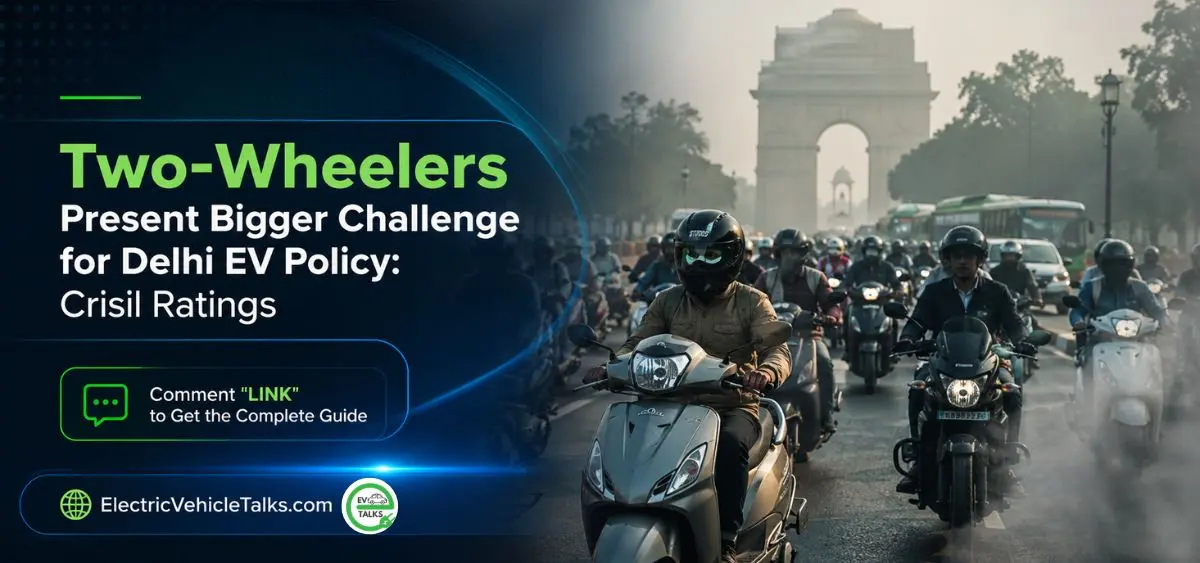

Delhi’s ambitious electric mobility roadmap is set to transform the automotive market, but the Delhi EV Policy faces the biggest challenge in 2-Wheeler adoption, according to Crisil Ratings. The new policy mandates that all newly registered bikes and scooters in the national capital must be electric from April 2028. However, electric vehicles accounted for only 7.3% of two-wheeler registrations in FY26, highlighting the significant gap that must be bridged before the deadline.
Low EV Penetration Raises Concerns
Crisil Ratings Director Poonam Upadhyay said the policy provides a clear direction for manufacturers to accelerate investments in electrical products, production capacity, and distribution networks. Even so, internal combustion engine (ICE) models are expected to remain relevant in the near term as consumers gradually shift toward electric alternatives. Delhi EV Policy Faces Biggest Challenge in 2-wheelers because registrations in the segment rose nearly 25% to 5.7 lakh units in FY26, while EV penetration remained relatively low.

Incentives to Support the Transition
To encourage faster adoption, the Delhi government will provide incentives of up to ₹30,000 per electric two-wheeler during the first year of implementation, with benefits gradually reducing over the following two years. Buyers will also receive scrappage incentives and exemptions from road tax and registration fees where applicable. As financial support tapers, pricing competitiveness, lower ownership costs, and charging infrastructure will play a critical role in sustaining demand. Delhi EV Policy Faces Biggest Challenge in 2-wheelers unless these factors improve significantly.
Different Outlook for Other Vehicle Segments
Unlike two-wheelers, private passenger cars are not subject to an EV-only registration mandate. Instead, the policy relies on incentives, including a 100% exemption from road tax and registration fees for electric cars priced up to ₹30 lakh. In FY26, Delhi registered nearly 2 lakh four-wheelers, including about 77,000 EVs, representing 39% penetration, along with approximately 52,000 hybrid vehicles.
Three-wheelers are expected to transition first, with EV-only registrations beginning on January 1, 2027. Electric models already account for nearly two-thirds of the segment’s 55,700 registrations. Overall, Delhi’s EV Policy Faces Biggest Challenge in 2-wheelers, making consumer adoption, infrastructure expansion, financing, and affordable pricing essential to achieving Delhi’s ambitious electrification goals.

Related Articles:









