
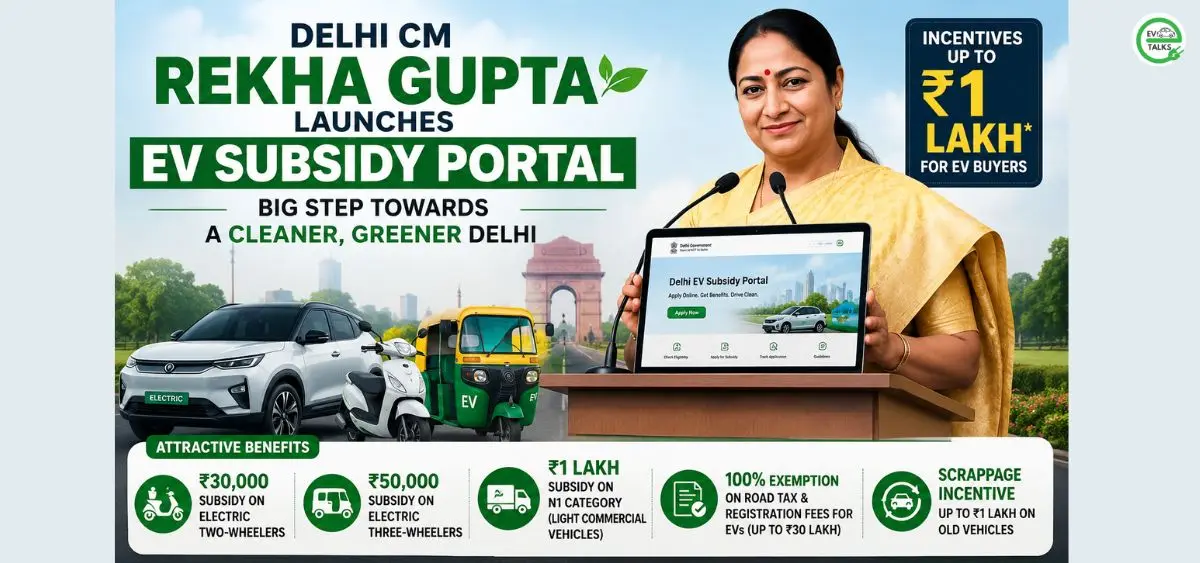

In a major step towards reducing air pollution and promoting sustainable transportation, Rekha Gupta unveils the EV Subsidy Portal under the newly introduced Delhi Electric Vehicle (EV) Policy 2026. The digital platform simplifies the process of applying for EV purchase incentives, scrappage benefits, and other policy-related services through a completely paperless system.
The initiative aims to encourage residents, businesses, and commercial vehicle owners to switch from conventional fuel-powered vehicles to electric vehicles. According to the Delhi government, vehicular emissions contribute nearly 23% of the city’s total pollution, making clean mobility a top priority.

EV Subsidies and Financial Benefits
The new policy offers attractive financial incentives across different vehicle categories.
- Electric Two-Wheelers: Subsidy of up to ₹30,000
- Electric Three-Wheelers: Subsidy of up to ₹50,000
- N1 Category Light Commercial Vehicles: Subsidy of up to ₹1 lakh
- Scrappage Incentives: Up to ₹1 lakh for replacing eligible old internal combustion engine (ICE) or BS-IV vehicles with new electric vehicles.
Additionally, all eligible electric cars priced below ₹30 lakh will receive a 100% exemption from Road Tax and Registration Fees. However, private electric cars are not eligible for a direct purchase subsidy.
Rekha Gupta Highlights Delhi’s Pollution Strategy
While launching the portal, Chief Minister Rekha Gupta stated that the EV policy was long overdue and essential for addressing Delhi’s worsening air pollution. She emphasized that the government has introduced measures across multiple sectors, including dust control, tree plantation, and vehicle emission reduction.
Rekha Gupta Unveils EV Subsidy Portal as part of a broader environmental strategy designed to reduce pollution from road transport, which remains the city’s single largest pollution source.
She also described the policy as an “end-to-end solution” that covers not only EV adoption but also future requirements such as EV waste management. The government has already begun preparations for establishing an e-waste recycling facility to manage the growing number of electric vehicles in the coming years.
Fully Digital and Paperless Application Process
The Delhi EV Subsidy Portal allows citizens and institutions to complete the entire subsidy application online from home.
Applicants must submit their claims within 30 days of purchasing the vehicle and receiving its Registration Certificate (RC).
The process includes:
- Aadhaar-based login with OTP verification.
- Uploading Aadhaar Card, Voter ID, Vehicle RC, and cancelled check or bank passbook.
- Scrappage applicants must upload a valid Certificate of Deposit from an authorised vehicle scrapping facility.
- Institutional buyers must additionally submit PAN, GSTIN, and company bank account details.
The portal also provides real-time application tracking using registration and chassis numbers. After document verification, approved incentives will be transferred directly to beneficiaries’ Aadhaar-linked bank accounts through Direct Benefit Transfer (DBT) within a maximum of 60 days.
Major Infrastructure Expansion Planned
To support large-scale EV adoption, Delhi plans to invest more than ₹7,000 crore over the next four years. The government aims to install over 32,000 public EV charging points by 2030, significantly strengthening the city’s charging infrastructure.
Future Registration Rules
The Delhi EV Policy 2026 also introduces phased timelines to reduce dependence on fossil-fuel vehicles.
- From January 1, 2027, only electric L-5 auto-rickshaws and N1 light goods vehicles will be eligible for new registrations.
- From April 1, 2028, registration of new petrol and diesel two-wheelers will be discontinued in Delhi. Existing legally registered ICE vehicles can continue operating until their registration validity expires.
A Major Push Towards Cleaner Delhi
With attractive subsidies, tax exemptions, scrappage incentives, digital processing, and significant investments in charging infrastructure, Rekha Gupta unveils the EV Subsidy Portal as one of Delhi’s most comprehensive clean mobility initiatives. The policy is expected to accelerate electric vehicle adoption, improve air quality, reduce vehicle emissions, and build a sustainable transportation ecosystem for the future.
As Rekha Gupta unveils the EV Subsidy Portal, Delhi takes a decisive step towards becoming one of India’s leading electric mobility hubs while offering citizens a faster, transparent, and hassle-free way to access EV benefits.

Related Articles:









