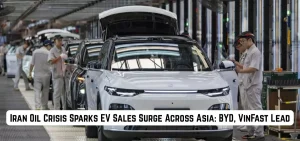
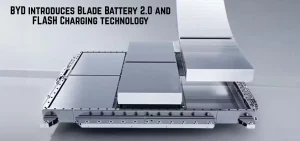
The global electric vehicle market has reached a turning point. Tesla Loses Its EV Crown to BYD, marking a major reshuffle at the top of the battery-electric vehicle (BEV) industry. After years of dominance, Tesla has been overtaken by China’s BYD, a company that has steadily built scale, affordability, and global reach while Tesla’s sales momentum weakened.
BYD Overtakes Tesla: The Numbers Tell the Story
As of January 2, 2026, BYD officially became the world’s largest BEV manufacturer on an annual basis. In 2025, BYD sold around 2.26 million BEVs, reflecting a strong 28% year-on-year growth. In contrast, Tesla delivered 1.64 million vehicles, down nearly 8.6% from its 2024 total of 1.79 million units.

When including plug-in hybrids, BYD’s dominance becomes even clearer. Its total vehicle sales reached 4.55 million units in 2025, highlighting the strength of its diversified portfolio and manufacturing scale.
Key Reasons Behind Tesla’s Decline
Several factors explain why Tesla Loses Its EV Crown to BYD. One major blow was the expiration of the $7,500 U.S. federal EV tax credit in September 2025, which significantly reduced demand in Tesla’s largest market during the final quarter of the year.
At the same time, competition intensified. BYD expanded aggressively across Europe and Southeast Asia, offering affordable and well-equipped models such as the Dolphin and Seagull. These vehicles appealed strongly to cost-conscious buyers, directly challenging Tesla’s pricing advantage.
Product Lineup and Brand Challenges
Analysts also point to Tesla’s aging lineup. The Model 3 and Model Y continue to drive volumes, but the absence of a truly low-cost, mass-market platform limited Tesla’s ability to defend its market share. Meanwhile, BYD’s broad range of vehicles allowed it to adapt quickly to different regional demands.
Brand perception played a role as well. Elon Musk’s political involvement and public rhetoric during 2025 reportedly led to backlash in key Western markets, weakening customer loyalty and impacting sales performance.
What Lies Ahead for Tesla in 2026?
Even as Tesla Loses Its EV Crown to BYD, the company is not standing still. Investor focus is shifting toward autonomous driving projects like the Cybercab and Tesla’s rapidly growing energy storage business, which achieved a record 14.2 GWh deployment in Q4 2025. For 2026, analysts now project Tesla deliveries at around 1.8 million vehicles, signaling stabilization—but in a very different competitive landscape.

Related Articles:-