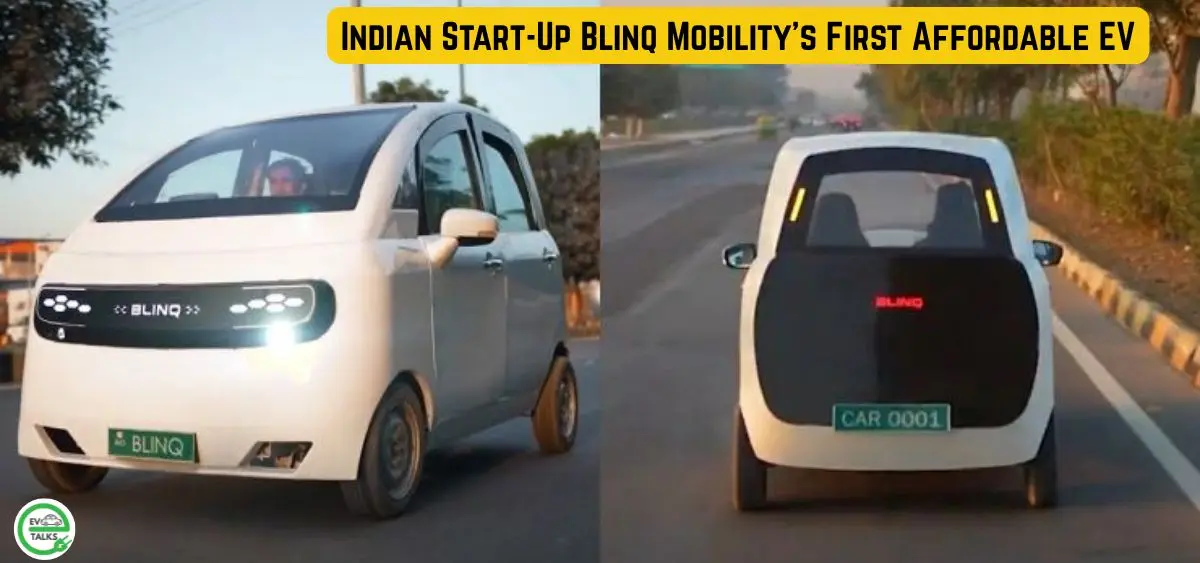

The Indian electric vehicle market has witnessed rapid growth over the last five years, with both global giants and homegrown startups entering the space. Among the emerging innovators is Gurugram-based Blinq Mobility, which is gearing up to introduce Blinq Mobility’s First Affordable EV—a micro electric car designed to transform urban mobility and ride-hailing operations.
A 4-Wheeler at a 3-Wheeler Price
Positioned as a game-changer, Blinq Mobility’s First Affordable EV aims to deliver a “4-wheeler experience at a 3-wheeler price.” The expected starting price is around ₹4–5 lakh, making it highly attractive for fleet operators and budget-conscious buyers. By offering battery subscription services, the company plans to reduce the initial acquisition cost by nearly 40%, making electric mobility even more accessible.

Smart Battery Swapping Technology
One of the biggest highlights of Blinq Mobility’s First Affordable EV is its proprietary battery-swapping system. Instead of waiting hours for charging, users can replace a depleted battery in under five minutes. Each swap is expected to offer a driving range of approximately 250 km, effectively solving the “downtime dilemma” faced by ride-hailing operators where charging time equals lost revenue.
Futuristic Design and Advanced Engineering
Currently referred to as the Pod (Car1 prototype), the vehicle features a futuristic white hatchback silhouette reminiscent of the Tata Nano. It uses proprietary composite body panels claimed to be stronger than conventional steel. The design features hexagonal DRLs, LED projector headlamps, and an illuminated logo, giving Blinq Mobility’s First Affordable EV a distinctive, modern appeal.
Strong Team and Road Testing Underway
Founded by IIT Delhi alumni, the startup includes Ankit Kumar, a former Tesla engineer who worked on advanced vehicle programs. Prototype testing began on public roads in early 2026. With ₹4.3 crore raised in a pre-seed round led by 8i Ventures, the company plans extensive refinement in the first half of 2026, followed by pilot deployments in controlled environments.

Related Articles:-