
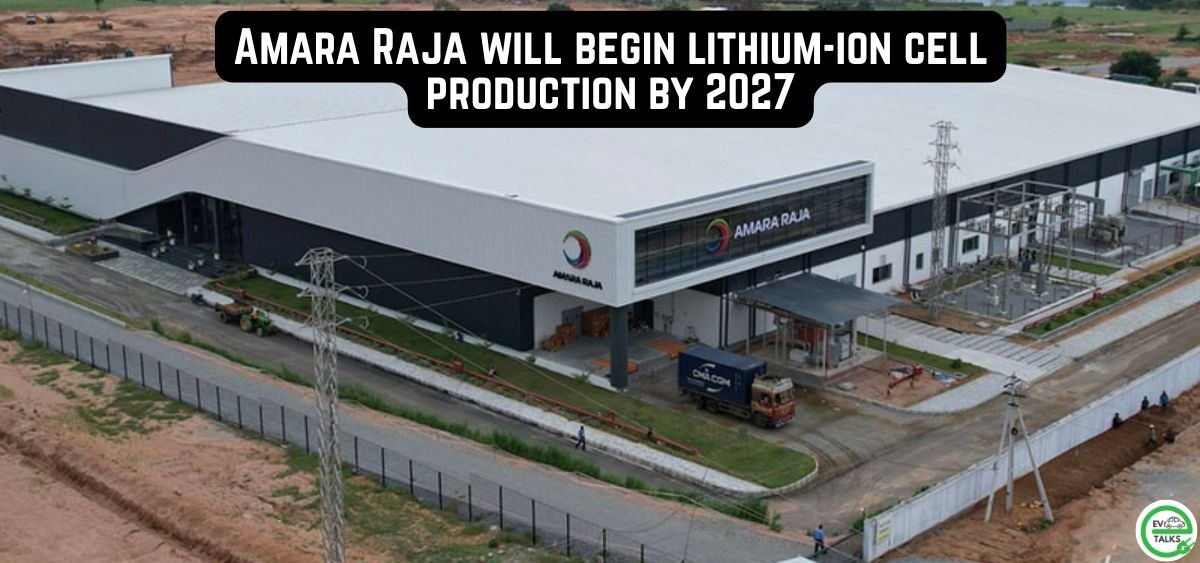

India’s energy transition is gaining momentum as Amara Raja will begin lithium-ion cell production by 2027, marking a significant milestone in building a domestic battery ecosystem. Amara Raja Energy & Mobility is preparing to scale up from pilot operations to full-fledged manufacturing, supporting the rapidly expanding electric vehicle (EV) and energy storage markets in the country.
Production Roadmap and Timeline
The company has laid out a clear, phased roadmap. In 2026, it will initiate megawatt-hour-scale production to supply sample cells for customer testing and qualification. This will pave the way for bulk manufacturing in 2027 at its first Gigafactory in Telangana, starting with an initial capacity of 2 GWh. Over time, the company aims to expand capacity to 16 GWh for lithium-ion cells and 5 GWh for battery packs.

This structured approach ensures that Amara Raja will begin lithium-ion cell production with a strong foundation in quality validation and scalability.
Strategic Focus and Technology Plans
Initially, production will focus on the fast-growing electric two-wheeler segment, a key driver of EV adoption in India. Later, the company plans to diversify into power tools and garden equipment.
The first manufacturing lines will produce 21700 cylindrical cells using Nickel Manganese Cobalt (NMC) chemistry. However, the facility is designed for flexibility, with plans to incorporate Lithium Iron Phosphate (LFP) chemistry and prismatic cell formats.
In a strategic shift, the company has also decided to split its long-term capacity equally between EV mobility and energy storage solutions, such as telecom infrastructure and data centers. This diversification strengthens the vision behind Amara Raja, which will begin lithium ion cell production as a broader energy play.
Investment, Partnerships, and Ecosystem Development
To bring this vision to life, Amara Raja has committed an investment of ₹10,000 crore by 2032. The company has also secured technology partnerships, including licensing agreements for LFP cells and collaborations with leading automakers like Ather Energy and Piaggio India.
These partnerships are expected to accelerate innovation and ensure strong market integration as Amara Raja begins lithium-ion cell production at scale.
Cost Challenges and Industry Outlook
Despite the progress, there are short-term cost challenges. Locally manufactured cells are expected to be around 15% more expensive than imports initially, due to the nascent stage of India’s supply chain. However, as the ecosystem matures, costs are likely to stabilize.
Overall, this initiative represents a crucial step in reducing import dependence and strengthening India’s clean energy ambitions, even if immediate cost benefits are limited.

Related Articles:









