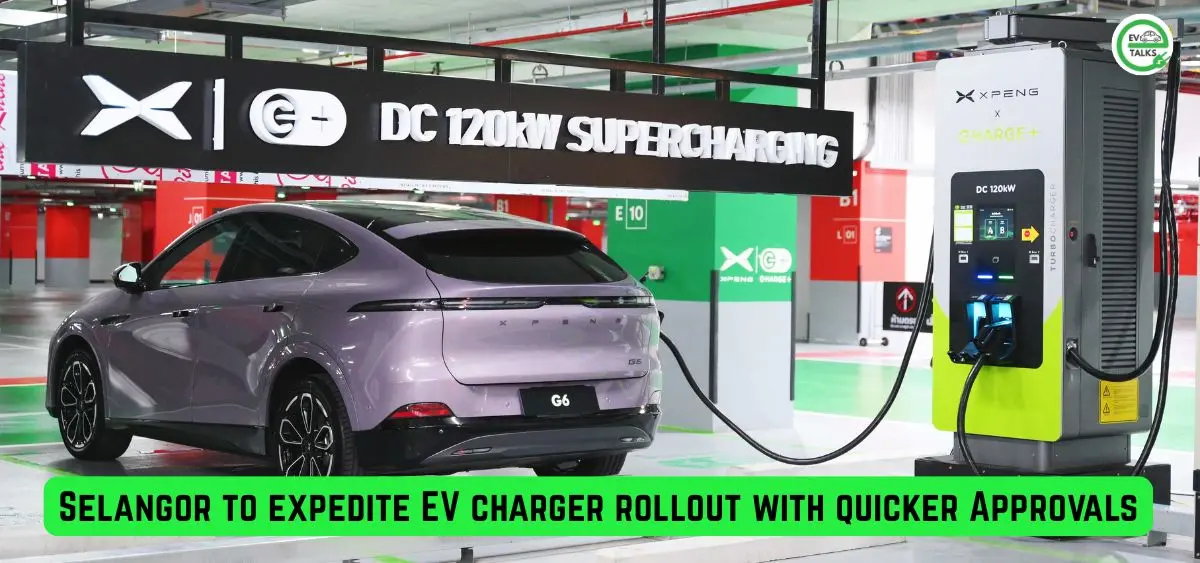

Selangor is stepping up efforts to accelerate electric vehicle (EV) infrastructure under its initiative, Selangor to expedite EV charger rollout, by streamlining approval processes and aligning regulations across local councils. The move comes amid rising demand for EV charging facilities and increasing interest from private operators.
State executive councilor for investment, trade, and mobility, Ng Sze Han, highlighted that inconsistent procedures among local councils have been a key obstacle slowing down implementation. To address this, the state government has tasked the Shah Alam City Council with finalising a standard set of guidelines that can be adopted statewide.

Faster Approvals and Growing Industry Interest
A core focus of Selangor to expedite EV charger rollout is reducing approval timelines for Charging Point Operators (CPOs). Around 100 companies have already expressed interest and submitted proposals to install EV chargers, underscoring strong market demand. The state is also working closely with federal frameworks like the National Energy Transition Roadmap to ensure a consistent and efficient rollout.
EV manufacturers such as Tesla are reportedly ready to expand charging infrastructure, further boosting momentum in the sector.
Ambitious Targets and Expanding Infrastructure
Currently, Selangor has about 1,090 EV charging bays installed statewide. Under the Selangor plan to expedite the EV charger rollout, the state aims to deploy 1,000 chargers by 2025 and significantly scale up to 4,000 charging bays by 2030.
To support this growth, EV charging facilities are now being made mandatory in new property developments. Additionally, local councils are identifying strategic locations for more public chargers, while Worldwide Holdings has been appointed to coordinate CPO activities across the state.
Enhancing Accessibility and Innovation
Selangor is also exploring on-street charging solutions to improve accessibility, especially for residents without private parking. A progressive “right-to-charge” policy is under consideration, allowing residents in high-rise buildings to install chargers at their own parking bays. However, older buildings may face limitations due to electricity capacity constraints.
On the technology front, innovations like lamp pole EV chargers developed by Universiti Malaysia Pahang Al-Sultan Abdullah are being evaluated for wider deployment.
A new e-Mobility Service Platform (eMSP), led by the Ministry of Housing and Local Government Malaysia, will also provide real-time data on charger availability and usage.
Transition to Clean Mobility and Future Plans
Beyond EVs, Selangor is investing in hydrogen mobility as part of its long-term clean transport strategy. Plans are underway to introduce hydrogen-powered buses under the Smart Selangor initiative, potentially by 2026, depending on infrastructure readiness.
Despite the promise, officials note that hydrogen production remains costly and requires careful planning.
With coordinated policies, faster approvals, and strong private-sector participation, Selangor’s plan to expedite the EV charger rollout is set to transform the state’s EV ecosystem—making charging more accessible, efficient, and future-ready.

Related Articles: