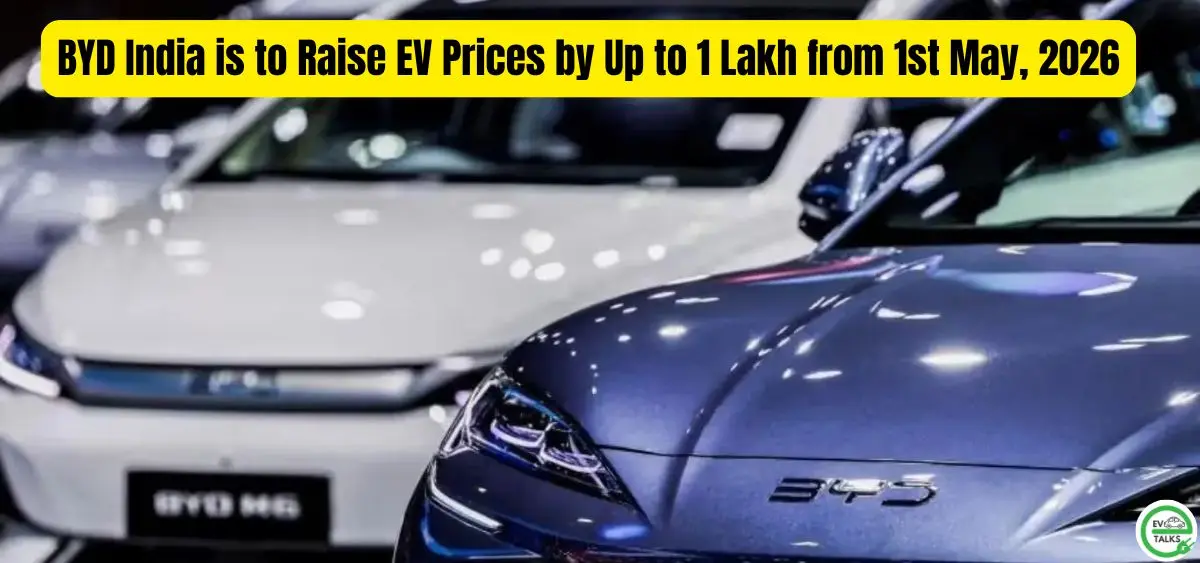

In a significant development for India’s electric vehicle market, BYD India is to raise EV Prices by up to ₹1 lakh starting May 1, 2026. The price revision comes as the automaker faces mounting pressure from rising input costs, global supply chain disruptions, and increasing freight expenses.
Price Hike Across Entire EV Portfolio
The announcement confirms that BYD India will raise EV Prices across its full lineup, which includes the Atto 3 SUV, eMAX 7 MPV, Seal sedan, and Sealion 7 SUV. Currently priced between ₹24.99 lakh and ₹54.90 lakh (ex-showroom), these models will see an increase ranging from ₹50,000 to ₹100,000, with some high-end variants potentially becoming costlier by up to ₹1.7 lakh.

Model-Wise Expected Increase
- Atto 3 SUV: ₹50,000 – ₹100,000 hike
- eMAX 7 MPV: ₹55,000 – ₹59,000 increase
- Seal Sedan: ₹80,000 – ₹160,000 rise
- Sealion 7 SUV: ₹99,000 – ₹165,000 jump
Post-revision, prices are expected to range approximately between ₹25.49 lakh and ₹56.55 lakh, depending on the model and variant.
Global Factors Driving the Price Surge
The decision by BYD India to raise EV Prices is largely influenced by global economic and geopolitical challenges. A major contributor is the ongoing Strait of Hormuz crisis, which has disrupted a crucial global oil transit route handling nearly 27% of seaborne crude oil. This disruption has led to a spike in Brent crude prices and shipping insurance premiums.
Additionally, key raw materials used in EV manufacturing are being affected. The Gulf region contributes significantly to global aluminum output and sulfur trade, while synthetic graphite—essential for EV battery production—is also linked to petroleum refining. These factors have collectively increased production costs for automakers.
Impact on EV Industry and Buyers
Industry experts, including insights from S&P Global Mobility, suggest that automakers have been absorbing a portion of these rising costs. However, continued pressure means price hikes are becoming unavoidable. BYD India to Raise EV Prices reflects a broader trend among premium EV manufacturers adjusting pricing strategies to maintain margins.
Despite the increase, demand in the premium EV segment remains relatively stable, although price sensitivity among buyers persists. BYD, which operates over 55 showrooms across India, is also planning to expand its lineup with the upcoming Atto 2, signaling continued commitment to the Indian market.
Conclusion
The move by BYD highlights the growing impact of global supply chain disruptions on India’s EV ecosystem. As costs continue to rise, consumers may need to prepare for further price adjustments across the electric vehicle segment in the near future.

Related Articles: