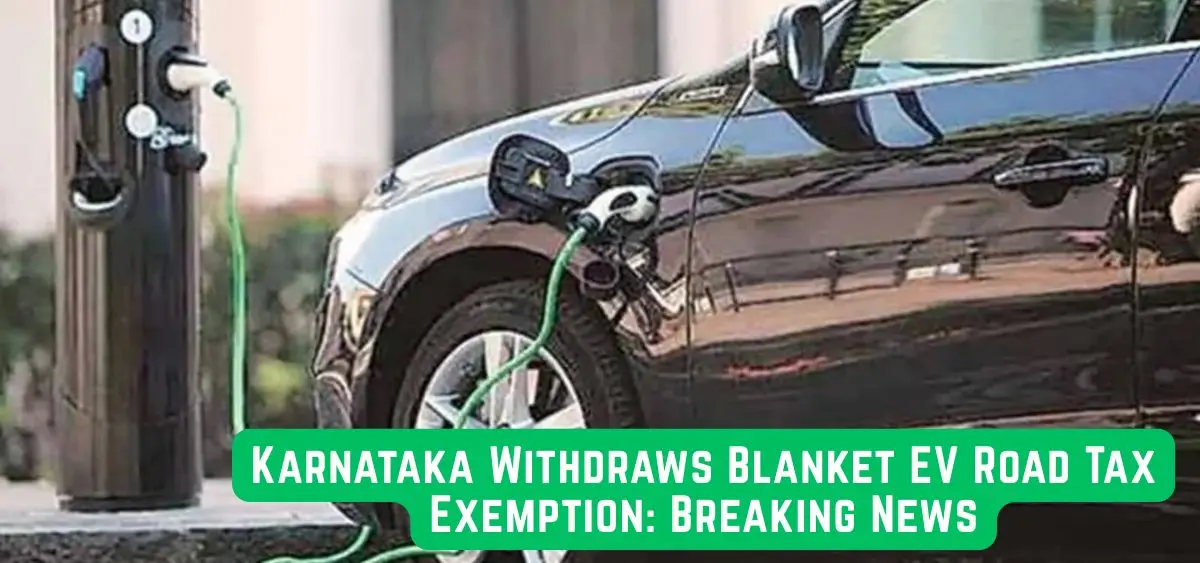

In a major policy shift, Karnataka withdraws blanket EV road tax exemption, ending nearly a decade of incentives that positioned the state as one of India’s most EV-friendly regions. Effective April 1, 2026, electric vehicles will no longer enjoy 100% road tax exemption. Instead, Karnataka has introduced a graded lifetime tax, marking a significant change in its clean mobility strategy.
A Decade-Long Exemption Comes to an End
Since March 2016, Karnataka has offered full exemption on road tax and registration fees for all EVs to accelerate adoption. This policy helped the state become a major contributor to India’s EV market, accounting for around 12% of national EV volumes (excluding Telangana). As EV sales grew steadily—reaching 6.4% of total vehicle sales in 2025—the state began reevaluating its revenue structure. The transition began in 2024, when EVs priced above ₹25 lakh were brought under a 10% lifetime tax.
Now that the full rollback has been announced, Karnataka withdraws the blanket EV road tax exemption, replacing it with a cost-based taxation model.

New Graded Lifetime Tax Structure
Under the revised policy, EVs will now attract road tax based on their price bracket:
- Up to ₹10 lakh – 5% lifetime tax
- ₹10 lakh to ₹25 lakh – 8% lifetime tax
- Above ₹25 lakh – 10% lifetime tax
This one-time tax is payable at the time of registration and applies to all EV segments. The state aims to balance EV promotion with revenue generation as adoption increases.
Impact on Demand and the EV Market
The removal of full exemptions increases the upfront cost of electric vehicles, which may affect demand in price-sensitive categories. While the long-term impact remains uncertain, industry analysts believe the shift may temporarily slow down the rapid pace of EV adoption. With Karnataka’s withdrawal of the blanket EV road tax exemption, the market may see a recalibration in consumer buying behavior, especially for entry-level EVs.
Interestingly, while Karnataka scales back benefits, other states like Delhi and Tamil Nadu continue offering attractive EV incentives, creating a contrast in regional policies.
Auto and Battery Stocks Likely in Focus
The industry reaction is expected to be reflected in the stock market as well. Companies with strong EV portfolios, such as Tata Motors and Mahindra & Mahindra, may draw investor attention. Battery and ancillary manufacturers, including Exide Industries and Amara Raja Energy & Mobility, along with ecosystem players like Tata Power and Olectra Greentech, are also likely to remain in focus.
As Karnataka withdraws blanket EV road tax exemption, the coming months will reveal how customers, automakers, and investors adapt to the new landscape.

Related Articles: