
India’s electric three-wheeler (e-3W) revolution is transforming urban mobility faster than any other EV segment. Thanks to lower operating costs, government support, and rising fuel prices, electric auto rickshaws have become the preferred choice for both passenger transport and cargo delivery. If you’re planning to invest in an electric auto, this comprehensive guide covers the Top 5 Electric Three-Wheelers in India, including pricing, range, ownership costs, charging requirements, government incentives, and expert recommendations to help you make an informed decision.
Why Are Electric Three-Wheelers Becoming So Popular in India?
Electric three-wheelers have emerged as the backbone of India’s last-mile transportation ecosystem.
Unlike electric cars, these vehicles generate income every day, making return on investment (ROI) one of the biggest purchase considerations.
Major reasons behind their popularity include:
- Extremely low running cost
- Reduced maintenance expenses
- Zero tailpipe emissions
- Government incentives
- Ideal for city transportation
- Growing charging ecosystem
- Better profitability for fleet operators
According to industry reports, India remains the world’s largest electric three-wheeler market, with the segment accounting for a significant share of overall EV sales. Passenger and cargo e-3Ws continue to witness double-digit growth, driven by commercial demand, fleet electrification, and state-level EV policies.
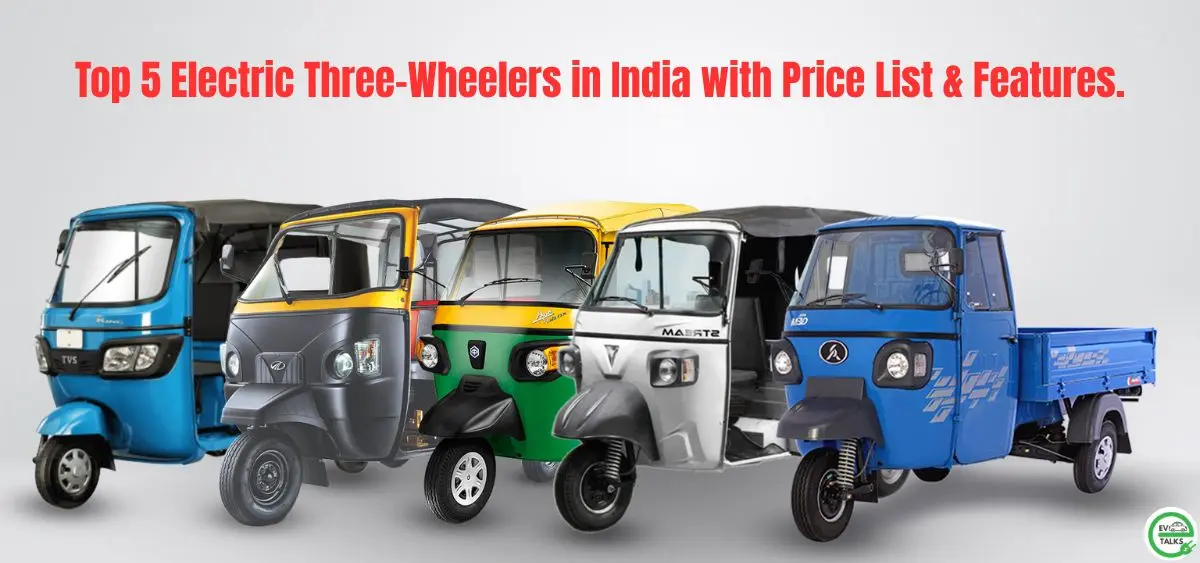
Top 5 Electric Three-Wheelers in India (2026)
| Model | Battery | Certified Range | Ex-Showroom Price |
|---|---|---|---|
| Mahindra Treo Series | 10.24 kWh Lithium-ion | 140–150 km | ₹2.50–4.00 lakh |
| YC Electric Yatri Super | Lead Acid/Lithium Options | 90–120 km | From ₹1.73 lakh |
| Bajaj RE E-Tec 9.0 | 8.9 kWh Lithium-ion | Up to 178 km* | From ₹3.94 lakh |
| Piaggio Ape E-City FX Max | Lithium-ion | 120–145 km | From ₹2.89 lakh |
| Saera Saarthi DLX | 48V Battery | 90–110 km | ₹1.00–1.40 lakh |
*Claimed range may vary depending on load, terrain, weather, and driving conditions.
1. Mahindra Treo Series
Mahindra Last Mile Mobility has established itself as the benchmark for premium electric three-wheelers. The Treo lineup is trusted by individual drivers, fleet operators, and logistics companies alike.
Highlights
- 8 kW electric motor
- 10.24 kWh lithium-ion battery
- Real-world range of 140–150 km
- Fast acceleration
- Comfortable suspension
- Digital instrument cluster
- Reverse assist
- Regenerative braking
Best For
- Passenger transport
- Fleet operators
- Daily commercial usage
- Urban commuting
Price
₹2.50 lakh–₹4.00 lakh (Ex-showroom)
2. YC Electric Yatri Super
YC Electric has become one of the highest-selling electric rickshaw manufacturers across North and East India due to its affordable pricing and simple maintenance.
Highlights
- 1000W–1500W motor
- Heavy-duty chassis
- Spacious passenger cabin
- Low maintenance
- Excellent spare parts availability
Best For
- Budget-conscious buyers
- Tier-2 and Tier-3 cities
- Short-distance passenger transport
Price
Starting around ₹1.73 lakh (Ex-showroom)
3. Bajaj RE E-Tec 9.0
Bajaj Auto has leveraged decades of auto-rickshaw expertise to develop the RE E-Tec 9.0, delivering strong performance, improved safety, and dependable reliability.
Highlights
- 8.9 kWh lithium-ion battery
- Powerful electric drivetrain
- Excellent gradeability
- Premium build quality
- Durable suspension
- Strong resale potential
Best For
- Professional drivers
- Commercial fleets
- Long daily operating hours
Price
Starting from ₹3.94 lakh (Ex-showroom)
4. Piaggio Ape E-City FX Max
Piaggio has been a dominant player in India’s commercial vehicle segment for decades. Its electric Ape lineup focuses on minimizing downtime while maximizing operational efficiency.
Highlights
- Up to 9.5 kW power output
- 120–145 km certified range
- Smooth city driving
- Rugged chassis
- Fleet-friendly design
Best For
- Passenger transport
- Urban cargo movement
- Fleet businesses
Price
Starting around ₹2.89 lakh (Ex-showroom)
5. Saera Saarthi DLX
Saera Electric has played a significant role in expanding electric mobility across northern and eastern India through its Mayuri and Saarthi product range.
Highlights
- 1 kW motor
- Comfortable passenger seating
- Easy maintenance
- Affordable purchase cost
- Suitable for daily commercial use
Best For
- Rural transport
- Small business owners
- Entry-level buyers
Price
₹1.00 lakh–₹1.40 lakh (Ex-showroom)
Comparison: Top 5 Electric Three Wheelers in India Price List
| Vehicle | Passenger/Cargo | Battery | Approx Range | Price |
|---|---|---|---|---|
| Mahindra Treo | Passenger & Cargo | Lithium-ion | 150 km | ₹2.5–4 lakh |
| YC Electric Yatri | Passenger | Lead Acid/Lithium | 90–120 km | ₹1.73 lakh |
| Bajaj RE E-Tec 9.0 | Passenger | Lithium-ion | Up to 178 km | ₹3.94 lakh |
| Piaggio Ape E-City | Passenger/Cargo | Lithium-ion | 145 km | ₹2.89 lakh |
| Saera Saarthi DLX | Passenger | 48V Battery | 90–110 km | ₹1–1.4 lakh |
What Is the Running Cost of an Electric Three-Wheeler?
One of the biggest reasons behind the rapid adoption of India’s electric three-wheeler (e-3W) segment is the exceptionally low operating cost.
| Expense | Electric Three Wheeler | Diesel/CNG Auto |
|---|---|---|
| Running Cost | ₹0.60–₹1.20/km | ₹3–₹5/km |
| Engine Oil | Not Required | Required |
| Maintenance | Low | Moderate to High |
| Noise | Very Low | High |
| Emissions | Zero Tailpipe | High |
For drivers covering 100–150 km daily, the savings can amount to tens of thousands of rupees annually, improving profitability over the vehicle’s lifetime.
Benefits of Buying an Electric Three-Wheeler
Choosing an electric auto offers several advantages:
- Lower fuel expenses
- Reduced maintenance
- Better profitability
- Smooth and quiet driving
- Eco-friendly transportation
- Government incentives
- Higher uptime with lithium-ion batteries
- Ideal for urban deliveries and passenger mobility
Challenges Buyers Should Consider
Despite strong growth, buyers should also be aware of certain limitations:
- Charging availability varies by region.
- Battery replacement can be expensive after several years.
- Overloading reduces battery life and range.
- Not every model supports fast charging.
- Service network quality differs across manufacturers.
Evaluating these factors before purchase helps avoid unexpected ownership costs.
Buying Guide: How to Choose the Right Electric Three-Wheeler
Before investing, consider the following:
a) Daily Driving Distance
Choose a vehicle whose real-world range comfortably exceeds your daily travel.
b) Passenger vs Cargo
Passenger models prioritize seating comfort, while cargo variants offer stronger load-carrying capabilities.
c) Battery Type
Lithium-ion batteries generally provide:
- Faster charging
- Longer lifespan
- Better efficiency
- Lower maintenance than lead-acid batteries
d) Service Network
Select a brand with reliable service centers and readily available spare parts in your region.
e) Total Cost of Ownership (TCO)
Don’t focus only on the purchase price. Factor in electricity costs, maintenance, battery warranty, financing, and expected resale value.
Charging Insights for Indian EV Owners
Most electric three-wheelers can be charged using a standard household electricity connection. Typical charging times:
| Battery Type | Charging Time |
|---|---|
| Lead Acid | 7–10 Hours |
| Lithium-ion | 3–5 Hours |
| Fast Charging (where supported) | 1.5–2 Hours |
Many fleet operators also install dedicated charging points at depots to reduce downtime.
Government Incentives Driving e-3W Adoption
Government initiatives have played a crucial role in accelerating electric mobility.
Key support mechanisms include the following:
- State EV policies offering purchase subsidies
- Reduced registration fees in several states
- Road tax exemptions in selected regions
- Priority financing for commercial EVs
- Expansion of public charging infrastructure
- Production-linked incentives (PLI) for advanced battery manufacturing
While the original FAME-II scheme helped accelerate EV adoption, current support is increasingly being delivered through state-level incentives and broader manufacturing and infrastructure programs. Buyers should check the latest incentives available in their state before purchasing.
Sustainability Impact of Electric Three-Wheelers
Replacing conventional auto-rickshaws with electric models contributes to:
- Improved urban air quality
- Reduced greenhouse gas emissions
- Lower dependence on imported fossil fuels
- Quieter city streets
- Reduced operating emissions for logistics and public transport
As India’s electricity grid incorporates more renewable energy, the environmental benefits of e-3Ws are expected to grow further.
Industry Trends Shaping the Future
The Indian electric three-wheeler market is evolving rapidly, with several key developments:
- Connected telematics and fleet management systems
- Battery swapping for commercial fleets
- Higher-capacity lithium-ion battery packs
- Improved financing options for drivers
- Expansion into rural and semi-urban markets
- Increased participation from established automotive manufacturers
- Growing use of AI-driven route optimization for fleet efficiency
These trends are making electric three-wheelers more practical, reliable, and profitable than ever before.
Expert Insight from Electric Vehicle Talks
From our analysis at Electric Vehicle Talks, the electric three-wheeler segment represents one of the strongest business cases in India’s EV ecosystem. Unlike private electric cars, e-3Ws generate daily revenue, making total cost of ownership, battery durability, service support, and uptime far more important than headline specifications alone.
For first-time buyers, choosing a vehicle from an established manufacturer with a proven service network and lithium-ion battery technology can deliver better long-term value, even if the initial purchase price is slightly higher. As charging infrastructure expands and financing becomes more accessible, the segment is poised for sustained growth across both passenger and cargo applications.
For more buying guides, EV ownership tips, and industry analysis, visit Electric Vehicle Talks.
People Also Ask
Which is the best electric three-wheeler in India?
The Mahindra Treo Series is widely regarded as one of the best electric three-wheelers due to its reliability, range, strong service network, and proven commercial performance.
What is the price of an electric three-wheeler in India?
Prices typically range from ₹1 lakh to ₹4 lakh (ex-showroom) depending on the brand, battery type, range, and intended use.
Which battery is better for electric auto rickshaws?
Lithium-ion batteries are generally the preferred choice because they offer longer life, faster charging, better efficiency, and lower maintenance than lead-acid batteries.
How much does it cost to charge an electric three-wheeler?
Charging costs vary by state electricity tariffs, but a full charge for most lithium-ion models generally costs only a fraction of the daily fuel expense of a CNG or diesel auto, resulting in significant operational savings.
Are electric auto rickshaws suitable for long daily operations?
Yes. Many modern lithium-ion models can comfortably support full-day commercial operations when selected according to daily distance requirements and charged appropriately.
Is a government subsidy available on electric three-wheelers?
Support varies by state and scheme. Buyers should check the latest state EV policies, financing programs, and applicable incentives before making a purchase.
FAQs about the Top 5 Electric Three-Wheelers in India
1. Which company makes the best electric auto rickshaw in India?
Mahindra, Bajaj, Piaggio, YC Electric, and Saera Electric are among the leading manufacturers, each offering models tailored to different budgets and commercial applications.
2. What is the average battery life of an electric three-wheeler?
A lithium-ion battery typically lasts 5–8 years, depending on usage, charging habits, and maintenance.
3. Can electric three-wheelers be charged at home?
Yes. Most models can be charged using a standard household power connection, though charging time depends on battery size and charger specifications.
4. Are electric three-wheelers profitable for commercial use?
Yes. Due to low running and maintenance costs, they can provide a faster return on investment compared with conventional fuel-powered auto rickshaws, especially for high-mileage operators.
5. What should I check before buying an electric three-wheeler?
Evaluate the real-world driving range, battery technology, warranty, service network, charging requirements, financing options, and total cost of ownership rather than relying solely on the purchase price.
Conclusion
India’s electric three-wheeler market has moved well beyond the early adoption phase and is now a cornerstone of the country’s transition toward cleaner, more efficient mobility. Whether you are an independent driver, a fleet operator, or a business owner looking to reduce transportation costs, today’s e-3Ws offer compelling advantages in terms of operating economics, reliability, and sustainability.
Among the Top 5 Electric Three-Wheelers, the Mahindra Treo Series stands out for premium performance, Bajaj RE E-Tec 9.0 brings trusted engineering, Piaggio Ape E-City excels in commercial applications, YC Electric delivers value for money, and Saera Saarthi DLX remains a dependable choice for budget-conscious buyers.
As battery technology advances, charging infrastructure expands, and supportive policies continue to encourage electrification, electric three-wheelers are expected to play an even greater role in India’s mobility future. To stay updated with the latest EV news, in-depth buying guides, charging insights, and expert analysis, explore more resources from Electric Vehicle Talks.
Related Article: