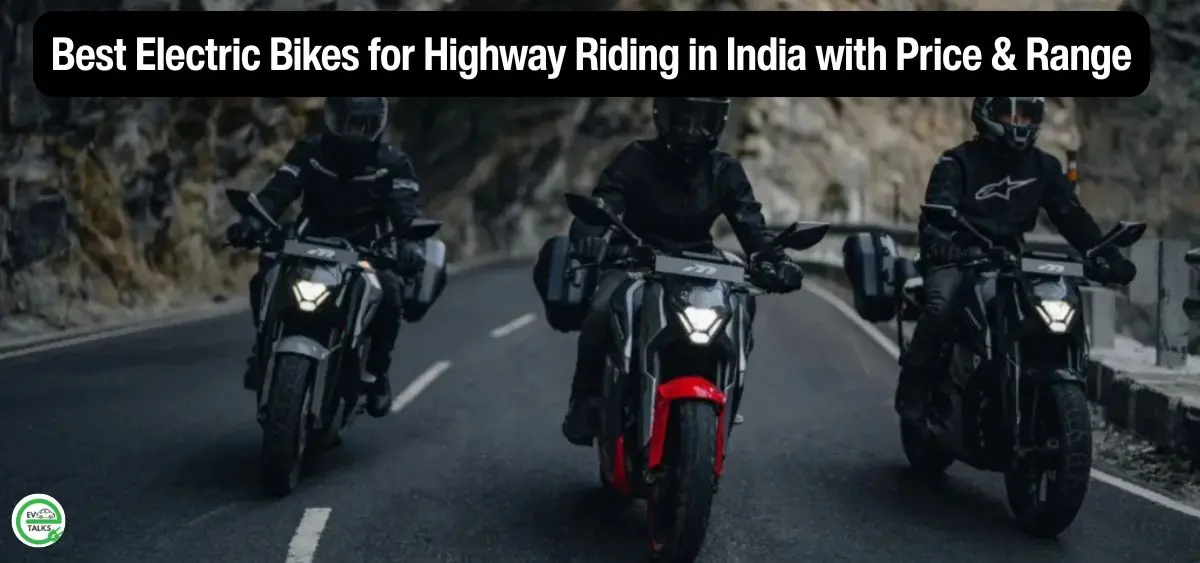

Highway-ready electric motorcycles are no longer a futuristic concept—they are already redefining long-distance travel in India. The Best Electric Bikes for Highway Riding combine high cruising speeds, large battery packs, fast charging, and stable chassis designs that make interstate journeys both practical and enjoyable.
As India’s charging network expands rapidly and battery technology continues to improve, premium electric motorcycles are becoming genuine alternatives to petrol-powered touring bikes. Whether you’re a daily commuter who frequently travels on expressways or an enthusiast planning weekend rides across states, choosing the right electric motorcycle is more important than ever.
In this comprehensive guide from Electric Vehicle Talks, we’ll explore the best highway-capable electric motorcycles available in India, compare their performance, analyze ownership costs, and help you make an informed purchase decision.
Why Does Highway Riding Require a Different Kind of Electric Bike?
City-focused electric scooters prioritize efficiency, compact size, and stop-and-go riding. Highways present a completely different challenge.
An ideal highway electric motorcycle should offer the following:
- Sustained cruising speeds above 90–100 km/h
- Strong acceleration for safe overtaking
- High battery efficiency at highway speeds
- Excellent braking performance
- Stable suspension setup
- Aerodynamic riding position
- Reliable thermal management
- Fast charging capability
Unlike urban riding, highway travel continuously stresses both the battery and motor. Poor thermal management can significantly reduce performance during long rides.
Best Electric Bikes for Highway Riding in India with Price
| Electric Motorcycle | Estimated Price (Ex-showroom) | IDC/Claimed Range | Top Speed | Highway Suitability |
|---|---|---|---|---|
| Ultraviolette F77 Mach 2 | ₹2.99–3.99 lakh | 211–323 km | 155 km/h | ★★★★★ |
| Raptee T.30 | Around ₹2.39 lakh | Around 200 km | 135 km/h | ★★★★★ |
| Olá Roadster Pro | ₹2.00–2.50 lakh (variant dependent) | Up to 579 km (claimed) | 194 km/h | ★★★★★ |
| Komaki Ranger | ₹1.85–2.00 lakh | 160–250 km | 80 km/h+ | ★★★☆☆ |
Note: Real-world highway range is typically 20–35% lower than certified or claimed figures due to higher sustained speeds.
Top Electric Motorcycles for Highway Riding in India
1. Ultraviolette F77 Mach 2
The Ultraviolette F77 has emerged as India’s benchmark premium electric performance motorcycle.
Highlights
- Top speed of 155 km/h
- IDC ranges up to 323 km
- Multiple ride modes
- Dynamic stability systems
- Regenerative braking
- Fast charging support
- Advanced thermal management
The motorcycle is engineered specifically for spirited riding and highway touring. Its aerodynamic design significantly improves efficiency at higher speeds.
Best For
- Highway commuters
- Weekend riders
- Performance enthusiasts
- Long-distance EV touring
2. Raptee T.30
Raptee is introducing one of India’s most innovative highway electric motorcycles.
Its biggest innovation is support for CCS2 DC fast charging, making it compatible with thousands of existing electric car charging stations across India.
Key Features
- 135 km/h top speed
- Around 200 km range
- High-voltage architecture
- CCS2 charging compatibility
- Premium chassis
For riders worried about charging availability during long trips, this could become a game-changing motorcycle.
3. Ola Roadster Pro
The Ola Roadster Pro has generated tremendous excitement due to its impressive specifications.
Higher variants promise:
- Peak motor output of 52 kW
- Claimed range up to 579 km
- Top speed of 194 km/h
- Multiple battery configurations
If real-world performance approaches these figures, it could redefine long-distance electric motorcycling in India.
4. Komaki Ranger
Not every highway rider seeks outright speed.
The Komaki Ranger focuses on relaxed touring with cruiser-inspired ergonomics.
Highlights include:
- Comfortable seating
- Claimed range between 160 and 250 km
- Relaxed riding posture
- Touring-oriented styling
It suits riders who prioritize comfort over aggressive performance.
What Makes an Electric Motorcycle Good for Highways?
1. High Battery Capacity
Larger batteries experience less stress during sustained high-speed riding.
Benefits include:
- Longer range
- Lower battery degradation
- Better thermal stability
- Reduced charging frequency
2. Efficient Thermal Management
Continuous highway riding generates heat.
Premium motorcycles use the following:
- Liquid cooling
- Smart battery management systems
- Temperature monitoring
- Power optimization
These technologies maintain consistent performance even after hours of riding.
3. Fast Charging Support
Highway riders cannot afford lengthy charging breaks.
Look for:
- DC fast charging
- High charging power
- Wide charging network compatibility
- Smart charging management
4. Stable Chassis
High-speed stability depends on:
- Longer wheelbase
- Premium suspension
- Low center of gravity
- High-quality tyres
These factors inspire rider confidence during overtaking and cornering.
Is a 400 km Range Electric Bike in India Practical?
One of the most searched questions today is whether a 400 km range electric bike in India is realistic.
The answer depends on how the range is measured.
Manufacturers often publish laboratory-certified figures under standardized testing conditions. However, real-world highway riding typically delivers lower numbers because:
- Higher speeds consume more energy.
- Strong acceleration increases battery usage.
- Wind resistance rises exponentially above 80 km/h.
- Additional luggage and pillion riders add load.
While some upcoming motorcycles, such as higher variants of the Ola Roadster Pro, claim ranges beyond 400 km, riders should realistically expect considerably lower highway figures.
Charging Infrastructure for Highway Riding
India’s EV charging ecosystem is growing rapidly.
Key developments include the following:
- Expansion of DC fast chargers along major expressways.
- Increased deployment of CCS2 charging stations.
- Highway charging hubs at fuel stations, hotels, and restaurants.
- Public-private partnerships to improve nationwide EV infrastructure.
Planning charging stops before a long ride remains an essential habit for every EV owner.
Cost Analysis: Electric vs Petrol Touring
| Expense | Electric Motorcycle | Petrol Motorcycle |
| Fuel/Energy Cost per km | ₹0.40–₹1.20 | ₹2.5–₹4.5 |
| Engine Oil | None | Required |
| Routine Maintenance | Lower | Higher |
| Clutch Maintenance | Not Required | Required |
| Transmission Maintenance | Minimal | Moderate |
| Regenerative Braking | Yes | No |
Over thousands of kilometers, electric motorcycles can significantly reduce running costs despite their higher initial purchase price.
Benefits of Highway Electric Bikes
Modern electric motorcycles offer several advantages:
- Instant torque for quick overtakes.
- Minimal vibration.
- Quiet riding experience.
- Lower maintenance.
- Lower operating costs.
- Zero tailpipe emissions.
- Advanced connected technology.
- Smooth acceleration.
Challenges You Should Know
Despite rapid improvements, some limitations remain.
- Charging Time: Fast charging is improving but still takes longer than refueling with petrol.
- Highway Range: Higher speeds reduce battery efficiency.
- Charging Availability: Coverage continues to improve, but remote regions may still have limited charging infrastructure.
- Purchase Cost: Premium electric motorcycles remain more expensive upfront than comparable petrol bikes.
Common Mistakes Buyers Make
Avoid these common errors when choosing a highway-capable EV:
- Buying solely based on claimed range.
- Ignoring charging compatibility.
- Overlooking riding ergonomics.
- Choosing city-focused models for long-distance touring.
- Underestimating highway battery consumption.
- Skipping test rides.
Practical Ownership Tips
To maximize performance and battery life:
- Charge between 20% and 80% for daily use.
- Use DC fast charging only when necessary.
- Maintain recommended tire pressure.
- Plan charging stops before long journeys.
- Keep software updated.
- Ride smoothly instead of frequent hard acceleration.
Government Incentives and EV Policies in India
Although the original FAME-II scheme has concluded, India continues to promote electric mobility through evolving central initiatives and state-level EV policies. Many states still offer benefits such as road tax exemptions, registration fee waivers, and incentives for EV manufacturing and charging infrastructure. The government’s broader objective of accelerating EV adoption, supported by programs that encourage domestic battery production and public charging expansion, is making long-distance electric travel increasingly practical.
Prospective buyers should also check the latest incentives available in their state, as benefits can vary significantly.
Battery Technology Driving Highway EVs
The latest highway-focused electric motorcycles feature the following:
- High-density lithium-ion battery packs
- Advanced Battery Management Systems (BMS)
- Regenerative braking
- Intelligent thermal management
- Smart software updates
- Connected vehicle diagnostics
These innovations improve both performance and long-term battery durability.
Sustainability Impact
Switching from petrol motorcycles to electric motorcycles offers multiple environmental benefits:
- Reduced greenhouse gas emissions
- Lower urban air pollution
- Reduced dependence on imported fossil fuels
- Higher energy efficiency
- Support for India’s clean mobility transition
As India’s electricity grid incorporates more renewable energy, the environmental advantages of electric motorcycles will continue to increase.
Industry Trends Shaping the Future
Several trends are transforming India’s highway EV segment:
- Larger battery capacities
- 800V electrical architectures
- Faster DC charging
- More premium electric motorcycles
- AI-powered battery optimization
- Connected riding ecosystems
- Expansion of interstate charging corridors
These developments are steadily reducing range anxiety and making electric touring more practical than ever.
Expert Insight from Electric Vehicle Talks
From our analysis of India’s rapidly evolving electric two-wheeler market, one trend is becoming increasingly clear: highway-ready electric motorcycles are moving from niche products to mainstream choices for performance-oriented riders.
The next wave of innovation will focus less on headline range figures and more on delivering consistent real-world highway performance, widespread fast-charging access, and improved battery durability. Buyers should evaluate motorcycles based on usable highway range, charging ecosystem compatibility, software capabilities, after-sales support, and long-term ownership costs rather than relying solely on marketing claims.
For readers looking to stay informed about the latest EV launches, charging developments, ownership guides, and expert reviews, Electric Vehicle Talks regularly publishes practical insights and market analysis. Learn more.
Buying Guide: Which Highway Electric Bike Should You Choose?
| Rider Type | Recommended Model |
| Performance Enthusiast | Ultraviolette F77 Mach 2 |
| Long-Distance Touring | Raptee T.30 |
| Maximum Claimed Range | Olá Roadster Pro |
| Cruiser Lovers | Komaki Ranger |
People Also Ask
Which is the best electric bike for highway riding in India?
The Ultraviolette F77 Mach 2 is widely regarded as one of the best highway-ready electric motorcycles in India thanks to its high top speed, advanced thermal management, premium handling, and long certified range.
Which electric bike has the highest range in India?
Among announced models, higher variants of the Ola Roadster Pro claim a range of up to 579 km. Actual highway riding range will be significantly lower depending on speed, terrain, and riding style.
Can electric bikes be used for long-distance touring?
Yes. Premium electric motorcycles with fast-charging support, efficient battery management, and large battery packs are increasingly suitable for interstate touring when charging stops are planned.
How much does it cost to charge an electric motorcycle?
Depending on battery size and electricity tariffs, a full home charge typically costs between ₹80 and ₹250, making electric motorcycles far cheaper to operate than petrol bikes.
Is charging infrastructure good enough for highway riding?
Major highways and expressways are seeing rapid deployment of fast chargers, particularly CCS2-compatible stations. Availability is improving every year, though route planning is still recommended.
Does highway riding reduce electric bike range?
Yes. Sustained high speeds increase aerodynamic drag and energy consumption, reducing real-world range by roughly 20–35% compared with certified figures.
FAQs
1. Which is the best electric bike for highway riding in India, with a price?
Premium options include the Ultraviolette F77 Mach 2, Raptee T.30, Ola Roadster Pro, and Komaki Ranger, with prices broadly ranging from around ₹1.85 lakh to ₹4 lakh depending on the model and variant.
2. Is a 400 km range electric bike available in India?
Some upcoming models advertise ranges above 400 km under standard test conditions, but actual highway riding ranges will typically be lower.
3. Are electric motorcycles cheaper to maintain?
Yes. They eliminate expenses such as engine oil changes, clutch maintenance, and many routine mechanical service items.
4. Can electric motorcycles handle Indian highways safely?
Modern premium models are designed with high-speed stability, advanced braking systems, and sophisticated battery management, making them suitable for highway use when ridden responsibly.
5. Which charging connector is best for highway travel?
Motorcycles supporting CCS2 DC fast charging offer greater flexibility because they can access a growing network of public fast chargers across India.
Conclusion
The Best Electric Bikes for Highway Riding are no longer limited by technology—they are increasingly defined by real-world usability. High-performance models like the Ultraviolette F77 Mach 2, Raptee T.30, Ola Roadster Pro, and Komaki Ranger demonstrate how far India’s electric motorcycle market has progressed, offering impressive performance, lower running costs, and a more sustainable way to travel.
As charging infrastructure expands and battery technology continues to evolve, electric motorcycles are becoming practical companions for everything from daily expressway commutes to cross-state adventures. The key is to choose a model that matches your riding style, charging needs, and long-term ownership expectations.
For more expert buying guides, EV news, charging insights, ownership tips, and the latest developments in sustainable mobility, visit Electric Vehicle Talks at https://electricvehicletalks.com/ and continue exploring the future of electric transportation.
Related Article: