
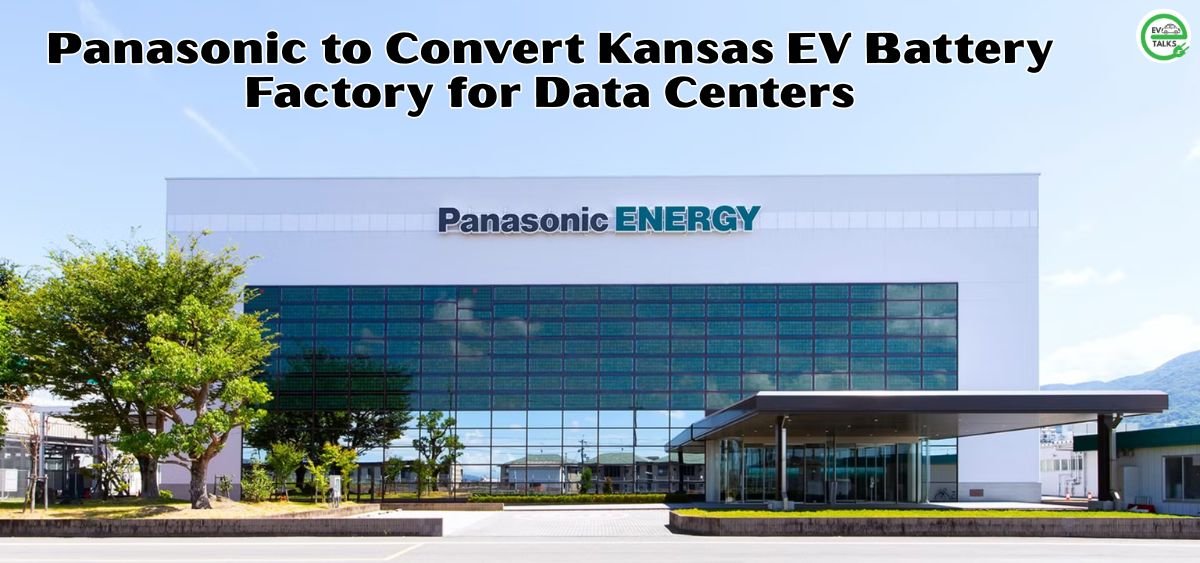

Japanese electronics and battery giant Panasonic is making a significant strategic shift in its North American operations as it responds to changing market dynamics. The company has announced plans to repurpose its electric vehicle battery manufacturing facility in Kansas, United States, to produce batteries for data centre applications starting in the third quarter of 2029. The move reflects the rapidly growing demand for energy storage solutions driven by artificial intelligence (AI) infrastructure and large-scale data centers. According to Panasonic Energy’s recent investor presentation, Panasonic to Convert Kansas battery production capacity from EV-focused manufacturing toward data centre battery applications as part of a broader long-term growth strategy.
The company also plans to repurpose certain EV battery production lines in Japan and expand module manufacturing operations in Mexico to support battery energy storage system (BESS) deployments for data centers.
Massive Investment in AI Infrastructure
Panasonic is backing this transition with substantial financial resources. The company plans to invest approximately JP¥350 billion (around US$2.18 billion) into its Energy division between fiscal years 2026 and 2028. This investment forms part of a larger US$3.12 billion commitment toward AI-related infrastructure development.
The Energy division is a critical business segment for Panasonic, supplying battery cells to leading EV manufacturers, including Tesla. However, the growing power requirements of AI data centers are creating new opportunities for battery manufacturers to diversify into the automotive sector.
Kansas Gigafactory’s Changing Role
Located in De Soto, Kansas, Panasonic’s battery factory officially opened on July 14, 2025. The facility was originally designed to produce approximately 32GWh of EV battery capacity annually. Combined with Panasonic’s battery plant in Sparks, Nevada, the company’s total US EV battery production capacity was expected to reach nearly 73GWh per year.
Now, Panasonic to Converts Kansas operations into a future hub for advanced data centre battery solutions. The transition highlights how battery manufacturers are adapting to evolving market conditions and emerging demand sectors.
Why Battery Makers Are Shifting Beyond EVs
The decision comes amid slower-than-anticipated EV adoption rates and regulatory challenges affecting battery manufacturing in the United States. Industry experts point to changing incentives, including the removal of certain EV consumer tax credits and restrictions associated with the Foreign Entity of Concern (FEOC) rules under the One Big Beautiful Bill Act (OBBBA).
As a result, battery manufacturers are increasingly redirecting production capacity toward energy storage markets. Panasonic’s conversion of Kansas is part of a broader industry-wide trend that is reshaping the North American battery landscape.
Several major players have already begun similar transitions. Ultium Cells, the joint venture between General Motors and LG Energy Solution, is repurposing its Tennessee battery facility to manufacture lithium iron phosphate (LFP) cells for energy storage systems. LG Energy Solution has also converted EV production lines in Michigan into approximately 17GWh of BESS manufacturing capacity. Meanwhile, Samsung SDI and SK On have expanded their US manufacturing footprint and secured agreements with energy storage system integrators.
Growing Demand for Battery Energy Storage Systems
The increasing demand for AI-powered data centers is creating unprecedented requirements for reliable backup power and grid stability. Battery Energy Storage Systems are becoming essential infrastructure components for hyperscale data centers, cloud computing facilities, and AI training hubs.
Industry observers note that while repurposing EV battery factories involves high costs, the enormous capital already invested in gigafactories makes conversion a practical alternative to building entirely new facilities. This trend is expected to accelerate as AI infrastructure expands globally.
With Panasonic to convert Kansas battery operations for data centre applications, the company is positioning itself at the intersection of two of the world’s fastest-growing industries: artificial intelligence and advanced energy storage.

Related Articles:









