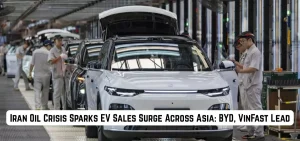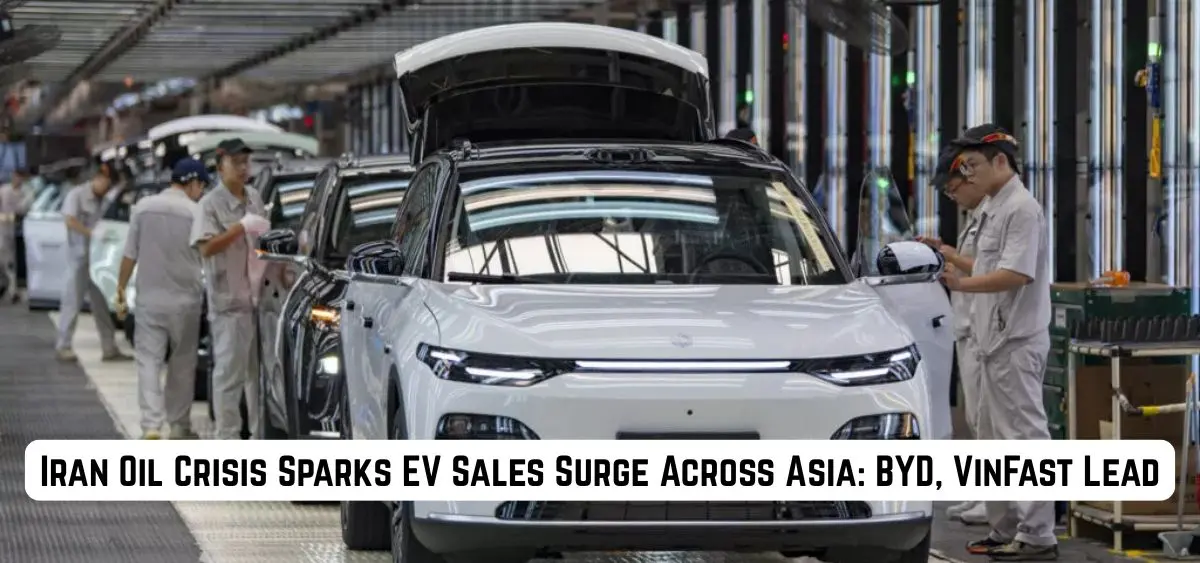

The Iran Oil Crisis Sparks EV Sales Surge across Asia as soaring fuel prices push consumers toward electric mobility. The ongoing conflict and the effective closure of the Strait of Hormuz have disrupted global oil supply, causing petrol prices to spike sharply—by as much as 50% in some regions. This sudden shift has accelerated the transition toward electric vehicles (EVs), with leading automakers witnessing unprecedented demand.
Record-Breaking Demand for EVs
The Iran Oil Crisis Sparks EV Sales Surge most visibly in key Asian markets like the Philippines and Vietnam. At a BYD dealership in Manila, dealers reported receiving an entire month’s worth of orders within just two weeks. Similarly, VinFast showrooms in Hanoi experienced a fourfold increase in footfall, forcing them to hire additional staff to manage demand. In just three weeks, VinFast sold around 250 EVs—double its average weekly sales from 2025.
Consumers are rapidly switching from gasoline vehicles to EVs to combat rising fuel costs. For instance, a Vietnamese commuter replaced his petrol-powered sedan with a VinFast VF 5, citing significant long-term savings on daily travel expenses.

Rising Competition in India and Southeast Asia
In India, competition between EV manufacturers is intensifying. By early March 2026, VinFast had sold over 850 units, outperforming BYD, which recorded more than 550 units. Meanwhile, Southeast Asian nations are witnessing strong demand for affordable EV models as daily commuters seek cost-effective alternatives.
The Iran Oil Crisis Sparks EV Sales Surge further due to government interventions. Laos, for example, has introduced emergency policies by reducing EV registration fees by 30% while increasing fees for conventional vehicles. India is also accelerating its electrification strategy and ethanol blending initiatives to reduce fuel dependency.
Economic and Energy Implications
Experts believe that high oil prices are a major catalyst for EV adoption. According to economists, the global EV fleet had already offset nearly 70% of Iran’s oil exports in 2025, and this crisis is accelerating that trend. Additionally, EV adoption helped reduce global oil consumption by approximately 2.3 million barrels per day last year.
The Asia-Pacific region, heavily dependent on oil imports through the Strait of Hormuz, is particularly vulnerable to fuel price shocks. This makes the shift toward EVs not just an economic decision but also a strategic move toward energy security.
Challenges and Future Outlook
Despite the surge, challenges remain. Infrastructure gaps—especially the lack of charging stations—and higher upfront costs continue to hinder widespread EV adoption. However, as fuel prices rise, the total cost of ownership is becoming more favorable for EV buyers.
The Iran Oil Crisis Sparks EV Sales Surge is expected to benefit China the most, as it dominates global EV production. Even before the crisis, EV exports from China had already doubled year-on-year.
If oil prices remain elevated, Asia could witness a long-term transformation in mobility, firmly establishing electric vehicles as the future of transportation.

Related Articles:-