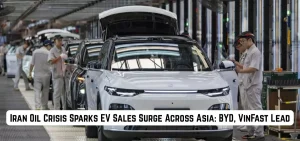
The escalating tensions in the Strait of Hormuz in March 2026 have triggered a global energy shock, pushing Brent crude above $100 per barrel and shaking fuel-dependent economies. This sudden volatility has created a global “Hormuz effect,” prompting governments and consumers to rethink their reliance on petrol and diesel. As a result, Hormuz Risk could fast-track EV Adoption across key markets, shifting electric mobility from a climate-friendly choice to a strategic economic necessity.
Why Fuel Volatility Is Accelerating EV Shift?
The Strait of Hormuz, which handles nearly 20% of the world’s oil traffic, became a chokepoint overnight. With oil prices surging 30–35% in just 10 days, EVs now offer a much stronger running-cost advantage. Consumers are reacting fast—online research for EVs and hybrids rose to 22% of all car-related searches following the crisis. For many nations, Hormuz Risk could fast-track EV Adoption by reframing energy security as the key driver of the transition.
“If you’re curious about the real running cost of electric vehicles during today’s fuel crisis, you can use this calculator to get exact values and easily compare your expenses between EVs and ICE vehicles.”

Market-Specific Impact Across Regions
China
China, already leading global EV sales with a 50% market share by 2025, remains resilient. Its vertically integrated manufacturing system shields it from oil-driven logistics spikes, positioning Chinese automakers to dominate the accelerated demand.
India
Despite importing 85% of its battery cells, India witnessed a surge in EV inquiries at dealerships as consumers brace for long-term fuel price inflation. February 2026 Vahan data reports 193,829 EV registrations, a 12% dip from January but a strong 38% rise year-over-year.
Breakdown (Feb 2026):
- 2-Wheelers: 111,680
- 3-Wheelers: 66,398
- Passenger EVs: 13,659
Europe
Fuel prices spiked sharply, with Germany seeing gasoline touch $9 per gallon (€2.03/L), triggering heightened EV interest.
Southeast Asia
Vietnam (38% EV share) and Thailand continue to outpace the U.S. due to stronger sensitivity to rising fuel costs. Laos even reduced EV registration and service fees by 30% while penalizing gasoline vehicles.
Challenges Emerging from the Crisis
While Hormuz Risk Could Fast Track EV Adoption, it also exposes vulnerabilities:
- Supply Chain Disruptions: About 40,000 tonnes of copper cathode shipments per month were disrupted—critical for motors and batteries.
- Rising Manufacturing Costs: Petrochemical derivative prices may rise, affecting EV plastics and insulation.
- Logistics Costs: Rerouting around the Cape of Good Hope added $1,500–$4,000 per shipment, raising the cost of imported EV components.
The Road Ahead
Despite temporary disruptions and a February slump in some markets like China, long-term EV demand is surging. New Zealand even saw EV sales quadruple in a single day in mid-March. As global fuel insecurity deepens, Hormuz Risk could fast-track EV Adoption, accelerating a structural shift already underway.

Related Articles:-