
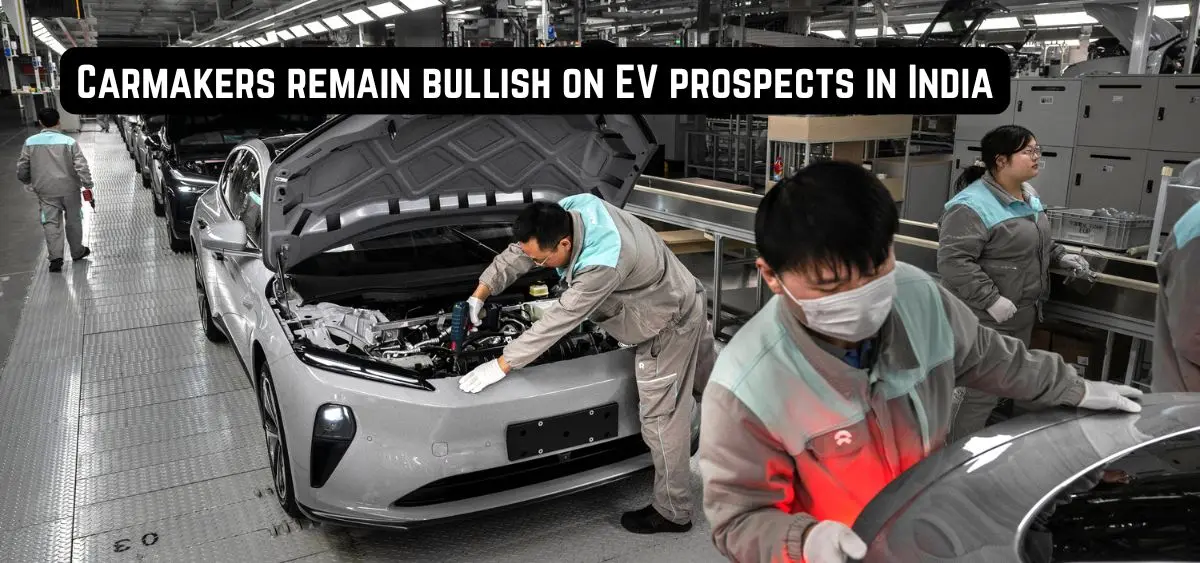

While electric vehicle (EV) markets in the US and Europe are experiencing slower adoption and financial write-offs, India has emerged as a promising growth hub. Carmakers remain bullish on EV prospects in India, viewing the country as one of the most dynamic and expanding EV markets globally.
Strong Growth Momentum in India’s EV Market
India’s EV sector ended 2025 on a high note, recording nearly 177,000 unit sales, representing an impressive 77% year-on-year growth. This rapid rise highlights the increasing acceptance of electric mobility among Indian consumers.
The momentum has continued into 2026 as well. Monthly EV sales volumes have ranged between 16,000 and 18,000 units, which is more than double the sales recorded during the same period a year earlier. Such strong growth signals that carmakers remain bullish on EV prospects and expect India’s EV demand to accelerate further.

Automakers Increasing Strategic Investments
Despite global market uncertainties, several major automakers are investing heavily in India’s EV ecosystem.
Mahindra & Mahindra plans to allocate 20% of its manufacturing capacity to EVs by FY2027, targeting production of around 18,000 units per month. Meanwhile, Tata Motors, the current EV market leader, aims to achieve 20–25% EV penetration by 2030 and has committed investments of up to ₹18,000 crore to strengthen its EV business.
International companies are also entering the race. Honda is investing ₹1,200 crore to manufacture its first electric vehicle at its Tapukara plant in Rajasthan, with a launch expected in the second half of FY2026-27. Similarly, Suzuki Motor (Maruti Suzuki) has announced a massive $8 billion investment over the next five to six years to expand EV production in India.
Government Policies Driving EV Adoption
Government support is another major factor behind India’s EV growth story. The PM E-DRIVE scheme, with an allocation of ₹10,900 crore, along with various state-level incentives, offers benefits that can cover 35–60% of an EV’s cost through manufacturing support, tax exemptions, and subsidies.
In addition, the charging infrastructure is expanding rapidly. By July 2025, India had over 29,000 public EV chargers, a five-fold increase since FY2022, making EV ownership more practical and convenient.
India Entering the EV “Take-Off” Phase
Industry analysts believe India is currently in the “take-off” stage of EV adoption, unlike mature markets that are facing demand slowdowns. Even as subsidies such as the PM E-DRIVE scheme approach their expiration in March 2026, falling battery costs are expected to bring EV prices closer to traditional internal combustion engine vehicles.
With supportive policies, rising consumer interest, and massive investments from automakers, carmakers remain bullish on EV prospects in India. As infrastructure improves and costs decline, carmakers remain bullish on EV prospects and see the country as one of the most promising electric mobility markets in the coming decade.

Related Articles:-







