
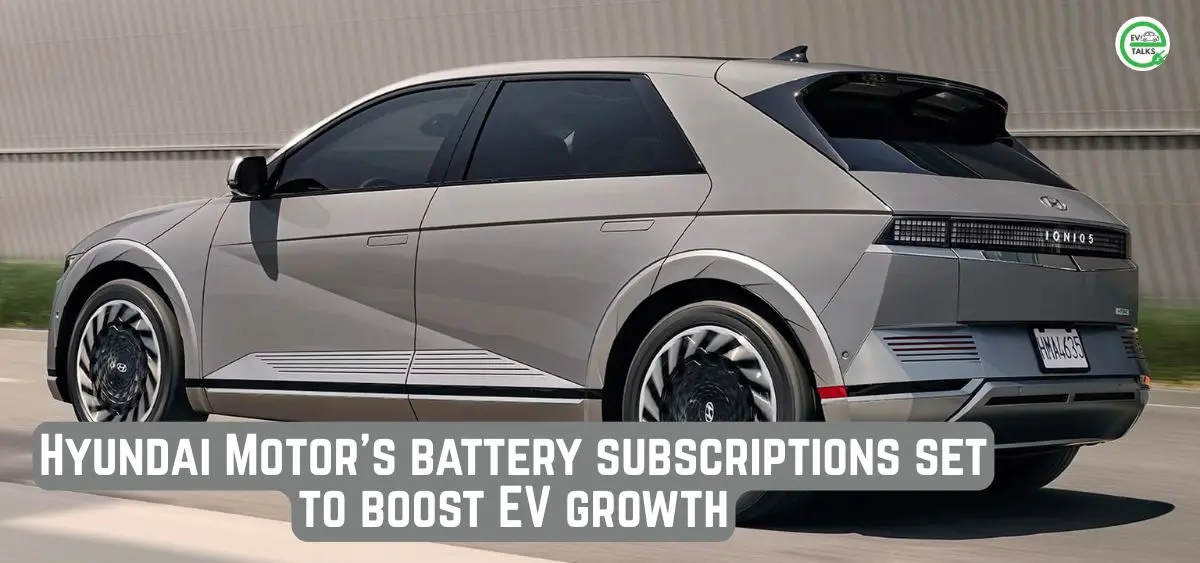

Hyundai Motor Group has introduced an innovative pilot program in South Korea aimed at making electric vehicles (EVs) more accessible through Hyundai Motor’s battery subscriptions. By separating battery ownership from the vehicle, the company seeks to significantly lower upfront purchase costs while addressing consumer concerns about battery lifespan and replacement expenses. This “Battery-as-a-Service” (BaaS) model could play a pivotal role in accelerating EV adoption.
Lower Costs, Flexible Payments
One of the most compelling advantages of Hyundai Motor’s battery subscriptions is the reduction in initial vehicle cost. For instance, the price of a Kia EV6 used as a corporate taxi dropped to 18.6 million won ($12,700) when the battery cost was excluded. Instead of paying for the battery up front, customers pay a monthly subscription fee of around 1.4 million won. This cost is reportedly lower than typical monthly LPG fuel expenses, making it financially appealing for high-mileage users such as taxi operators.

Pilot Program and Expansion Plans
The pilot phase, set for the first half of 2026, will involve five IONIQ 5 taxis operating in the Seoul metropolitan area. These vehicles will be used to test the economic feasibility of the subscription model in real-world conditions, particularly focusing on battery performance and degradation. In the second half of 2026, Hyundai plans to expand the service to individual consumers, offering private buyers access to EVs through Hyundai Motor’s battery subscriptions.
Operational and Strategic Benefits
Under this model, drivers or fleet operators own the vehicle itself, while Hyundai Capital retains ownership of the battery. This structure shifts the risk of battery degradation and residual value away from consumers to financial institutions. Additionally, the program allows for battery swapping and maintenance, reducing the burden of costly replacements.
The initiative is supported by South Korea’s regulatory sandbox, which permits the separate registration of vehicle bodies and batteries. Strategically, it also strengthens Hyundai’s position amid rising competition from low-cost Chinese EV manufacturers.
Global Context and Industry Outlook
Hyundai’s move aligns with global trends, as companies like Nio and VinFast have adopted similar battery subscription models. While questions remain about the total cost of ownership, industry experts believe Hyundai Motor’s battery subscriptions could become a game-changer if proven economical. The initiative may also support Hyundai’s broader efforts to build sustainable and affordable EV ecosystems worldwide, including in emerging markets like India.

Related Articles:









