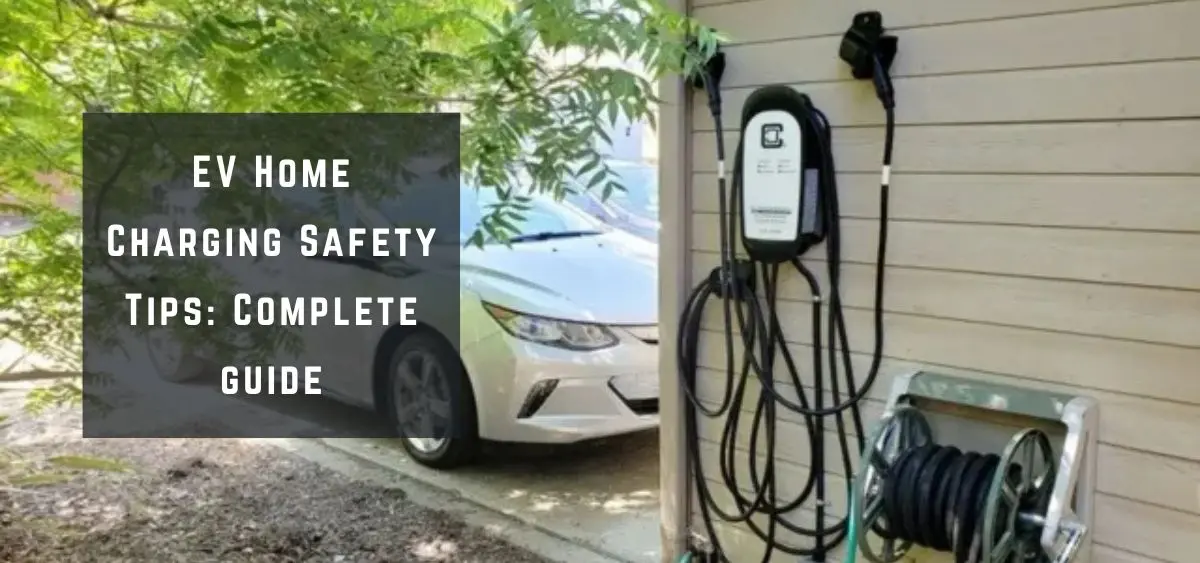

Thinking about installing a home charger for your electric vehicle? Before you plug in, you need to know the essential EV home charging safety tips that can protect your home, your charger, and your EV from unexpected risks. While installing an EV home charger is one of the smartest upgrades for any EV owner, safety must always come first. From proper electrical load checks and high-quality copper wiring to the right protection switches, earthing setup, and voltage stability—every detail matters. In this complete guide, we break down each step to ensure your home charging setup is smooth, efficient, and 100% safe.
1. Show the Setup First
A typical safe setup includes:
- The EV Charger (3.3 kW, 7.2 kW, 11 kW, or 22 kW)
- Proper wiring from your main meter box to the charger
- Dedicated protection switches
- Strong earthing and stable voltage supply
2. Electrical Connection Requirements (Must Follow)
A safe EV charging installation starts with the correct electrical groundwork.
2.1 Proper Load Capacity
Your home must support the charger load:
- Up to 7.2 kW → Single phase
- 11 KW and Above → Three-phase
Get a load check done by your electricity provider or a certified electrician.
2.2 Copper Output Wire Only
Always use 100% copper wiring for charger output.
Never use aluminum wire—it overheats and is unsafe for EV charging.
2.3 Install a Cutout (100 Amp) Before Connecting Charger
A 100A cutout is mandatory for protection and isolation.
Avoid thin wiring — it increases the risk of heat buildup and fire.
2.4 Optional: Install a Sub-Meter
A sub-meter helps track EV charging electricity consumption separately.
2.5 Appropriate Earthing
Proper grounding is one of the most critical safety steps.
Voltage Check Before Installation:
- Single Phase (up to 7.2 kW):
- Phase to Neutral Standard, i.e., 220 Volt approx
- Phase-to-Earthing: 1V-8V or less (considered negligible)
- Three Phase (11–22 kW):
- Phase-to-phase: 400V+
- Phase to Neutral Standard, i.e., 220 Volt approx
- Phase-to-Earthing: 1V-8V or less (considered negligible)
3. Required Materials for Home Charger Setup
Wiring Specifications
Choose wire thickness based on charger capacity:
For Chargers Up to 7.2 kW (Single Phase)
- 10 mm² 3-core copper wire
- Recommended Brand: Polycab
For 11 kW (three-phase)
- 4 mm² 5-core copper wire
- Only use copper, never aluminum.
For 22 kW
- 10 mm² 5-core copper wire
- Only use copper, never aluminum.
4. Protection Switches (Mandatory Safety Devices)
Your charger must be protected through either of these two switch systems:
Option 1: MCB + RCD + SPD
- MCB → Protects from overcurrent
- RCD → Detects leakage current
- SPD → Surge protection
Option 2: RCBO + SPD
- RCBO = MCB + RCD combined
- More compact and safer
You can test if the RCBO is working properly using a leakage test button/device.
5. Protection Switch Ratings (According to Charger Capacity)
For up to 7.2 kW:
- MCB 40A 2-Pole + RCD 40A 2-Pole + SPD 320V
OR - RCBO 40A 2-Pole + SPD 320V
For 11 kW (three-phase):
- MCB 25A 4-Pole + RCD 25A 4-Pole + SPD 320V
OR - RCBO 25A 4-Pole + SPD 320V
For 22 kW (three-phase):
- MCB 40A 4-Pole + RCD 40A + SPD 320V
OR - RCBO 40A + SPD 320V
6. Additional Charger Safety: Internal MOV / GDT Components
Quality chargers include MOV or GDD protection components that act as the final layer of safety.
If all protections fail:
- These components stop the surge from traveling to your vehicle’s battery, preventing damage.
7. Keep a Fire Extinguisher Nearby
Always keep one fire extinguisher:
- Inside your car
- At your home charging point
This is a simple but essential safety measure.
8. Extension Cable Safety (If Needed)
Use only high-quality copper extension cables:
- 6 sq mm → For 3.3 kW chargers
- 10 sq mm → For 7.2 kW or 11 kW chargers
- Maximum length: 10 meters
- Check regularly for heat buildup
9. Final Safety Re-Check (Before Charging Your EV)
Before your first charging session, verify:
- Electrical Connection & Earthing: Everything must be tightly fitted, stable, and professionally installed.
- Protection Switches & Wiring: Ensure proper MCB/RCBO/RCD ratings and correct copper wiring.
- Fire Extinguisher Availability: Place one near the charger and one inside your car.
- Verify Charger Quality: Buy BIS-certified, branded chargers only.
Conclusion: After this, You Are 100% Safe
With the correct load capacity, copper wiring, protection switches, stable voltage, proper earthing, and final safety checks, your EV home charger setup becomes 100% safe, reliable, and future-proof.
Follow this guide before installing your charger to ensure complete peace of mind and long EV battery life.
Related Articles: