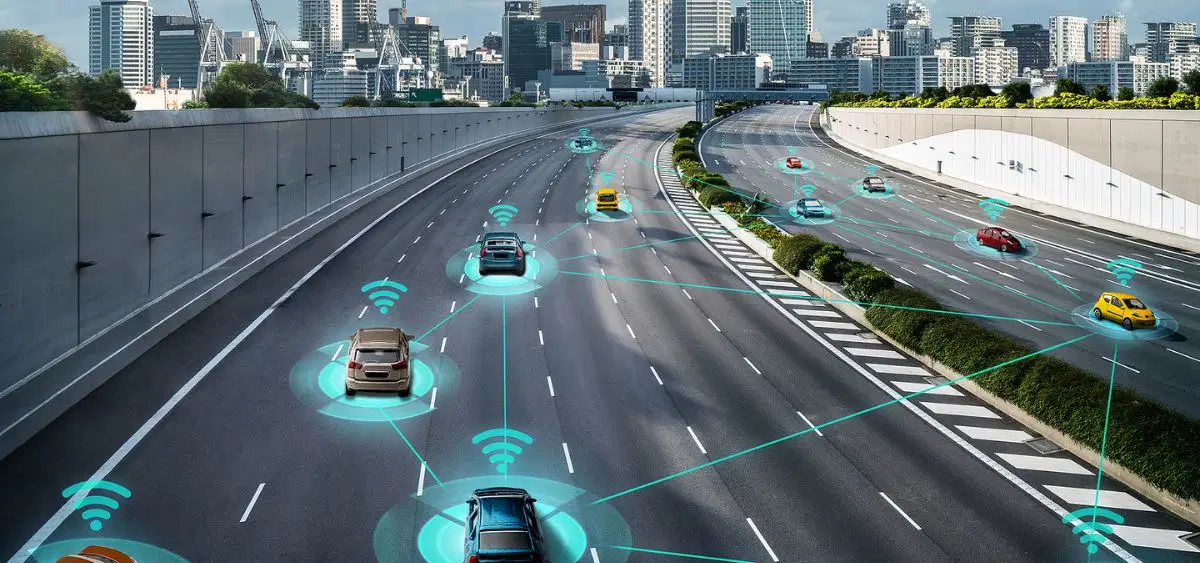

Autonomous driving in EVs combines electric propulsion with automated driving technology. However, an electric car with advanced driver assistance is not automatically self-driving: Level 2 systems require continuous supervision, while genuine driverless services operate within defined conditions.
That distinction matters in 2026. Electric cars increasingly offer sophisticated steering, braking, and parking assistance, while robotaxis demonstrate a different experience: passengers travelling without a human driver in a restricted operating environment.
For buyers, understanding that difference is more useful than counting sensors or comparing futuristic feature names. It reveals what the vehicle can do today, where its capabilities end and when a person must take control.
Key Takeaways
- Level 2 ADAS supports the driver. It can control steering and speed together, but the driver must continuously supervise.
- Level 4 automation can operate without a human driver within defined conditions. It does not mean the vehicle can drive everywhere.
- Electric powertrains suit automation, but autonomous driving is not exclusive to EVs.
- Indian buyers should check the exact variant and operating limits, rather than assume an ADAS badge means driverless capability.
- Software fees, sensor repairs, calibration, and energy consumption belong in the ownership calculation.
- Safety and environmental benefits require evidence. Neither is guaranteed simply because a vehicle is electric and automated.
What Is Autonomous Driving in EVs? Actually Mean?
An autonomous electric vehicle combines two separate technologies: a battery-electric powertrain and a system capable of performing driving tasks.
Electrification determines how the vehicle moves. Automation determines which responsibilities software can perform and under what conditions. Neither guarantees the other.
An EV with automatic emergency braking may offer valuable active safety without sustained automated driving. Conversely, automation can be engineered into vehicles using other powertrains.
SAE’s driving-automation framework provides a useful starting point. Its September 2026 revision retains six levels, defined by the roles of the system and human rather than the number of features fitted.
| SAE level | Core capability | Human responsibility |
|---|---|---|
| Level 0 | No sustained driving automation; warnings or momentary interventions may exist | Performs and monitors driving |
| Level 1 | Sustained steering assistance or speed assistance | Continuously supervises and intervenes |
| Level 2 | Sustained steering and speed assistance | Continuously supervises and intervenes |
| Level 3 | Automated driving under defined conditions | Must resume driving following an appropriate alert or evident malfunction |
| Level 4 | Automated driving within defined conditions, including managing fallback | Human driving is not required to mitigate risk within those conditions. |
| Level 5 | Automated driving under all conditions in which humans can drive | Human driving is not required. |
“Level 2+” is an industry label, not a seventh SAE level. A more capable Level 2 system still requires supervision. An approved hands-free function does not automatically permit the driver to look away.
Another essential term is “operational design domain,” or ODD. It describes the conditions in which an automated system is designed to operate, potentially including geography, road types, speed, and weather.
A driverless vehicle that handles one mapped service area cannot be assumed to handle an unfamiliar rural road.
Mechanical vs. Digital Steering
- Steer-by-Wire: Modern EVs like the Lexus RZ replace physical mechanical steering columns with electronic signals. Steering inputs from the wheel (or autonomous computer) are sent via wire to actuators on the front wheels.
- Shared Control & Haptic Feedback: Research from institutions like the University of Michigan uses haptic steering wheels to let humans and automated systems “negotiate” control smoothly instead of fighting for the wheel.
- Master Controllers: In custom or experimental autonomous EV setups, an Autonomous Vehicle Electronic Control Unit (AV-ECU) or master chip (like a Raspberry Pi or dedicated AI board) coordinates motion and steering commands over the vehicle’s native EV-ECU.
Where Does Autonomous Driving Stand in 2026?
The industry increasingly follows two paths: sophisticated assistance for private cars and geographically bounded driverless fleets.
The IEA’s Global EV Outlook 2026 reports that approximately half of new cars sold worldwide in 2025 featured Level 2 systems. It also estimates that the global robotaxi fleet more than doubled to around 8,000 vehicles in 2025, operating across roughly 20 cities.
These are dated global estimates, not an October 2026 fleet count or an India-specific sales statistic.
Consumer branding still needs careful interpretation. Tesla’s current US support page explicitly states that Full Self-Driving (Supervised) requires active supervision and does not make the vehicle autonomous. Its UK FSD address now redirects to a page named Tesla Assisted Driving, illustrating why regional terminology should be checked rather than copied across markets.
There have also been strategic reversals. In December 2024, GM announced that it would stop funding Cruise’s robotaxi development and refocus autonomous-driving work on personal vehicles and driver assistance. Older predictions of imminent GM robotaxi expansion therefore need updating.
Level 3 remains a separate, limited category. Availability, permissible driver activities, and legal responsibilities depend on the approved system and jurisdiction. An overseas approval should never be presented as permission to use the same capability in India.
Why Are EVs a Strong Platform for Autonomous Driving?
Electric vehicles offer engineering and operating advantages, although none removes the need for rigorous safety validation.
Precise Motor Control
Electric motors respond quickly to torque commands. This supports controlled acceleration and smooth speed changes when automated systems follow traffic or maneuver at low speed.
The advantage is precise execution. The driving software must still decide whether accelerating, slowing down, or changing direction is appropriate.
Regenerative Braking Integration
Regenerative braking allows an EV to recover energy during deceleration. Automated control can coordinate this with friction braking to deliver predictable slowing.
However, regeneration depends on battery temperature, state of charge, and other limits. A full or cold battery may accept less recovered energy, so safe stopping cannot depend on regeneration alone.
Integrated Electrical and Software Architectures
Modern EV platforms often combine substantial electrical capacity with software-oriented vehicle control. This can support computing, diagnostics and over-the-air updates.
The IEA identifies electrical supply, reduced mechanical complexity, and precise torque control as reasons battery-electric platforms suit automation.
Power reliability remains an engineering task. High-voltage batteries supply other systems through conversion hardware, and safety-critical functions need fault protection.
Petrol vehicles also have regulated electrical supplies. Claims that only EVs provide stable power are inaccurate.
Potentially Attractive Fleet Economics
Electric propulsion can reduce energy and routine powertrain-maintenance costs. High-mileage fleets have more opportunities to realize those savings than lightly used private cars.
However, autonomous fleets also require charging, sensor maintenance, cleaning, and operational support. Lower drivetrain costs alone do not establish a profitable business.
How Do Self-Driving Electric Cars Understand the Road?
Automated driving involves five connected tasks:
- Perception: identifying surrounding objects and road features.
- Localization: estimating the vehicle’s position.
- Prediction: anticipating how other road users might move.
- Planning: selecting an appropriate path and speed.
- Control: executing steering, acceleration, and braking commands.
The supplied 2023 IJERT paper provides useful background on integrating motors, battery management, charging, steering, and braking. Its value is explaining an interconnected vehicle system, rather than establishing current commercial capabilities.
| Technology | Main contribution | Important limitation |
|---|---|---|
| Cameras | Interpret lanes, signals, objects, and visual detail. | Glare, darkness, obstruction, and weather can affect perception. |
| Radar | Measures range and relative motion | Resolution and interpretation depend on hardware and processing. |
| Lidar | Measures distance and provides spatial information | Performance depends on design, weather, and surface reflectivity. |
| Ultrasonic sensors, where fitted | Detect nearby objects during low-speed maneuvers. | Short-range detection does not establish road-driving capability. |
| GNSS, inertial sensing, and odometry | Estimate position and movement. | Signals can be obstructed, and movement estimates can accumulate error |
| Driver monitoring | Helps assess attention in supervised modes | Monitoring does not replace the driver’s responsibility. |
There is no universal camera “success rate” or fixed sensor range that applies to every vehicle. Detection depends on the object, speed, environment, installation, and software.
Similarly, a larger sensor count does not automatically establish a safer or more capable system.
What Is Changing in AI and Software-Defined EVs?
Developers use machine learning to interpret complex scenes and predict how road users may move. Some approaches combine learned driving behavior with explicitly engineered safety constraints; others integrate more of the driving pipeline into learned models.
The difficult issue is validation. Recognizing a motorcycle is different from predicting whether its rider will enter a narrow gap beside the vehicle.
Rare situations, ambiguous human signals, and unusual obstacles can expose weaknesses absent from ordinary demonstration drives.
Software-defined architectures and over-the-air updates make refinement easier. Embitel’s integration discussion highlights the relationship between driver assistance, vehicle control, and software development, although its 2024 examples should not determine current feature availability.
An update can improve existing functions. It cannot necessarily overcome missing hardware, provide local approval, or transform a supervised system into driverless operation.
Buyers should evaluate capabilities available now rather than assign value to an unspecified future upgrade.
Which Electric Cars Offer Driver Assistance in India?
Current manufacturer information provides useful examples, but specifications must be checked against the exact vehicle being purchased.
| India-market EV example | Manufacturer-described capability | What buyers should understand |
|---|---|---|
| Hyundai IONIQ 5 | Hyundai SmartSense Level 2 ADAS | Driver supervision remains necessary |
| Mahindra BE 6 | Level 2/2+ ADAS on applicable configurations | Equipment varies by configuration |
| Mahindra XEV 9e | Level 2/2+ ADAS on applicable configurations | Advanced assistance does not establish driverless capability |
Hyundai’s India safety page identifies Level 2 ADAS for the IONIQ 5. Mahindra’s announcements describe Level 2+ equipment for higher configurations and Level 2 assistance for Pack Two offerings.
These examples are not a complete market ranking. Manufacturers also count features differently, making headline totals an unreliable comparison.
Ask the dealer to show the variant’s owner’s manual and demonstrate how assistance engages, disengages, and alerts the driver.
Do not infer an ADAS package from an older model’s name, a similar-looking vehicle or a shared platform.
Why Are Indian Roads Challenging for Autonomous EVs?
An expressway with clear markings and predictable traffic is a different operating environment from a crowded junction.
Indian driving can involve closely spaced two-wheelers, informal merges, pedestrians, animals, temporary barriers, and inconsistent markings. Monsoon rain, dust and low visibility add further complexity.
These conditions require systems to interpret behaviour as well as detect objects.
For owners, the response is practical: use assistance only within its documented conditions. Take control when visibility, markings or traffic behaviour become unsuitable. Do not wait for an alert to make that judgement.
For developers, local validation must cover representative traffic, road layouts and weather rather than rely on overseas performance.
As an editorial assessment, bounded applications such as controlled campuses or logistics sites may offer a more manageable starting point than unrestricted nationwide robotaxi deployment.
Are Autonomous EVs Safer Than Human-Driven Cars?
They can deliver safety benefits, but a blanket answer would conceal important differences.
Emergency braking and collision warnings address particular hazards. A driverless system requires broader evidence showing performance across its operating domain, including failures and difficult situations.
Waymo’s safety dashboard reports 271.3 million rider-only miles through June 2026. This provides a substantial operating dataset, but remains company-published evidence about a particular system and deployment context. It cannot establish the safety of every autonomous EV.
Meaningful comparisons should examine:
- Crash severity and injury outcomes.
- Geography and road types.
- Distance travelled and operating conditions.
- Reporting methods and benchmark selection.
- Whether human supervision was required.
Supervised assistance also introduces a human-factors challenge: drivers may overtrust a system that usually behaves smoothly.
NHTSA distinguishes continuous supervision at Level 2 from automated driving at higher levels and identifies cybersecurity as a critical development issue.
A smooth demonstration is useful, but it is not a substitute for transparent safety evidence.
How Do Autonomy, Charging and Battery Range Interact?
Sensors, computers, and cooling consume energy. A smoother driving strategy may save some energy, while additional equipment uses it.
There is no universal net range improvement from automation.
Consider this illustrative calculation, rather than a measured vehicle specification:
| Assumption | Result |
|---|---|
| Additional equipment draws 500 W for four hours | 2 kWh consumed |
| Driving consumption is 15 kWh/100 km | 2 kWh equals roughly 13 km of driving energy |
The example excludes changes in weight, aerodynamics, and cooling. It shows why auxiliary loads belong in range planning.
For robotaxis, charging is also an availability problem. Dispatch software must consider remaining charge, charger reliability, queues, charging curves and travel to the depot.
A higher peak charging figure does not automatically deliver faster fleet turnaround.
Driverless driving also does not mean driverless charging. Connecting a cable may still require a person unless compatible automated connection equipment is installed.
Battery management must balance utilisation with temperature and long-term health. Frequent charging is not automatically damaging: degradation depends on chemistry, thermal control and the operating pattern.
What Does Advanced Automation Cost to Own?
The relevant cost is the complete package, not simply the initial feature price.
| Cost item | What owners should check |
|---|---|
| Purchase premium | Difference between otherwise comparable variants |
| Software fees | Trial duration, subscriptions and renewal terms |
| Sensor repairs | Replacement costs and calibration requirements |
| Insurance | Coverage wording, repair network and deductible |
| Energy consumption | Real-world efficiency with normal equipment operating |
| Resale | Whether features and subscriptions transfer |
| Fleet operations | Charging, cleaning, support and downtime |
Tesla’s US support page currently lists FSD (Supervised) at US$99 per month. This is a US-market subscription example, not an Indian quote or a price for driverless capability.
The same page states that features vary by region, hardware and software, and explains ownership-dependent transfer conditions.
Indian buyers should obtain written estimates for common sensor repairs and calibration. A minor collision or windscreen replacement may involve more than replacing the visible part when sensing equipment is affected.
For fleets, empty kilometres also matter. A vehicle travelling to collect passengers consumes energy without generating passenger revenue.
Does Autonomous Driving Make EVs More Sustainable?
Battery-electric vehicles eliminate exhaust emissions at the vehicle. Their wider environmental impact still includes electricity generation, manufacturing and battery production.
Automation could improve routing and driving smoothness. It could also increase empty travel between bookings or encourage additional journeys.
Those outcomes pull in opposite directions.
Shared services are most useful when they provide efficient connections and accessible mobility without unnecessarily replacing higher-occupancy transport.
Accessibility also requires suitable vehicle design, boarding assistance and usable booking systems. Driving software alone does not remove every mobility barrier.
A credible assessment should measure energy per passenger-kilometre, occupancy and empty running. “Electric and autonomous” describes technologies rather than a guaranteed environmental outcome.
What Should Buyers Check Before Paying for ADAS?
Confirm the Actual Function
Distinguish collision warnings, emergency intervention, adaptive cruise control, lane centring and automated parking.
These functions solve different problems and do not establish the same automation capability.
Read the Operating Limits
Check permitted speeds, road types, visibility requirements, and supervision instructions.
Understand which conditions can make the function unavailable.
Assess Everyday Usability
During a safe demonstration, examine how the system behaves in ordinary situations. Does it provide clear alerts? Is disengagement easy to understand?
Avoid deliberately creating dangerous situations to test emergency functions.
Verify Service Support
Ask whether the authorised workshop can calibrate the equipment, how long repairs typically take, and whether replacement parts are readily available.
Check Software and Resale Terms
Confirm trial expiry, subscription requirements, update support and feature transfer arrangements.
Keep sensing areas clean according to the manual. Avoid accessories that obstruct cameras or radar, and arrange checks after relevant repairs.
Expert Insight from Electric Vehicle Talks
The strongest near-term opportunity is useful, clearly explained automation.
For private owners, reliable assistance and intuitive controls can matter more than ambitious terminology. For fleets, operating availability and safety evidence determine value.
Our assessment is that India’s adoption will depend on local validation, understandable driver responsibilities and dependable service support. A compelling expressway demonstration is insufficient evidence for mixed city traffic.
Future progress should be judged through measurable milestones: operating domains expanding safely, transparent incident reporting, predictable repair costs and consistent charging operations.
Buyers should pay for demonstrated capability, while policymakers and operators evaluate the conditions under which broader deployment is justified.
People Also Ask
1. What Is the Difference Between ADAS and Autonomous Driving?
ADAS assists a driver through warnings or control functions. Higher-level automated driving systems perform driving within defined conditions, with the human role changing according to the automation level.
2. Can a Level 2 Electric Car Drive Without Supervision?
No. Continuous driver supervision is required, even when steering and speed are controlled together. An approved hands-free mode does not automatically permit eyes-off use.
3. Is Tesla FSD Genuinely Autonomous?
Tesla’s consumer FSD (Supervised) is driver assistance. Its support documentation says the driver must remain attentive and that the features do not make the vehicle autonomous.
4. Why Do Robotaxis Use Electric Vehicles?
Electric platforms offer precise torque control and potentially attractive operating costs for intensive use. They also suit integrated electrical architectures, although charging and support costs remain important.
5. Does Level 4 Mean a Car Can Drive Anywhere?
No. Level 4 operates within defined conditions and handles fallback there. Universal human-free driving under all conditions in which humans can drive corresponds to Level 5.
6. Are Electric Cars Sold in India Automatically Self-Driving?
No. Electric propulsion does not establish automation capability. The examples discussed here provide driver assistance; buyers must check the exact variant and manual before using any function.
FAQs About Autonomous Driving in EVs
Can Autonomous Driving Work Without Lidar?
Some systems use camera-led designs; others combine cameras, radar, and lidar. Sensor choice alone cannot prove capability. Validation, fault handling, and operating conditions matter.
Does Autonomous Driving Require Continuous 5G Coverage?
There is no universal 5G requirement. Connectivity can support maps, updates and fleet operations, while safety-critical driving must account for communication failures. Requirements differ by system.
Can an OTA Update Turn My EV Into a Robotaxi?
Do not assume so. Driverless operation may require different hardware, redundancy, validation, and approval. An update promise is not an operating authorisation.
Will ADAS Always Increase EV Range?
No. Smooth control may reduce consumption, but equipment and cooling require energy. The balance varies by vehicle, traffic, speed, and weather.
Does Automatic Parking Mean the Car Is Fully Autonomous?
No. Parking is a separate function with specific limits. It does not establish the ability to complete a driverless road journey.
Will a Used EV Retain Paid Driver-Assistance Features?
It depends on the manufacturer and purchase arrangement. Check the vehicle’s actual entitlements, account requirements, and transfer terms before agreeing on a price.
Conclusion
Autonomous driving in EVs has moved beyond prototypes into useful driver assistance and defined driverless services. Progress is substantial, but capability remains tied to operating conditions, equipment and local permission.
For Indian buyers, the sound approach is to choose assistance that works on their routes, understand its limits, and budget for maintenance. For the industry, the next meaningful advance is dependable operation supported by evidence.
Explore more EV technology updates, buying guides, charging resources, and ownership insights at Electric Vehicle Talks to make better-informed electric mobility decisions.

Related Articles: